Book Appointment Now

How long OSP PCB shelf life really lasts: the storage windows by month, the humidity and packaging rules that extend it, and what to do with expired batches.
OSP PCB Shelf Life: Storage Windows, Reflow Limits and Batch Disposal
OSP boards are easy to buy and easy to lose: the organic film that makes the surface finish flat, cheap and solderable is also the reason an OSP PCB shelf life is measured in months, not years. Buyers who plan inventory around metal finishes are regularly surprised when a fast-turn project stalls because a batch sat one quarter too long in the warehouse and the pads no longer wet.
This article gives the working numbers: how far OSP PCB shelf life extends in each storage band, the packaging and humidity conditions that keep the film intact, how reflow cycles consume the solderability budget before assembly even starts, and what to do — and what never to do — when a batch is past its window. All windows are industry practice for planning; the batch documentation that ships with the boards is the final word.
Table of Contents
- Why OSP PCB Shelf Life Is Shorter Than Metal Finishes
- The Three Storage Windows of OSP PCB Shelf Life
- Four Factors That Decide How Long the Film Survives
- Storage Conditions That Keep the Film Intact
- Reflow Cycles: Why Double-Sided Assembly Spends the Budget
- Expired OSP Batches: Signs, Tests and Disposition
- OSP vs ENIG vs HASL: Matching the Finish to Inventory Turnover
- Ordering OSP Boards: What to Specify and How to Batch
- FAQ
- Submit Your Gerbers for a Surface Finish and Storage Plan
Why OSP PCB Shelf Life Is Shorter Than Metal Finishes
OSP — Organic Solderability Preservative — is a thin organic film, typically 0.2 to 0.5 µm, applied over bare copper to hold back oxidation until soldering. It wins on three fronts: pads stay flat for fine-pitch BGA placement, the process is one of the lowest-cost finishes, and it contains no metal plating to manage. The trade-off is that the protective layer is organic. It hydrolyzes slowly in the presence of moisture and heat, and once copper oxide forms under a degraded film, solder no longer wets reliably.
Compare that with metal finishes: HASL leaves actual solder alloy on the pads and ENIG leaves a nickel-gold sandwich, and both keep a usable surface for a year or more under the same storage conditions. The OSP film simply has less mass to give. That single fact drives everything else in this article — the storage windows, the handling rules and the disposal path for expired batches. For the other end of the finish spectrum, this site’s ENIG solderability guide covers what happens when a metallic finish fails instead.
The Three Storage Windows of OSP PCB Shelf Life
Industry practice splits the calendar into three bands. The commonly cited planning number is three months from shipment to assembly when vacuum packaging is intact and storage is room-temperature and dry; under strictly controlled conditions the safe ceiling extends to roughly six months. Past that, film degradation and wetting failures become likely enough that assembly without remediation is a gamble.
| Storage window | Film condition | Solderability and action |
|---|---|---|
| 0–3 months (recommended use window) | Film intact; copper protected | Solder normally; run the warehouse FIFO so oldest panels place first |
| 3–6 months (upper band, good conditions) | Film slowly thinning; risk rising | Run a solderability sample check before assembly; prioritize consuming the batch |
| Beyond 6 months (expired zone) | Degraded film; oxidation probable | Wetting failures likely; plan on rework — strip and re-apply OSP before use |
Treat these bands as planning defaults, not guarantees. A batch stored in a leaking bag in a humid loading bay can fail inside the three-month window; a vacuum-sealed batch in a climate-controlled store can survive longer than six. That is why the shipping documentation and batch records matter — they, not the calendar, define the disposition of any specific lot.
Four Factors That Decide How Long the Film Survives
Two warehouses holding the same OSP batch can end up with very different solderability. The difference almost always traces to four controllable factors.
| Factor | Mechanism | Control point |
|---|---|---|
| Packaging integrity | A leaking vacuum bag lets moisture reach the copper and oxidation accelerates | Vacuum-sealed bags with desiccant and a humidity indicator card; quarantine any damaged package for inspection |
| Temperature and humidity | Heat and moisture together speed up hydrolysis of the film | Store at 15–30 °C and below 60% RH, away from windows and direct light |
| Time after opening | Once the bag is open, contamination and oxidation accumulate on the exposed film | Run first-side placement the day the bag is opened; do not re-seal and reuse partially placed panels |
| Reflow count | Each reflow pass subjects the film to a thermal shock it cannot fully recover from | Plan double-sided assembly around 1–2 reflow passes; beyond that, switch finish |
The pattern across all four rows is that the film’s clock never stops — good storage slows it, and heat, humidity and thermal shocks accelerate it. Process planning that assumes OSP panels wait indefinitely will eventually meet the fourth factor the hard way, on the second reflow pass of a double-sided board. The process standards library maintained by the industry association is the reference point when a spec sheet and a shop-floor claim disagree.
Storage Conditions That Keep the Film Intact
The receiving end of the supply chain controls more of the window than the fabricator does. Every practice below slows the film’s aging clock and directly extends the usable OSP PCB shelf life of the batch:
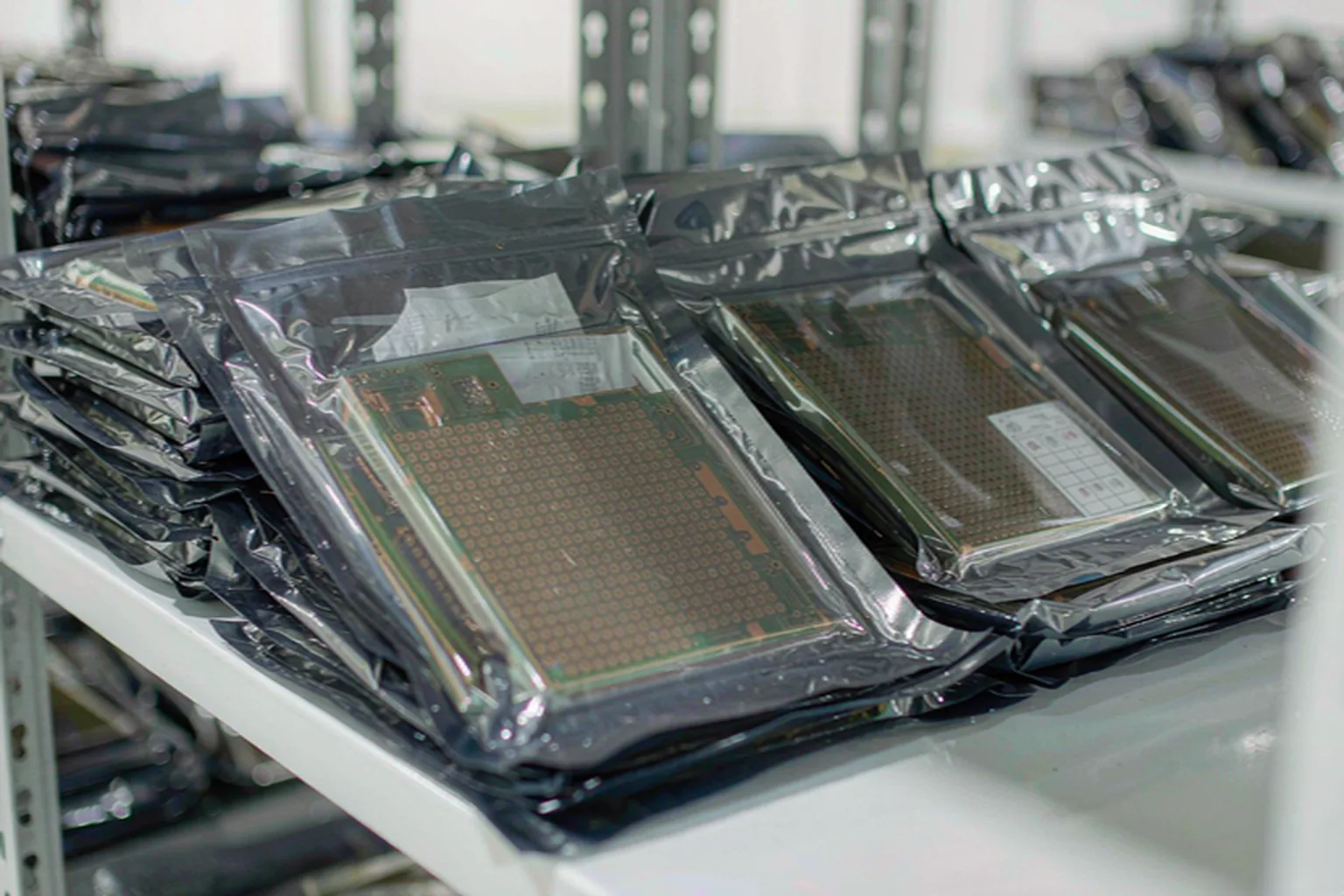
- Keep boards in their vacuum-sealed, moisture-barrier bags with desiccant and humidity indicator cards until the moment placement starts
- Hold the storage area at room temperature — 15 to 30 °C — with relative humidity below 60%, and away from windows or direct sunlight
- Open the bag only when assembly is scheduled the same day, starting with first-side placement
- Track received dates in a FIFO ledger so the oldest batch is always the next to place, and flag anything that crosses the three-month line
The humidity indicator card is the cheap early warning: if the card has shifted color inside a sealed bag, the seal is suspect and the batch should not wait for its calendar date. Incoming inspection teams that already check laminate condition on receipt — as described in this site’s incoming laminate quality guide — can add bag integrity and indicator status to the same routine.
Reflow Cycles: Why Double-Sided Assembly Spends the Budget
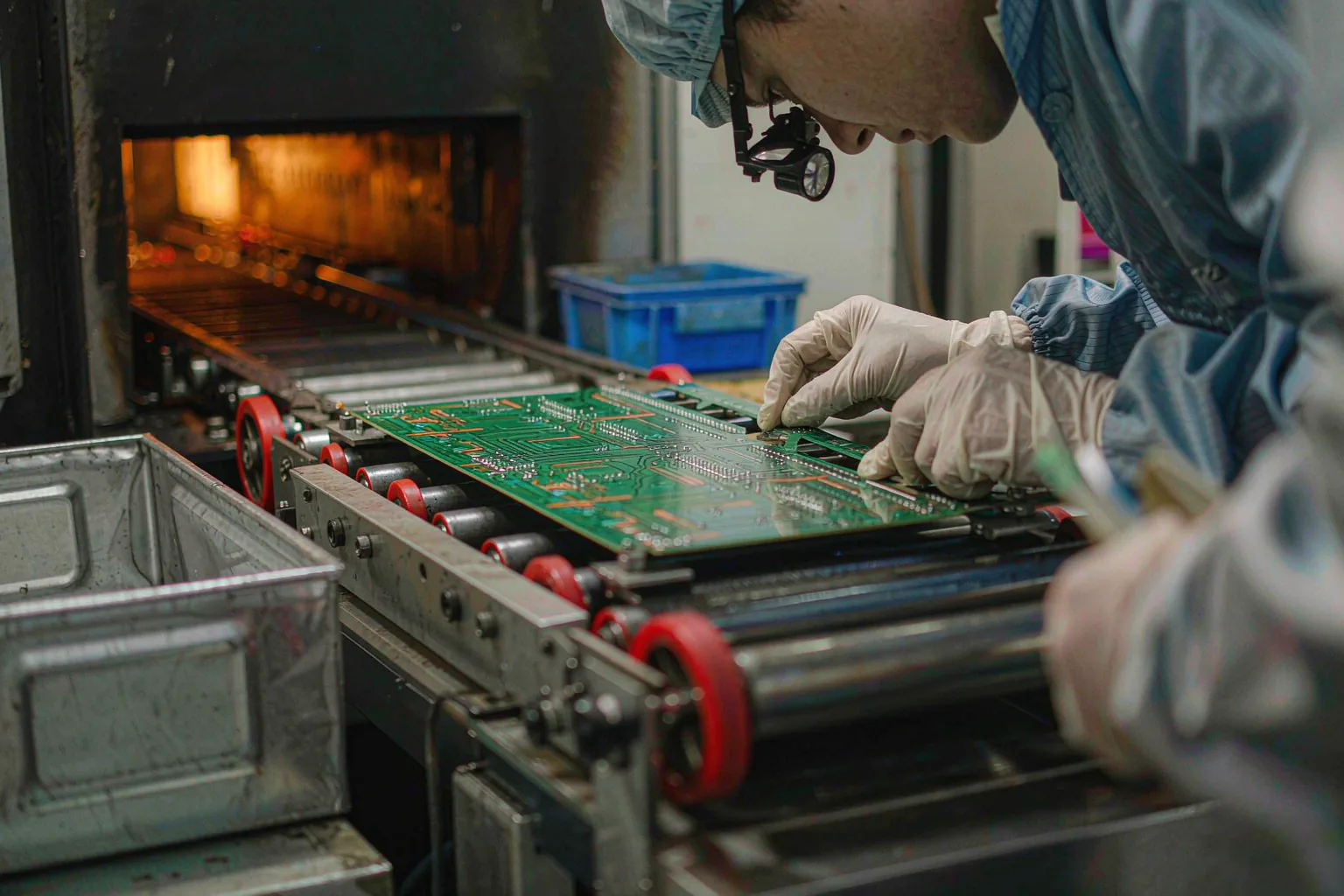
Every reflow pass pushes the film past its comfortable temperature range once. After the first cycle the film has done its job protecting the pads through preheat and the peak, but its remaining headroom is reduced. A single-sided OSP board consumes one cycle and assembles normally. A double-sided board consumes two — which is why the working guidance is to plan OSP assembly around one to two reflow passes.
The practical scheduling rule that falls out of this: when a bag is opened for first-side placement, complete second-side printing and reflow without parking the panels for days in between. If a design genuinely needs three or more thermal passes — mixed-technology boards with a rework-heavy profile, for example — the finish conversation should happen at design time, because OSP is the wrong answer at that point. Metal finishes such as ENIG tolerate repeated thermal exposure far better, which is the same reason their storage clock runs slower.
Expired OSP Batches: Signs, Tests and Disposition
Finding an expired batch in the warehouse is a disposition problem, not automatically a scrap problem. Work through the signs in order before deciding.
| Sign | How to check | Disposition |
|---|---|---|
| Copper discoloration | Visual check: pads dull rather than bright, or an iridescent oxide tint | Run a solderability sample before judging the whole lot |
| Wetting failure | First-article soldering shows non-wetting or dewetted pads | Stop the line for that batch; return the lot for re-finishing |
| Uneven or broken film | Microscope check shows patchy coverage or exposed copper | Cross-check batch records with the fabricator and plan rework |
| Overdue in the FIFO ledger | Received date beyond the agreed window | Do not assemble directly; send for re-OSP processing |
One rule deserves its own paragraph: do not bake OSP boards. High-temperature drying — the standard moisture-recovery move for other finishes — accelerates the very film degradation you are trying to reverse, and the film discolors and fails faster. Where an OSP batch has absorbed moisture or aged past its window, the correct path is rework: the old film is stripped in a mild process and fresh OSP is applied, restoring a solderable surface at a fraction of scrap cost. The reworked batch then restarts its clock with fresh batch documentation — the same traceability discipline described in the outgoing inspection report guide.
OSP vs ENIG vs HASL: Matching the Finish to Inventory Turnover
Once the storage clock is visible, finish selection becomes an inventory question as much as a technical one. The commonly cited planning windows line up like this:
| Finish | Commonly cited shelf life | Pad flatness | Reflow tolerance | Best fit |
|---|---|---|---|---|
| OSP | About 3 months, up to 6 in strict storage | Flat; ideal for fine-pitch BGA | 1–2 passes | Fast-turn projects with tight consumption schedules |
| HASL | About 6–12 months | Uneven surface from the solder meniscus | Multiple passes | General-purpose builds with moderate storage time |
| ENIG | About 12–24 months | Flat; excellent for fine-pitch and wire bonding | Multiple passes | Long-cycle products, high-reliability builds, buffered inventory |
The decision reduces to one question: how long will the boards realistically wait before assembly? A consumer product moving through placement within weeks fits OSP comfortably. Equipment boards that get built in batches across quarters — industrial controls, energy-storage cabinets, anything a distributor stocks — carry real risk on OSP, and the 10-layer HDI industrial-control board page shows the kind of build where a longer-window finish is usually worth its cost. Storage-heavy storage products sit between the two: the 4-layer SATA SSD carrier board example is typically consumed on a steady schedule where OSP remains workable with FIFO discipline. For the plating-level details of the metallic alternative, see the ENEPIG pros, cons and specification guide, and for the wider standards landscape the Global Electronics Association hosts the current document index.
Ordering OSP Boards: What to Specify and How to Batch
Two ordering habits prevent most OSP surprises. First, write the finish down explicitly — surface finish “OSP” with the expected film thickness noted, not a blank field a scheduler fills by preference. Second, size the batch to the consumption window: order quantities the line can place inside the first storage window rather than half a year of stock in one shipment, and confirm the delivery schedule at engineering review so shipments land when placement is ready.
Batch splitting also protects quality on both ends: smaller, staggered deliveries keep the FIFO ledger honest, and each lot arrives with its own packaging, desiccant and batch documentation. Projects that need the full parameter set before ordering — thickness, copper weights, impedance alongside the finish line — can work through the prototype order checklist, and the material-level context sits on the PCB materials and laminates pillar page.
Frequently Asked Questions
How long is the shelf life of an OSP PCB?
The industry planning number for OSP PCB shelf life is about three months from shipment to assembly when vacuum packaging is intact and boards are stored at room temperature and dry. Under strictly controlled storage the safe ceiling extends to roughly six months. Beyond that, wetting failures become likely, so the batch should move to a solderability check and rework rather than direct assembly.
Can OSP boards that passed their shelf life still be used?
Not directly on the line. First inspect the pads for discoloration and run a solderability sample on a few panels. If wetting is sound, the batch can be prioritized for immediate use; if pads fail to wet, the lot goes back for re-finishing. Rework — stripping the old film and re-applying OSP — is routine and far cheaper than scrapping the boards.
Can OSP PCBs be baked to remove moisture?
No. OSP is an organic film, and baking accelerates its degradation and discoloration instead of restoring solderability — the opposite of the logic used for moisture recovery on metallic finishes. A damp or aged OSP batch should go through the strip-and-recoat rework process, which is the reliable way to bring the surface back to a solderable state.
How many reflow cycles can an OSP board survive?
Plan on one to two reflow passes. Single-sided assembly uses one; double-sided boards consume two, which is the practical ceiling. A third pass carries a clearly rising risk of wetting failure because each thermal cycle degrades the film further. Designs that need three or more thermal exposures should be specified with a metallic finish such as ENIG from the start.
OSP or ENIG — which finish should I choose?
Ask how long the boards will wait before assembly. OSP costs less, keeps pads flat for fine-pitch placement, and fits fast-turn projects consumed within its storage window. ENIG carries a much longer storage window of roughly 12 to 24 months, tolerates multiple reflow passes, and suits high-reliability or inventory-buffered builds. If warehouse time is uncertain, pay for the metal finish.
What storage conditions does an OSP PCB need?
Keep boards in vacuum-sealed moisture-barrier bags with desiccant and a humidity indicator card, stored at 15 to 30 °C and below 60% relative humidity, away from direct light. Open the bag only when placement is scheduled the same day, run first-side assembly immediately, and never re-seal partially placed panels for later use. A shifted humidity indicator means the seal is suspect.
What should I note on the order for OSP boards?
Specify surface finish OSP with the expected film thickness, and attach the full technical set: Gerber files, finished thickness, copper weights, quantities and the delivery schedule. Ask for batch sizes aligned to your consumption window, and confirm storage guidance in the shipping documentation. Impedance-controlled or heavy-copper designs should list those requirements as separate line items.
Submit Your Gerbers for a Surface Finish and Storage Plan
Match the finish to the consumption schedule before the order, not after the batch ages. Send your Gerber package with finished thickness, copper weights, surface finish preference, quantities and delivery expectations through the PCB manufacturing services page. Production spans 2 to 30 layers with prototype builds reviewed case by case up to 64 layers, and the engineering review confirms the finish, film thickness and batching plan together — the 6-layer rigid-flex build page shows a representative application review.
998 PCB Group, founded in 2006, runs three plants in Shenzhen, Jiangxi and Anhui with an annual capacity of 3,000,000 m². Batch deliveries to your placement schedule, batch documentation with every lot, and finish-fit feedback come back with the engineering review.