Book Appointment Now
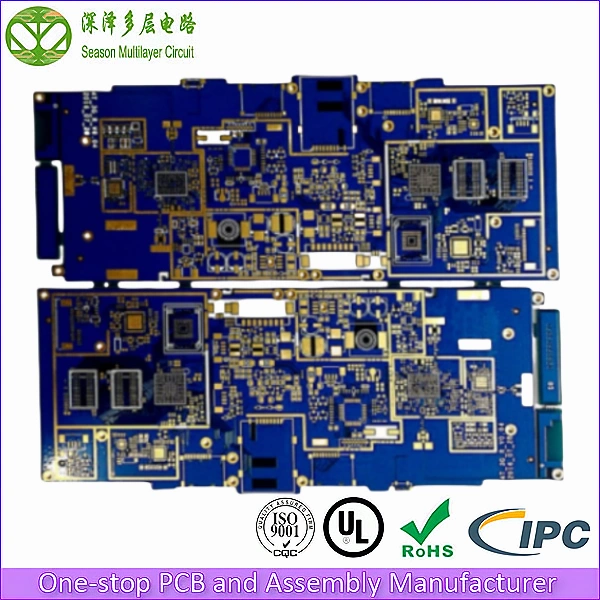
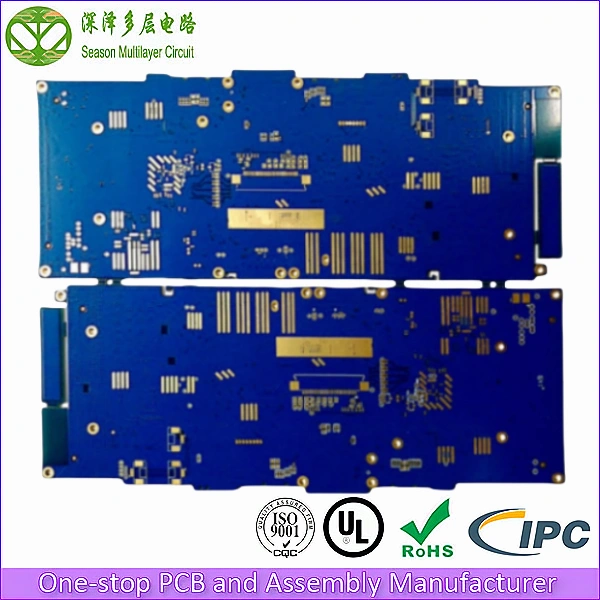
6-Layer HDI Rearview Mirror PCB
Premium HDI PCBs — dedicated rearview mirror PCB manufacturing for smart automotive mirrors with integrated displays, touch controls, and ADAS sensor connectivity. Compact. Reliable. High-density interconnect.
Modern automotive rearview mirrors have evolved far beyond simple reflective glass. Today’s smart mirrors incorporate LCD displays, backup camera feeds, blind-spot monitoring, and touch-sensitive controls — all demanding sophisticated PCB architecture. At Season Multilayer Circuit, we manufacture 6-layer HDI rearview mirror PCBs with blind and buried vias that deliver the density, signal integrity, and thermal reliability your automotive electronics require.
1+4+1
Layer Count
3/3 mil
Min. Trace/Space
0.10 mm
Min. Via Diameter
Tg 180
Glass Transition Temp
1–2 µ”
ENIG Gold Thickness
ISO 9001:2015
ISO 14001
UL (E305905)
IPC Class 2 / Class 3
IATF 16949
RoHS
6-Layer HDI Rearview Mirror PCB Stackup Diagram
Our 6-layer HDI stackup is optimized for automotive rearview mirror applications, combining high-density interconnect technology with robust signal integrity for display driver circuits, camera interfaces, and sensor connectivity.
- Top Layer (Copper/Plated): Component placement, fine-pitch BGA, display driver ICs
- Inner Layer 2 (Ground Plane): Reference shielding for L1 and L3 signal layers
- Inner Layer 3 (Signal Layer): Controlled impedance routing for camera and display signals
- Inner Layer 4 (Power Plane): Dedicated power distribution for 12V/5V/3.3V rails
- Inner Layer 5 (Signal Layer): Secondary routing with buried via connections
- Bot Layer (Copper/Plated): Bottom routing and thermal dissipation pad
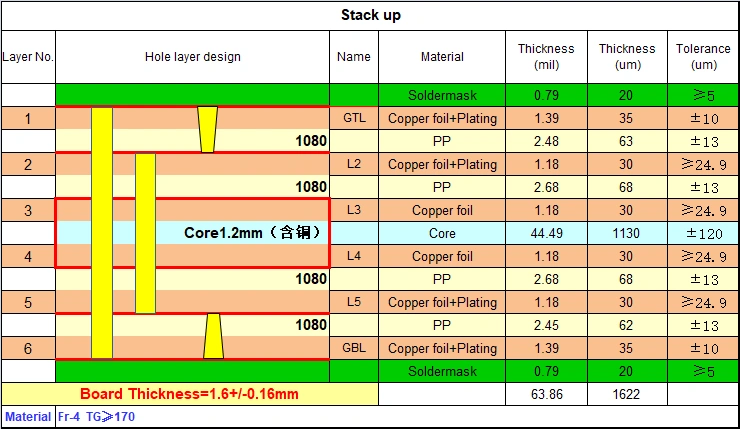
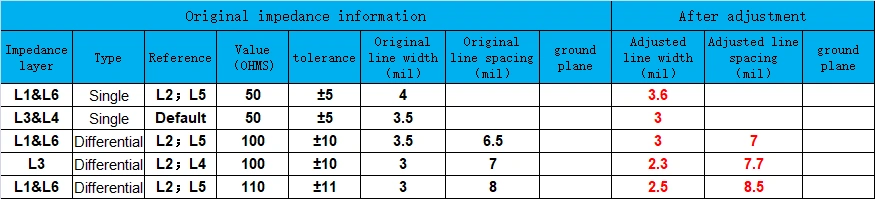
If your current trace widths and spacings fall outside strict impedance tolerance zones, our engineering team will design the optimal stackup architecture for your specific layout, making micro-adjustments to guarantee your board performs exactly as intended.
Technical Capability & Specifications
| Parameter | Specification | Advanced Capabilities |
|---|---|---|
| Layer Count | 6 Layer HDI (1+4+1) | 2-32L (Mass); 2-64L (Sample) |
| Base Material | FR-4 S1000-2M Tg 180 | SY, NY, TUC, ZY, EMC, KB, ITEQ, Rogers, Megtron, Nelco, Isola |
| Board Thickness | 1.6mm | 0.2-6.4mm (Mass); 0.15-20mm (Sample) |
| Panel Size | 138x162mm/2 | 800x600mm (Mass); 1050×610 (Sample) |
| Copper Thickness | Outer: 1 oz Inner: 1 oz | Outer: 1/3–12 oz Inner: 1/4–12 oz |
| Min Drill Size | 0.10mm (Laser) | 0.075mm (Laser Sample) |
| Min Trace Width/Spacing | 3/3 mil | 1.6/1.6 mil (Sample) |
| Blind Via | 0.10mm Laser | 0.075mm Laser (Sample) |
| Buried Via | 0.2mm Mechanical | 0.127mm (Sample) |
| Surface Finish | ENIG | HASL, OSP, Immersion Silver, Immersion Tin, ENIG, ENEPIG |
| Solder Mask | Blue | Green, Black, Blue, Red, Yellow, White, Purple |
| Impedance Control | 50/85/100 Ohm +/-8% | +/-5% available for ultra-high-speed |
Key Advantages of Our Rearview Mirror PCB
- Ultra-Compact Form Factor: HDI blind and buried vias enable 40% smaller board footprint compared to conventional through-hole designs, fitting perfectly within the slim profile of modern smart rearview mirrors.
- Superior Signal Integrity: Controlled impedance routing (50/85/100 ohm +/-8%) ensures clean transmission of high-speed display signals and camera data feeds without artifacts or latency.
- Automotive-Grade Reliability: IATF 16949 certified manufacturing with High-TG FR4 (Tg 180) substrate withstands extreme temperature cycling from -40C to 125C in automotive environments.
- Laser-Drilled Microvias: 0.10mm laser-drilled blind vias provide high-density interconnects for fine-pitch BGA packages used in display driver ICs and image signal processors.
- ENIG Surface Finish: 1-2 microinch gold over nickel provides excellent solderability and contact reliability for wire bonding and press-fit connectors in automotive applications.
Overcoming Critical Challenges in Smart Mirror Design
When sourcing HDI PCBs for automotive rearview mirror applications, electronic buyers and engineers routinely encounter three major failure points. Here is how our engineering team eliminates them:
1. Display Signal Degradation & Flickering
The Problem: Low-quality PCB stackups cause electromagnetic interference (EMI) and impedance mismatch, leading to display flickering, color distortion, and frame drops in LCD mirror displays. This is unacceptable in safety-critical automotive applications.
Our Solution: Our 6-layer HDI architecture uses tightly coupled ground planes (L2, L5) to shield high-speed display signals. Every signal layer has a dedicated ground reference, ensuring clean return paths and minimal EMI. The result: stable, artifact-free display performance even in electrically noisy automotive environments.
2. Thermal Stress in Enclosed Mirror Housings
The Problem: Smart rearview mirrors are sealed inside compact housings with no ventilation, causing rapid heat buildup from display drivers and processing chips. Internal temperatures can exceed 85C, leading to IC failure and delamination.
Our Solution: We use premium High-TG FR4 materials (Tg 180) with optimized thermal via arrays under hot components. The inner power plane (L4) acts as a thermal spreader, distributing heat evenly. For extreme environments, we offer heavy copper pours and metal-core options.
3. Space Constraints for Multi-Function Integration
The Problem: Modern smart mirrors must integrate display drivers, camera interfaces, touch controllers, and wireless modules in an extremely compact form factor. Standard PCBs simply cannot fit the required component density.
Our Solution: Our HDI technology with laser-drilled blind/buried vias enables 40% higher component density than conventional boards. Channels between components can be routed through inner layers with buried vias, eliminating the need for large through-holes that waste routing space.
Where Our Rearview Mirror PCBs Are Used
Our 6-layer HDI rearview mirror PCBs are deployed across a wide range of automotive mirror applications:
- Smart Digital Rearview Mirrors: LCD-based mirrors displaying real-time backup camera feeds with wider field of view than conventional mirrors.
- Blind-Spot Detection Mirrors: Mirrors with integrated LED indicators and side-camera connectivity for enhanced driver awareness.
- Auto-Dimming Mirrors: Electrochromic mirror assemblies with built-in light sensors and dimming control circuitry.
- ADAS Display Mirrors: Mirrors integrated with navigation overlays, speed display, and forward-collision warning alerts.
- Commercial Vehicle Camera Mirrors: Heavy-duty mirror replacement systems for trucks and buses using camera-monitor systems per UN R46.
Our Quality Guarantee for Rearview Mirror PCBs
Automotive mirror electronics operate in harsh environments and cannot tolerate failures. We implement rigorous testing protocols on every board:
- 100% AOI Inspection: Automated Optical Inspection scans every layer for trace breaks, shorts, and alignment errors before lamination.
- 100% Electrical Testing (E-Test): Flying probe or fixture-based testing verifies continuity and isolation on every finished board.
- Controlled Impedance Testing: Dedicated Polar Instruments impedance test report with every batch documenting compliance.
- X-Ray Inspection: Available for BGA and QFN packages to verify solder joint integrity on fine-pitch display driver packages.
- Certifications: ISO 9001:2015, ISO 14001, IATF 16949, UL (E305905), RoHS compliant. IPC Class 3 available for safety-critical applications.
Why Choose Season PCB for Your Rearview Mirror PCB?
With nearly 20 years of experience in Season Multilayer Circuit has served over 8,000 global clients in industries including automotive electronics, consumer devices, medical devices, and telecommunications. Our three manufacturing facilities (Shenzhen, Anhui, and Jiangxi) provide combined capacity for both rapid prototyping and high-volume mass production.
We understand that automotive mirror electronics demand zero-defect reliability. That is why every 6-layer HDI rearview mirror PCB we ship is backed by:
- Free DFM file checking before production — we catch design issues before they become manufacturing defects
- 24/7 dedicated engineering support — real engineers, not chatbots, available around the clock
- Guaranteed on-time delivery — we respect your project timelines
- No minimum order quantity — from 1 prototype to 100,000+ units
- Engineering fee waivers on bulk production orders
Season PCB specializes in HDI rearview mirror PCB manufacturing for automotive display and camera applications. Our rearview mirror PCB products feature high-density interconnect technology, blind and buried vias, and reliable signal integrity. Each rearview mirror PCB meets IATF 16949 automotive standards.
Display-side builds on the same 1+4+1 HDI stackup are covered on our 6-layer HDI LED display PCB page.
For your automotive mirror PCB needs, Season PCB provides fast turnaround, competitive pricing, and IATF-certified quality. Contact us for rearview mirror PCB manufacturing today.
Our rearview mirror PCB boards comply with UL safety certifications and IPC manufacturing standards. Each rearview mirror PCB undergoes thermal stress testing and signal integrity verification. For volume production, the same stackup runs on 998PCB Group’s advanced HDI PCB lines at the group’s Shenzhen campus.
Frequently Asked Questions
Why use HDI technology for rearview mirror PCBs?
Smart rearview mirrors integrate LCD displays, camera interfaces, touch sensors, and wireless modules in an extremely compact form factor. HDI technology with laser-drilled blind and buried vias enables the high component density and fine-pitch routing required, which is impossible with conventional through-hole PCBs.
What is the minimum via size you can achieve for HDI mirror PCBs?
Our standard minimum blind via size is 0.10mm using laser drilling. For sample production, we can achieve 0.075mm laser-drilled microvias. Buried vias are typically 0.15mm mechanical, with 0.127mm available for samples.
What automotive certifications do you hold?
We are IATF 16949 certified for automotive electronics manufacturing, in addition to ISO 9001:2015, ISO 14001, UL (E305905), and RoHS compliance. IPC Class 3 manufacturing is available for safety-critical automotive applications.
What materials and stackup options are available for the 6-layer HDI mirror PCB?
The standard build is a 1+4+1 HDI stackup on FR-4 S1000-2M (Tg 180), with SY, NY, TUC, ZY, EMC, KB, ITEQ, Rogers, Megtron, Nelco, and Isola laminates available on request. Board thickness is 1.6mm standard (0.2-6.4mm range) with 1 oz copper on outer and inner layers. ENIG is the standard surface finish, with HASL, OSP, immersion silver, immersion tin, and ENEPIG optional. Solder mask is blue as standard, with green, black, red, yellow, white, and purple available. Controlled impedance of 50/85/100 ohm at +/-8% is supported, with +/-5% for ultra-high-speed designs.
How do you verify quality on automotive mirror PCBs?
Every board passes 100% AOI, which scans each layer for trace breaks, shorts, and alignment errors before lamination, plus 100% electrical testing by flying probe or fixture. A Polar Instruments impedance test report accompanies every batch, and X-Ray inspection is available for BGA and QFN packages. We are certified to ISO 9001:2015, ISO 14001, IATF 16949, UL (E305905), and RoHS, with IPC Class 3 manufacturing available for safety-critical automotive applications.
Ready to start your Rearview Mirror PCB project?
Whether you need 5 pieces for prototyping or 50,000 for mass production, our engineering team is ready to support your project with DFM review, impedance modeling, and fast-turn fabrication.
Tel: (+86) 18681528532 (WhatsApp)
E-mail: roc@season-pcb.com