The Ultimate Guide to PCB Fire Resistance Rating
In the rapidly evolving world of electronics, safety is no longer a luxury—it is a necessity. At the heart of every electronic device lies the Printed Circuit Board (PCB), a critical component that not only facilitates electrical connections but also plays a pivotal role in the device’s overall safety profile. One of the most crucial yet often overlooked aspects of PCB design is its PCB Fire resistance rating.
This comprehensive guide will walk you through everything you need to know about this essential safety metric, from its definition and testing methodologies to how it directly impacts the reliability of your electronic products.
I.Understanding PCB Fire Resistance Rating
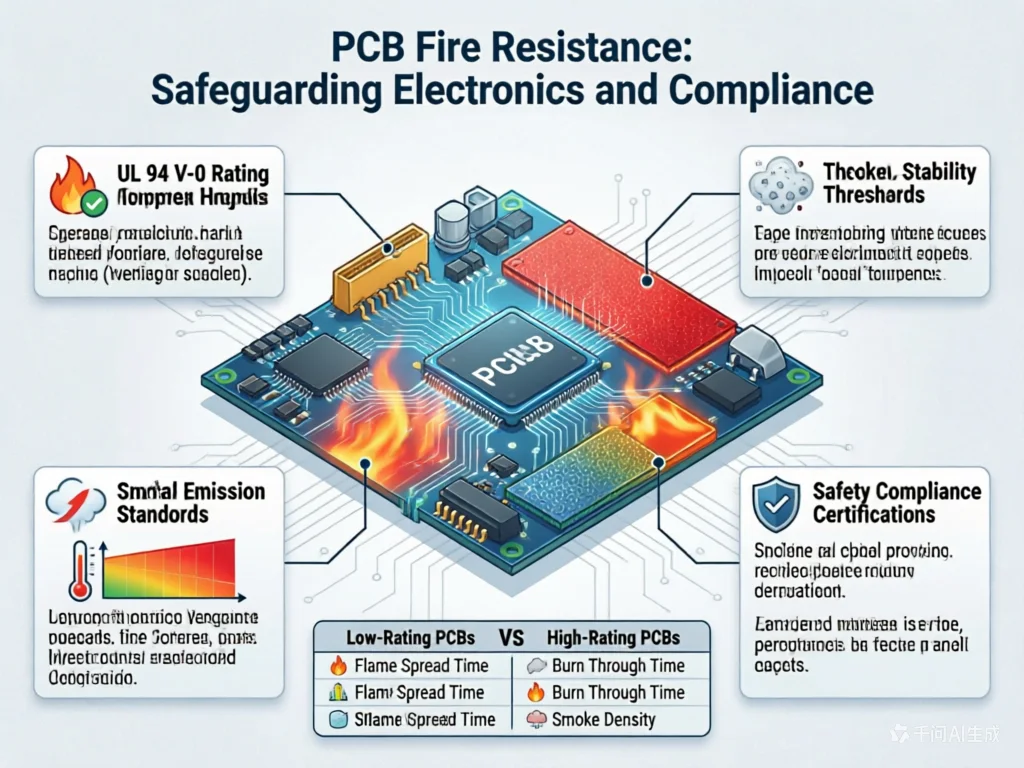
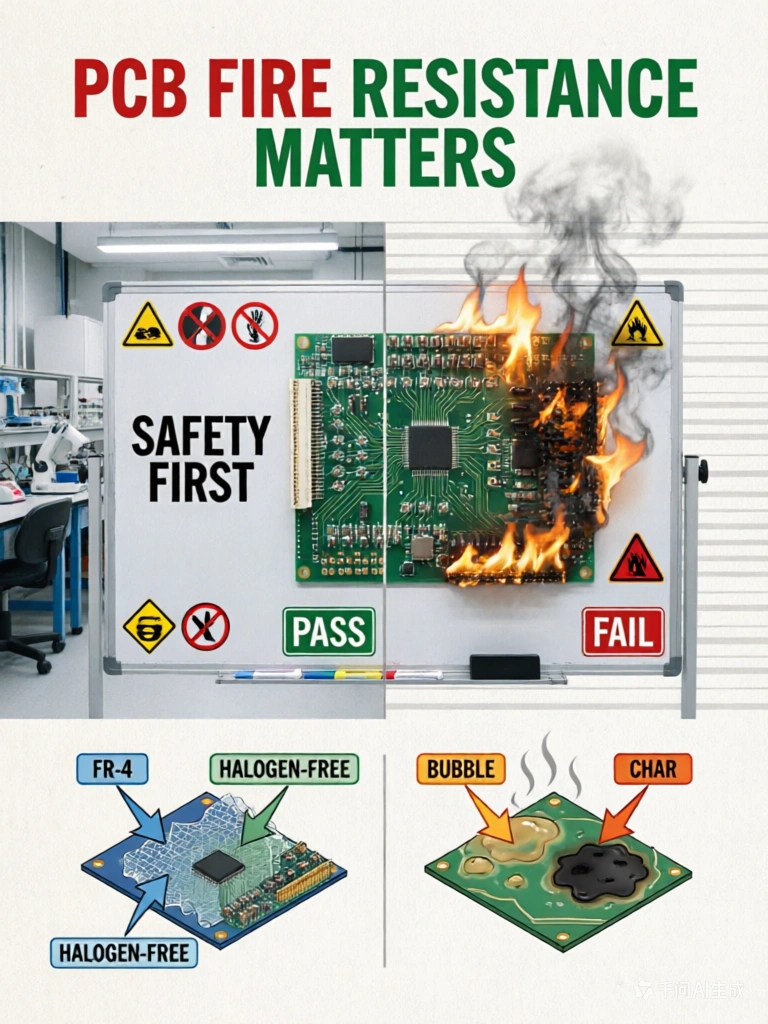
The PCB Fire resistance rating refers to the ability of a printed circuit board to resist burning or spreading flames when exposed to a fire source. It is a standardized measure of the flammability of the materials used in PCB fabrication, primarily the resin and laminate substrates like FR-4.
Why is this important? In the event of an electrical short circuit, overheating, or external fire, a PCB with a poor fire rating can act as fuel, accelerating the spread of fire and endangering both property and lives. Conversely, a high-rated PCB will self-extinguish, providing a vital buffer for safety mechanisms to activate or for users to evacuate.
Globally, these ratings are determined by rigorous testing standards set by organizations such as Underwriters Laboratories (UL) and the International Electrotechnical Commission (IEC). These standards ensure that electronic devices, ranging from smartphones to industrial machinery, meet specific safety criteria before reaching the market.
2.How is Fire Resistance Tested?
To determine the PCB Fire resistance rating, manufacturers subject material samples to controlled laboratory tests. The most common methods include:
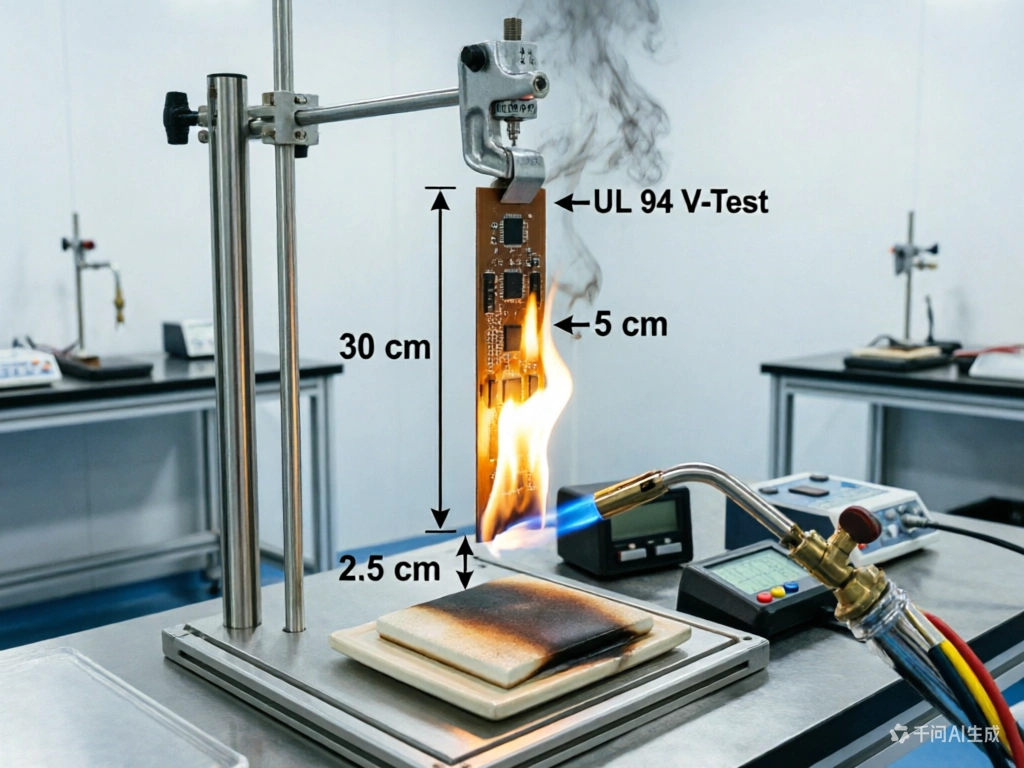
1. Vertical Burn Test (UL 94 V-Test): This is the gold standard for assessing PCB materials. In this test, a small sample of the PCB material is held vertically and subjected to a calibrated flame for a specific duration. The critical observation is how the material behaves after the flame is removed.
- Does it continue to burn?
- Does it drip flaming particles?
- How long does it take to self-extinguish?
2. Horizontal Burn Test (UL 94 HB): While less stringent than the vertical test, this method assesses the material’s ability to resist flame propagation when lying flat. It is generally used for materials that are not intended to be the primary structural component in vertical applications.
These tests provide quantitative data that classify the material into specific grades, ensuring engineers can select the right material for the right environment.
III.Decoding the UL 94 Rating System
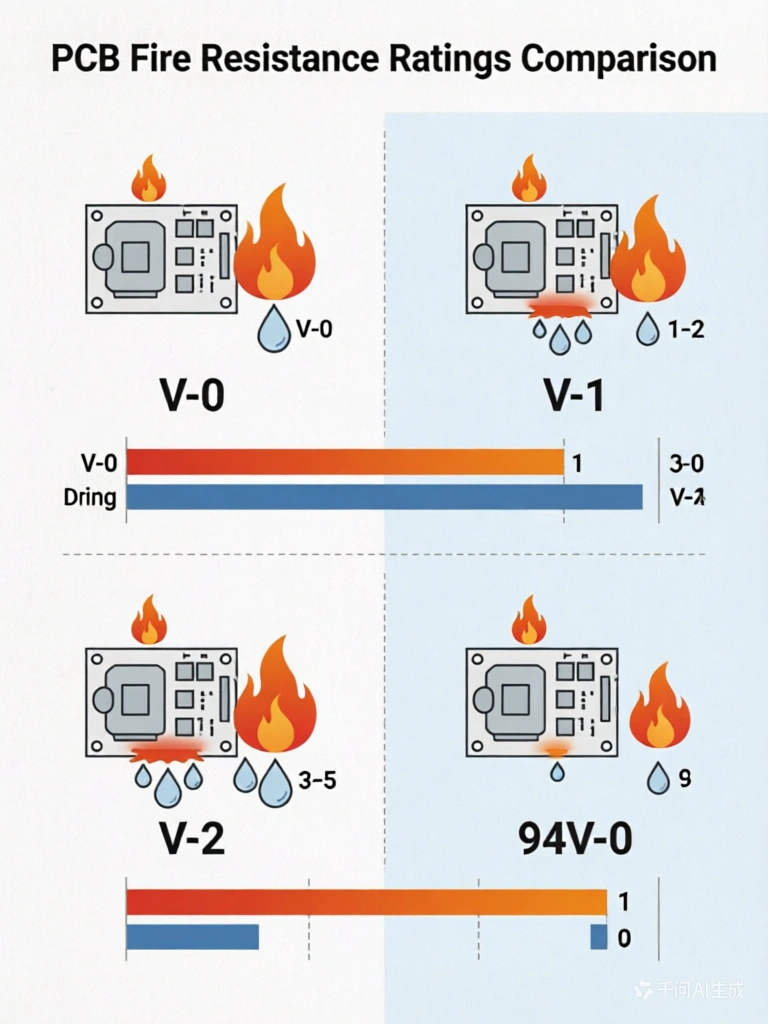
The UL 94 standard defines several grades of fire resistance. For PCBs, the most relevant classifications are the V-series ratings. Understanding the hierarchy of these ratings is essential for making informed design choices.
| Rating | Flame Duration | Dripping | Performance Summary |
| V-0 | < 10 seconds | No | Best resistance; stops burning almost immediately. |
| V-1 | < 30 seconds | No | Good resistance; extinguishes within half a minute. |
| V-2 | < 30 seconds | Yes | Moderate resistance; extinguishes but allows dripping. |
| 94V-0 | < 60 seconds | No | Industry standard for high-reliability PCBs. |
- V-0 (The Premium Standard): This is the highest level of fire resistance for plastic materials. A V-0 rated PCB will stop burning within 10 seconds after the ignition source is removed and will not drip flaming particles. This rating is often mandatory for consumer electronics and medical devices.
- V-1 (High Resistance): Slightly less stringent than V-0, a V-1 rated material will self-extinguish within 30 seconds. While it does not allow flaming drips, it has a longer burn time allowance compared to V-0.
- V-2 (Moderate Resistance): Similar to V-1 in burn time, but the critical difference is that V-2 materials are allowed to drip flaming particles while burning. This makes them less suitable for applications where falling sparks could ignite other components.
- 94V-0 (The Industry Benchmark): In the PCB industry, achieving a 94V-0 rating is often the baseline requirement. This means that after two applications of the test flame, the material must stop burning within 60 seconds and show no evidence of flaming droplets. This specific rating ensures that even under duress, the PCB will not contribute significantly to a fire hazard.
IV.The Critical Link Between Fire Rating and Product Safety
Selecting the correct PCB Fire resistance rating is not just about passing a certification test; it is about engineering safety into the DNA of a product. The implications of this choice are profound:
1. Reducing the Risk of Fire Outbreak High fire-rated PCBs act as a barrier to ignition. Materials with a V-0 or 94V-0 rating are formulated with flame-retardant additives (often bromine-based) that inhibit combustion. By choosing these materials, manufacturers significantly lower the probability of a fire starting within the device due to internal component failure.
2. Slowing Down Fire Propagation In the unfortunate event that a fire does start, a PCB with a high fire resistance rating will not act as a highway for the flames. Instead, it will char and form a protective layer, depriving the fire of oxygen and fuel. This containment is crucial as it buys valuable time for automatic shutdowns, fire suppression systems, or human intervention.
3. Mitigating Loss and Liability Fires in electronic devices can lead to catastrophic financial losses and damage to brand reputation. High fire resistance translates to higher reliability. It reduces the likelihood of total device destruction and, more importantly, minimizes the risk of injury to users. In sectors like aerospace, automotive, and healthcare, adhering to strict PCB Fire resistance rating standards is not optional—it is a legal and ethical imperative.
Conclusion: Choosing the Right Material
In conclusion, the PCB Fire resistance rating is a non-negotiable parameter in modern electronics design. It is a testament to the quality of the base materials and the manufacturer’s commitment to safety. Whether you are designing a simple power supply or a complex server rack, understanding the differences between V-0, V-1, V-2, and the industry-standard 94V-0 is essential.
When sourcing PCBs, always verify the UL certification of the laminate supplier. Do not compromise on this specification, as the cost of a fire-resistant material is negligible compared to the potential cost of a fire. By prioritizing high fire resistance, you are not just building a circuit board; you are building trust, reliability, and safety into every product you release to the world.