
What is a Heavy Copper PCB? The Definitive Industrial-Grade High-Durability Circuit Board
A Heavy Copper PCB is an advanced electronic printed circuit board that utilizes thick copper foil as the conductive layer. Renowned for exceptional electrical conductivity, superior heat resistance, robust mechanical strength, and long-term operational reliability, it plays an irreplaceable role in power conversion, electronic signal processing, and high-current transmission scenarios. This comprehensive guide dives deep into the definition, technical characteristics, manufacturing workflow, mainstream applications, and emerging development trends of the product.
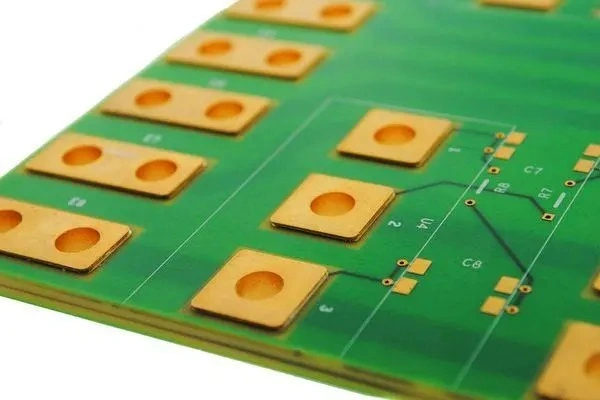
1. Basic Definition of Heavy Copper PCB
The most distinct difference between a heavy copper PCB and a conventional printed circuit board lies in the thickness of the copper conductive material. Generally, the copper foil thickness exceeds 1.0 mm, and in some customized industrial models, it can even reach several millimeters. The extra-thick copper layer endows the circuit board with enhanced electrical conductivity and mechanical stability, making it uniquely suitable for high-load industrial electronic equipment.
2. Core Technical Characteristics
The product stands out in the electronics manufacturing industry due to superior comprehensive performance. Its key technical features are summarized as follows:
2.1 Excellent Electrical Conductivity
Featuring ultra-low resistance, the board sustains far higher current loads than standard PCBs. The thick copper conductive layer minimizes current loss and heat generation during operation, which makes it the optimal choice for high-current transmission and power conversion systems.
2.2 Outstanding Heat Resistance
Thanks to the thick copper foil structure, it has remarkable thermal stability. It can maintain stable electrical conductivity and complete mechanical integrity under extreme high-temperature working environments, effectively avoiding performance degradation caused by heat accumulation.
2.3 High Mechanical Strength
The dense copper layer greatly improves mechanical toughness. It can withstand strong external pressure and physical impact without deformation or structural damage, adapting to harsh industrial operating conditions.
2.4 Superior Long-Term Reliability
With stable physical and chemical properties, the board has an extended service life. It rarely suffers from circuit failures, short circuits, or aging defects during long-term continuous operation, reducing equipment maintenance costs.
2.5 Reliable Insulation Performance
High-quality insulating substrates are adopted for dielectric layers. These premium insulating materials effectively isolate circuits, prevent current leakage and short-circuit risks, and ensure the safe operation of electronic devices.
3. Manufacturing Process of Heavy Copper PCB
The production requires sophisticated manufacturing technology and strict quality control standards. The standardized production workflow is listed below:
3.1 Insulation Substrate Fabrication
The production starts with insulating substrate manufacturing. Glass fiber cloth is the most commonly used raw material due to its excellent insulation and heat resistance. The raw materials are cut and processed into customized sizes to form the basic framework of the PCB.
3.2 Circuit Pattern Formation
Thick copper foil with a thickness ranging from 0.1 mm to 0.4 mm is applied to create circuit traces. Precision etching and advanced machining techniques are utilized to carve accurate circuit patterns and meet customized wiring requirements.
3.3 Lamination Treatment
Professional laminating machines are used to bond the insulating substrate and copper circuit layers tightly. This lamination process enhances the overall hardness and structural strength of the PCB, preventing layer separation in complex working environments.
3.4 Precision Drilling
High-precision drilling equipment perforates the finished boards to create through-holes for electrical connection between components. Strict drilling tolerance standards ensure assembly compatibility.
3.5 Comprehensive Inspection and Testing
All finished boards undergo rigorous testing procedures, including electrical performance tests and mechanical strength tests. Unqualified products are eliminated to ensure every PCB meets industrial quality specifications.
4. Main Application Fields
Benefiting from high current resistance, heat resistance, and durability, the board is widely applied in high-end industrial and electronic fields:
4.1 Power Converters
It is a core component of power converters. Power converters equipped with the board feature high energy conversion efficiency, high power density, and long service life, widely used in new energy power generation, power transmission, and industrial automation systems.
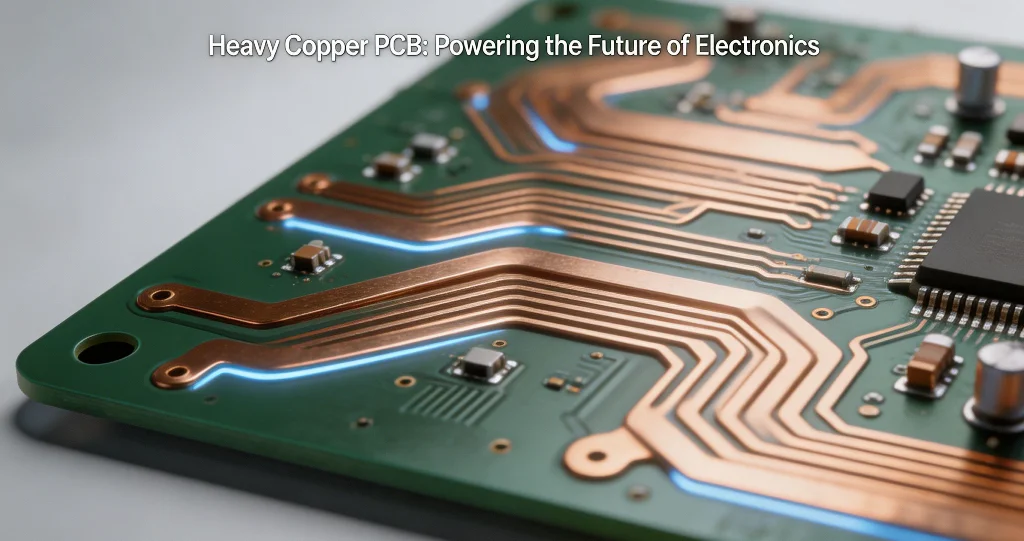
4.2 Motor Controllers
As a key carrier of motor control systems, it enables controllers to achieve fast response and high energy efficiency. They are extensively applied in electric vehicles, intelligent robots, and aerospace equipment.
4.3 On-Board Chargers
In the electric vehicle industry, it serves as an essential part of on-board chargers. It improves charging efficiency and power density, ensuring stable and safe charging performance for new energy vehicles.
4.4 Communication Equipment
The board supports high-speed data transmission and stable signal processing. It is commonly embedded in communication base stations, switches, and routers to optimize the overall performance and stability of communication hardware.
4.5 Industrial Automation Equipment
Industrial automated machinery and robots require high-temperature resistant and anti-interference circuit boards. The product perfectly meets these demands, guaranteeing the stable and safe operation of automated production lines.
4.6 Aerospace Industry
Aerospace equipment has extremely strict requirements for circuit board quality. It is used in the power control systems of aircraft and spacecraft, complying with stringent aerospace performance and safety standards.
4.7 Other Industrial Scenarios
Beyond the above fields, the board is also widely applied in medical devices, energy management systems, and high-precision electronic instruments.
5. Future Development Trends
With the continuous upgrading of global electronic manufacturing technology, heavy copper PCBs are evolving toward diversification and high-end optimization. The main development trends are as follows:
5.1 Higher Performance
Driven by industrial upgrading, the boards will be optimized for higher conductivity, thermal resistance, and mechanical strength to adapt to ultra-high load industrial equipment.
5.2 Lightweight and Slim Structure
To meet the miniaturization demand of modern electronic devices, manufacturers adopt advanced craftsmanship to reduce the overall thickness and weight while retaining high performance, improving product portability and flexibility.
5.3 Diversified Multifunctional Integration
Future products will break the single conductive function. They will integrate signal processing, power management, and temperature control functions to satisfy the complex functional requirements of intelligent electronic equipment.
5.4 Eco-Friendly Production
Under global environmental protection regulations, manufacturers will prioritize environmentally friendly, non-toxic raw materials for substrates and insulating layers. Green production processes will reduce industrial pollution and achieve sustainable development.
5.5 Customized Manufacturing Services
With the diversification of electronic equipment types, customized demands are rising. Manufacturers will provide personalized solutions covering size, thickness, and functional customization for different industrial clients.
5.6 Intelligent Upgrading
Combined with IoT and artificial intelligence technology, intelligent sensors and controllers will be embedded into the boards. This enables self-perception, self-regulation, and intelligent control, improving the automation level of terminal equipment.
Conclusion
As a high-performance and high-reliability electronic component, the heavy copper PCB has broad application prospects across power conversion, communication, industrial automation, and aerospace industries. With continuous technological innovation and growing market demand, manufacturers will keep optimizing production processes. In the future, it will provide more efficient, reliable, and eco-friendly circuit solutions for global electronic manufacturing industries.
FAQs About Heavy Copper PCB
Q1: What copper thickness is defined as a Heavy Copper PCB?
Generally, PCBs with a copper foil thickness over 1.0 mm are defined as heavy copper PCBs. For special industrial customization, the copper thickness can reach several millimeters, while standard PCBs usually have a copper thickness of only 0.035 mm to 0.1 mm.
Q2: What are the key advantages of Heavy Copper PCB over standard PCB?
Compared with ordinary PCBs, it has lower electrical resistance, stronger current-bearing capacity, better heat dissipation and heat resistance, higher mechanical durability, and longer service life. It is more suitable for high-current and high-temperature harsh working conditions.
Q3: What industries use Heavy Copper PCBs the most?
The top application industries include new energy vehicles (on-board chargers and motor controllers), power energy conversion, industrial automation, aerospace, and communication base station equipment. Medical high-precision instruments also adopt it for stable power supply.