How to Choose the Right PCB Solder Mask Ink
In the highly specialized world of PCB manufacturing, the selection of solder mask ink is a critical determinant of product quality, reliability, and market competitiveness. Often serving as the final protective layer, PCB solder mask ink not only provides electrical insulation and environmental protection but also significantly influences the assembly process and the end-user experience. With the global electronics industry demanding increasingly higher standards for durability and miniaturization, choosing the right solder mask is no longer a trivial decision but a strategic necessity.
This comprehensive guide aims to demystify the complex landscape of PCB solder mask ink. We will explore the fundamental criteria for evaluating ink performance, dissect the technical requirements necessary for modern electronics, and provide an in-depth analysis of the leading manufacturers dominating the market today. Whether you are a procurement manager sourcing materials for high-density interconnect (HDI) boards or an engineer troubleshooting adhesion issues, this article will equip you with the knowledge to make an informed choice.
I.Understanding PCB Solder Mask Ink
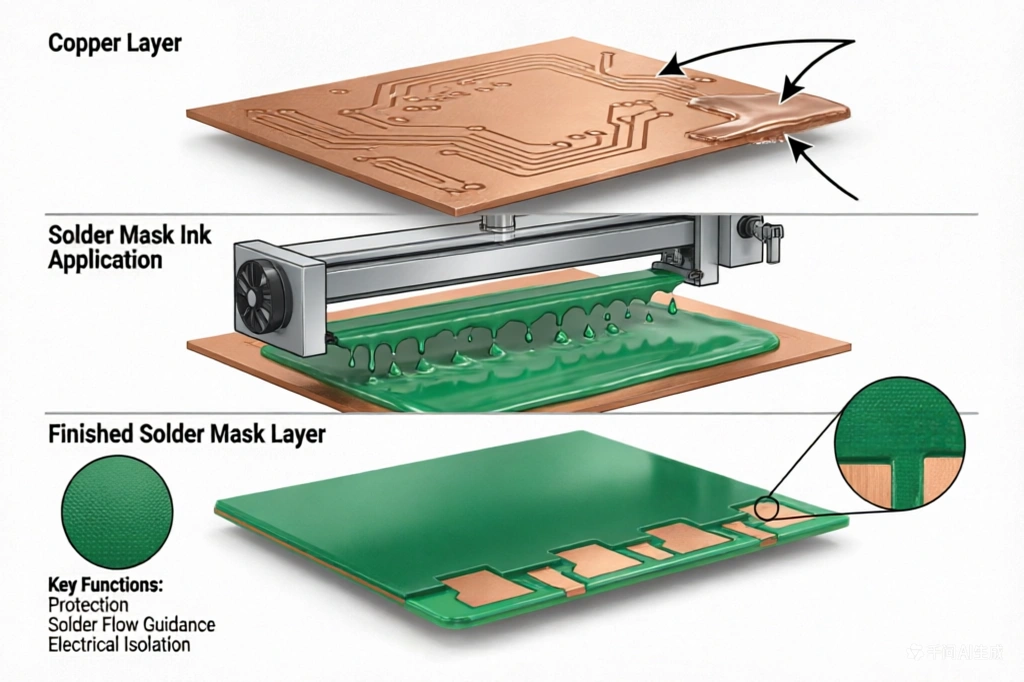
Before diving into brand comparisons, it is essential to understand what PCB solder mask ink actually is and its multifaceted role in electronics manufacturing. At its core, solder mask ink is a photoimageable polymer coating applied to the copper layers of a PCB. Its primary functions include preventing solder bridges during assembly, protecting the copper from oxidation and environmental corrosion, and providing a durable, aesthetic finish.
The market offers a variety of formulations, including epoxy, acrylic, and advanced photoimageable inks. The choice of ink directly affects the board’s ability to withstand thermal stress, chemical exposure, and mechanical wear. Therefore, selecting the appropriate PCB solder mask ink is a balancing act between performance requirements, environmental regulations, and economic feasibility.
II.Key Selection Criteria for PCB Solder Mask Ink
When evaluating different solder mask inks, manufacturers must consider several interrelated factors to ensure optimal performance and reliability.
1.Performance and Reliability
The foremost consideration is the performance and reliability of the ink. A high-quality solder mask must act as a robust shield for the circuitry.
● Thermal Resistance: The ink must endure multiple thermal cycles during soldering processes (such as reflow and wave soldering) without blistering, cracking, or delaminating. High glass transition temperature (Tg) values are desirable for lead-free assembly processes.
● Chemical Resistance: It should resist various chemicals, including strong fluxes, cleaning solvents, and acids, to maintain integrity throughout the production line and the product’s lifespan.
● Mechanical Strength and Adhesion: The cured film must exhibit excellent hardness to resist scratching while maintaining flexibility. Superior adhesion to both the substrate and copper traces is critical to prevent “lifting” or peeling, which could lead to electrical failures.
● Electrical Insulation: High dielectric strength is mandatory to prevent leakage currents, especially in high-voltage applications or densely packed circuits.
2.Process Compatibility and Adaptability
An ink’s performance is also dictated by how well it integrates with existing manufacturing workflows.
● Substrate Compatibility: Different base materials, such as FR-4, polyimide, or metal cores, require specific ink formulations to ensure proper wetting and bonding.
● Surface Finish Interaction: The compatibility between the solder mask and the PCB’s surface finish (e.g., ENIG, Immersion Silver, or Hard Gold) is crucial. For instance, certain inks are specifically engineered to perform optimally on nickel/gold surfaces to prevent interfacial failures.
● Application Method: Whether using screen printing, curtain coating, or spray application, the rheology (viscosity and flow characteristics) of the PCB solder mask ink must be tailored to the machinery to ensure uniform thickness and resolution.
3.Environmental Compliance and Safety
With the global push toward sustainable manufacturing, environmental compliance has become a non-negotiable requirement.
● Regulatory Standards: Ensure the ink is compliant with international directives such as RoHS (Restriction of Hazardous Substances) and REACH. This eliminates the use of lead, mercury, and other harmful substances.
● Low VOC Emissions: Volatile Organic Compounds (VOCs) are harmful to both the environment and worker health. Selecting low-VOC or VOC-free inks contributes to a safer workplace and reduces environmental impact.
4.Cost Efficiency and Supply Chain Stability
While performance is paramount, economic viability dictates long-term sustainability.
● Total Cost of Ownership: Evaluate not just the purchase price but also factors like coverage area, cure time (energy consumption), and the defect rate. A slightly more expensive ink that reduces rework can be more cost-effective in the long run.
● Supply Chain Resilience: Choose a supplier with a stable supply chain to avoid production stoppages. This is particularly important in the current global market where material shortages can occur unexpectedly.
III.Leading Brands in the PCB Solder Mask Ink Market
The global market for PCB solder mask ink is dominated by a mix of Japanese innovators and competitive Asian manufacturers. Each brand offers unique formulations tailored to specific industrial needs, from consumer electronics to automotive and aerospace applications.
1.Taiyo Ink (Japan)
Taiyo Ink is arguably the gold standard in the industry, renowned for its cutting-edge technology and high-reliability formulations. Through its extensive network, including operations in Taiwan and Suzhou, Taiyo (and associated entities like Winsontek and the former Union Chemical) caters to the high-end segment of the market.
● Key Strengths: Taiyo inks are celebrated for their exceptional resolution, enabling the production of fine-pitch components and HDI boards. They offer superior thermal stability and are often the default choice for mission-critical applications.
● Typical Use Cases: High-density interconnect (HDI) boards, semiconductor packaging, and high-frequency communication equipment.
2.Taiwan-based Manufacturers
Taiwan has emerged as a powerhouse in the chemical supply chain for PCBs, offering a range of high-quality alternatives.
● Guangpin (Guanpin): Known for high heat resistance and excellent adhesion, Guangpin’s solder masks are frequently chosen for applications requiring rigorous thermal cycling.
● Nanya Plastics: A giant in the chemical industry, Nanya offers a broad portfolio of solder mask inks that are widely compatible with various Substrate and surface treatments, making them a versatile choice for general-purpose PCBs.
● Crayton (Chuanyu) and Ultratech (Youli): These brands have garnered a solid reputation for stability and performance. They are often selected for their balance of quality and cost-effectiveness, serving a wide range of industrial electronics.
3.Mainland China’s Rising Contenders
Domestic Chinese manufacturers have made significant strides in recent years, closing the technology gap and offering competitive solutions for the global market.
● Rongda (Rongda Ink): Rongda has established a strong foothold in the market with products that are technologically advanced and reliable. Many contract manufacturers, such as 998PCB, use Rongda as their default option due to its consistent performance and cost-efficiency.
● Guangxin (Guangxin Ink): With significant market penetration, Guangxin is a well-known name in the PCB solder mask ink sector. Their products are recognized for balancing performance with affordability.
● Yanmo (Yanmo Ink): Yanmo has gained traction for producing stable and reliable inks suitable for a wide variety of PCB manufacturing processes, from simple single-sided boards to complex multilayers.
● Lanbang (Lanbang Ink): Boasting a rich product line, Lanbang offers specialized inks tailored to diverse performance needs, ranging from standard applications to specialized high-reliability requirements.
● Daodao (Daodao Ink): As a specialized manufacturer, Daodao has cultivated a positive reputation in the market. Their inks are noted for their professional formulation and widespread application across various electronics sectors.
4.Specialized and Niche Players
Certain brands have carved out specific niches based on application focus.
● Lvgu (Lvgu Ink): Known for its competitive edge in the mid-to-high-tier market segments.
● LituoDa (LituoDa Ink): This brand has found significant success in the automotive and telecommunications sectors, where reliability standards are exceptionally stringent.
Making the Right Choice
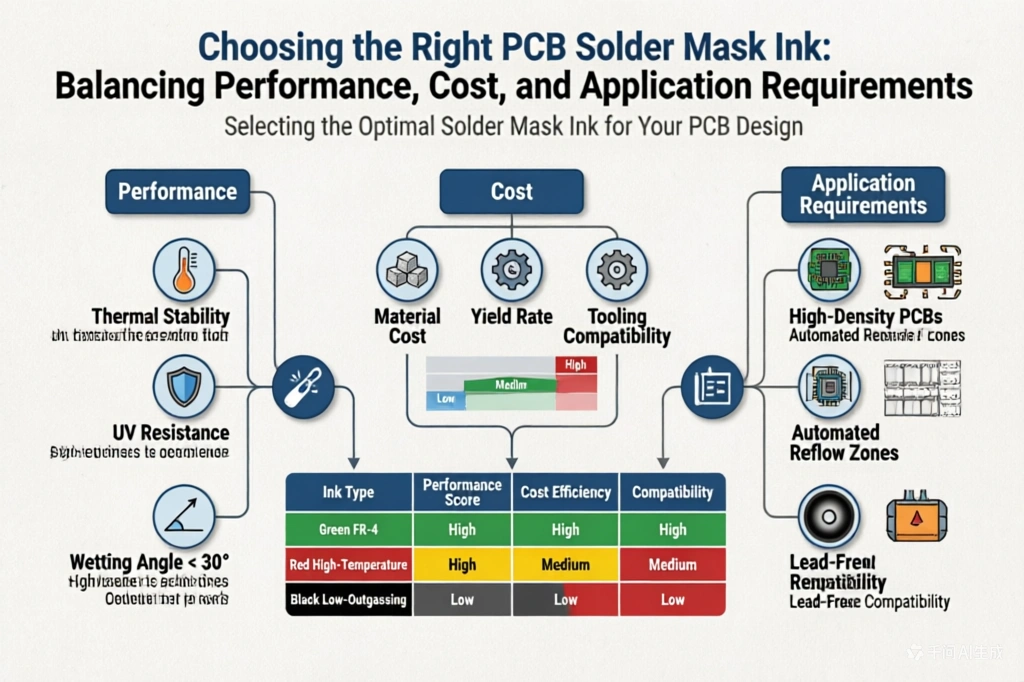
Selecting the right PCB solder mask ink ultimately depends on your specific application requirements. For standard consumer electronics where cost is a primary driver, domestic brands like Rongda, Guangxin, or Yanmo offer an excellent balance of performance and price. For high-reliability applications, such as those in the automotive, aerospace, or medical fields, Japanese brands like Taiyo or specialized high-end formulations from Taiwan (such as Guangpin) may be necessary to ensure long-term durability.
It is also worth noting the practices of major PCB fabricators. For instance, many factories default to using Rongda ink if the customer does not specify a particular brand, indicating its status as a reliable industry standard. However, if a client requires specific certifications or performance metrics, they often request Taiyo or another premium brand.
In conclusion, the landscape of PCB solder mask ink is rich with options. By carefully evaluating the factors of performance, compatibility, environmental impact, and cost, and by understanding the strengths of leading brands like Taiyo, Rongda, Guangpin, and Guangxin, you can select an ink that not only protects your circuitry but also enhances your product’s overall value proposition.