
Multilayer PCB: An Indispensable Part of Modern Technology
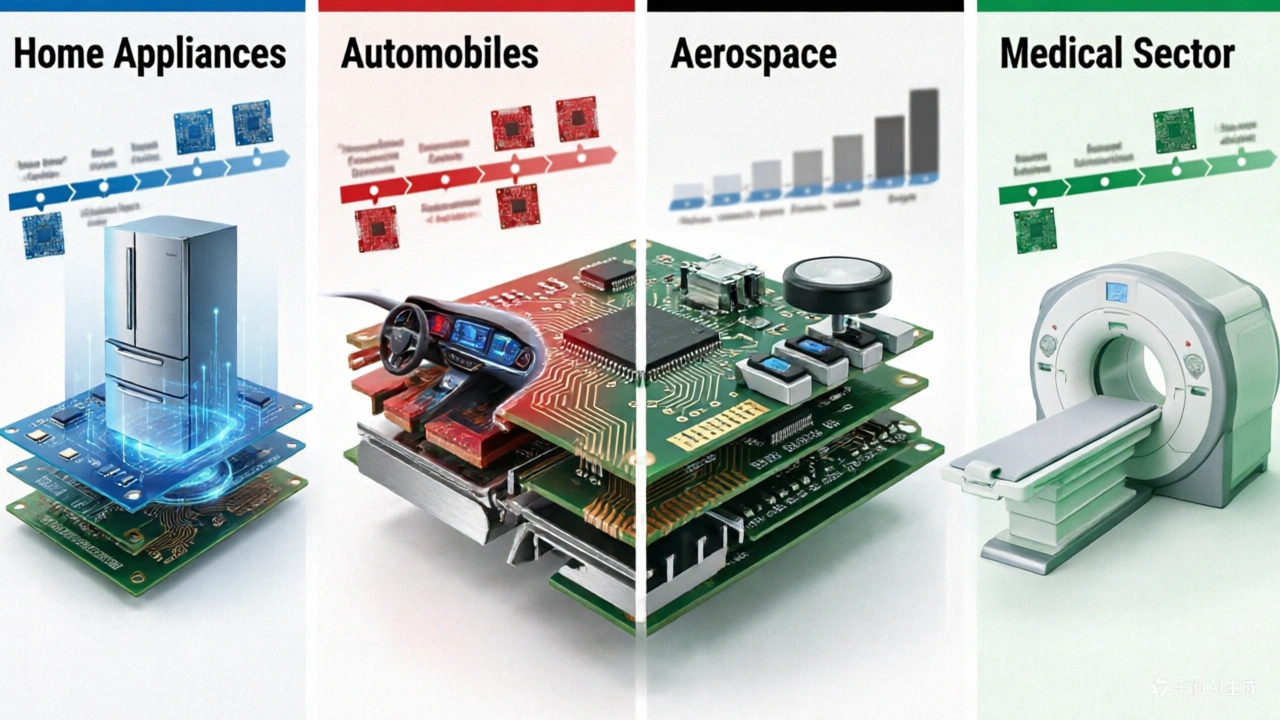
In the realm of modern technology, multilayer PCBs play a pivotal and irreplaceable role. From the tiniest chips to the most intricate control systems, PCBs serve as the core components that enable the functionality of countless devices. Their applications span across a vast array of fields, including home appliances, automobiles, aerospace, as well as medical and military sectors.
I.The Evolution of Circuit Boards
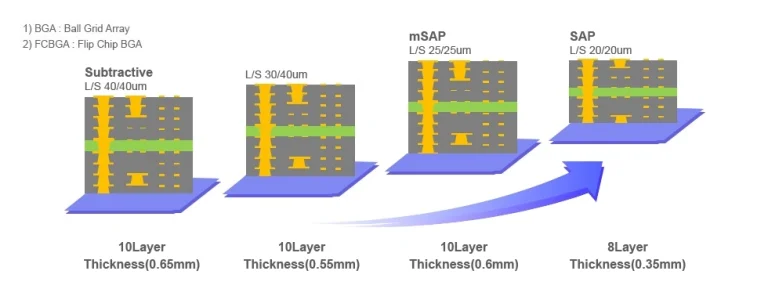
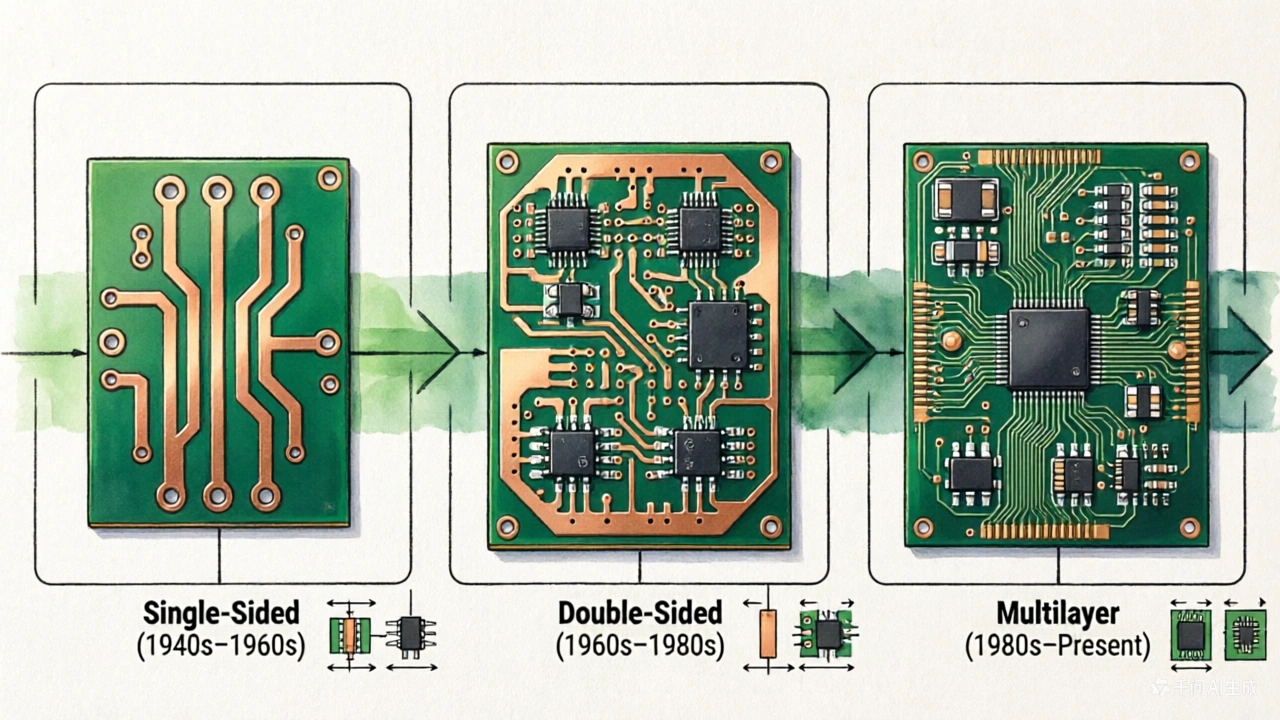
The journey of circuit boards dates back to the early 20th century. However, it was after World War II that they truly began to experience rapid development and widespread adoption. With the booming rise of the electronics industry, the manufacturing technology of circuit boards has been continuously evolving. Starting from single – sided boards, they advanced to double – sided boards and then to multilayer boards. The complexity and integration level of circuit boards have been increasing steadily over time. Today, it is possible to manufacture PCBs with dozens of layers of circuits. These boards have witnessed remarkable improvements in terms of precision and stability.
The transition from single – sided to double – sided boards was a significant leap. Single – sided boards could only accommodate components and traces on one side, limiting their capabilities. Double – sided boards, on the other hand, allowed for more complex circuit designs by having conductive layers on both sides. This enabled better electrical connections and more efficient use of space. As the demand for higher functionality and miniaturization grew, the development of multilayer boards became inevitable. Multilayer PCBs stack multiple conductive layers separated by insulating materials, providing a far greater capacity for electrical connections and component placement. This has been crucial for modern electronic devices that require high – density integration.
II.The Function of Multilayer PCBs
The primary functions of a PCB, especially a multilayer one, are to provide stable power distribution, facilitate signal transmission, and enable inter – circuit connections. In an electronic device, the PCB is not merely a physical platform for mounting components; it is the linchpin that determines the device’s performance and functionality. It is also the key to achieving modularity, repairability, and upgradability.
Power distribution is a fundamental function. A well – designed PCB ensures that electrical power is evenly and reliably distributed to all components. This is essential for the proper operation of electronic devices, as inconsistent power supply can lead to malfunctions or even component damage. Signal transmission is another critical aspect. In high – speed electronic systems, such as those used in telecommunications or high – performance computing, signals need to be transmitted accurately and with minimal interference. Multilayer PCBs are designed to manage these high – speed signals effectively, using techniques like impedance matching and signal isolation.
Inter – circuit connections are what enable the various components on a PCB to work together as a cohesive unit. By carefully routing traces between different layers and components, complex logical and control functions can be realized. For example, in a microcontroller – based system, the PCB connects the microcontroller to other components such as memory chips, sensors, and actuators, allowing for the execution of complex programs and the control of external devices.
III.Technological Advancements in PCB Design and Performance
The advent of computer – aided design (CAD) software has revolutionized the field of PCB design. CAD software allows engineers to design circuit boards in a highly automated and efficient manner. They can create detailed schematic diagrams, lay out components, and route traces with precision. This has significantly reduced the product development cycle. Instead of spending weeks or even months on manual design and prototyping, engineers can now complete the design phase in a much shorter time. CAD software also enables easy modification and optimization of designs, which is crucial for meeting the ever – changing requirements of the market.
The miniaturization of electronic components has gone hand – in – hand with the development of PCBs. As components such as integrated circuits (ICs), resistors, and capacitors become smaller and more integrated, the size of the PCB can be reduced accordingly. This has led to the creation of more compact and lightweight electronic devices. For instance, modern smartphones are incredibly thin and portable, and this is largely due to the use of highly miniaturized components and advanced multilayer PCBs. The high – density integration made possible by multilayer PCBs allows for the placement of a large number of components in a small area without sacrificing performance.
IV.The Future of Multilayer PCBs
The future of multilayer PCBs lies in increased intelligence and personalization. With the rapid development of the Internet of Things (IoT) and artificial intelligence (AI), the interactivity and intelligence of PCBs are emerging as new frontiers. In the context of smart home systems, PCBs are at the heart of enabling device interconnection and automated control. Each smart device in a home, such as a smart thermostat, a security camera, or a smart light bulb, contains a PCB that communicates with other devices through a network. These PCBs are designed to process and respond to data from sensors, making the home environment more comfortable, efficient, and secure.
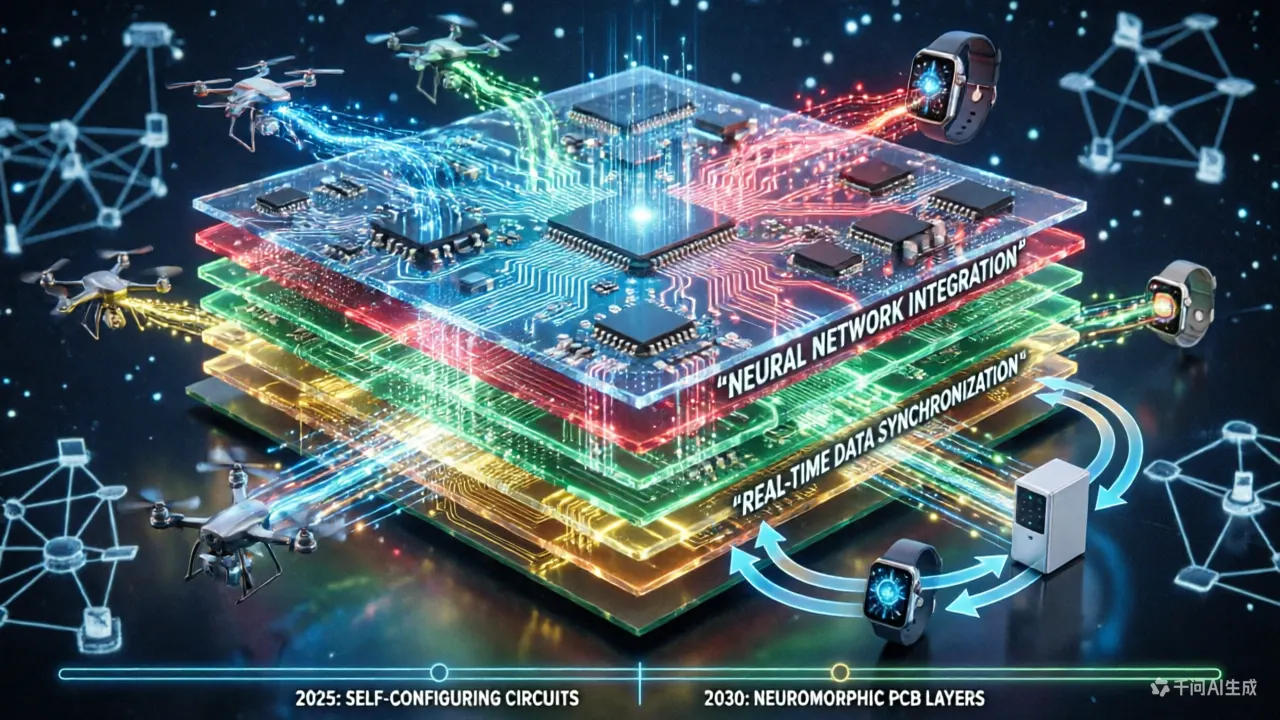
Smart wearable devices are another area where the potential of PCBs is being fully realized. These devices, which include smartwatches, fitness trackers, and augmented reality glasses, require highly integrated and compact PCBs. A single small – sized PCB in a smart wearable device can house sensors for tracking various physiological parameters, a processor for data processing, and a memory for storing information. This integration not only reduces the size and weight of the device but also improves its power efficiency.
The development of 3D printing technology also holds great promise for the future of PCB design and manufacturing. 3D printing allows for more flexible and personalized PCB designs. Instead of being limited to traditional two – dimensional layouts, 3D – printed PCBs can have complex three – dimensional structures. This can enable new form factors and improved electrical performance. For example, 3D – printed PCBs can be designed to have built – in cooling channels or to conform to the shape of a specific device, such as a custom – shaped medical implant.
In conclusion, multilayer PCBs are the cornerstone of modern technology. As technology continues to progress, we can expect even more remarkable improvements in their performance and design. The continuous innovation in PCB technology will undoubtedly contribute significantly to the advancement of various industries, from consumer electronics to healthcare and aerospace. With the trend towards greater intelligence, personalization, and miniaturization, PCBs will remain at the forefront of technological innovation, driving the development of new and exciting products for years to come.