
What is Military PCB? A Complete Guide to Materials, Features and Applications
Introduction
With the rapid advancement of modern military technology, the reliance on electronic systems has grown exponentially across defense applications. As a foundational component of military electronic equipment, Military PCB (Printed Circuit Board) plays an indispensable role in modern defense systems. Military-grade PCBs are purpose-built printed circuit boards engineered specifically for military and aerospace applications, featuring unique technical specifications and stringent manufacturing standards to guarantee stable and reliable performance under extreme environmental conditions. This article provides a comprehensive overview of Military-grade PCB, including its definition, core characteristics, manufacturing processes, key application areas, and future development trends.
I.What is a Military PCB?
A Military-grade PCB, short for military-grade printed circuit board, is an electronic component designed and manufactured exclusively to meet rigorous defense requirements. Compared with commercial and industrial PCBs, Military PCBs adhere to far stricter standards in material selection, structural design, manufacturing processes, and performance testing.
Beyond standard electrical functionality, Military PCBs must deliver exceptional reliability, structural strength, thermal management, data security, and long-term durability. Most importantly, they must maintain consistent electrical performance in harsh operating environments, ensuring mission success and operational safety for critical military systems.

II.Key Characteristics of Military PCBs
1. Exceptional Reliability
High reliability is the primary requirement for any Military-grade PCB. Military electronic equipment often operates continuously for extended periods and is exposed to extreme conditions including high and low temperatures, high humidity, strong radiation, intense vibration, and mechanical shock. To withstand these challenges, Military PCBs are engineered to meet top-tier benchmarks in material selection, circuit layout, production processes, and reliability verification, ensuring stable performance in mission-critical scenarios.
2. High Structural Strength
Military systems operate in demanding environments, requiring Military PCBs to possess outstanding mechanical strength. Through the use of specialized high-performance materials and optimized structural designs, these circuit boards maintain stable electrical properties under thermal stress, radiation, vibration, and physical impact. Reinforcements such as high-tensile metal substrates, strengthened board edges, and robust via designs further enhance the overall strength and durability of Military PCBs.
3. Superior Thermal Dissipation
Military electronic devices frequently operate under high loads for prolonged periods, generating significant amounts of heat. Inefficient heat dissipation can severely degrade performance and compromise reliability. Therefore, Military PCBs are designed with excellent thermal conductivity and heat dissipation capabilities.
This is achieved through thermally efficient substrates such as aluminum bases, copper bases, and aluminum nitride ceramic substrates, combined with advanced structural designs including multilayer boards, metallized vias, and thermal pads. These features enable rapid heat transfer and dissipation, preserving circuit stability and long-term operational reliability.
4. Advanced Security & Confidentiality
Information security and electromagnetic protection are critical in military applications. Military PCBs integrate strong electromagnetic shielding and data security features to prevent electromagnetic leakage and unauthorized information exposure. Common solutions include high-shielding metal substrates, specialized composite materials, multilayer shielding structures, and encrypted component integration. These measures ensure secure electromagnetic radiation control and protected data transmission for defense systems.
5. Long-Term Durability
Military equipment is expected to perform reliably in complex and variable environments over extended service lives. Military PCBs achieve high durability through corrosion-resistant, wear-resistant materials and reinforced structural designs. This allows them to retain stable electrical performance and mechanical integrity in harsh field conditions, extending the service life of military electronic systems.
III.Manufacturing Processes for Military PCBs
The manufacturing process for Military PCBs is far more complex and tightly controlled compared to standard PCBs. Key production stages include:
1. Material Selection & Preprocessing
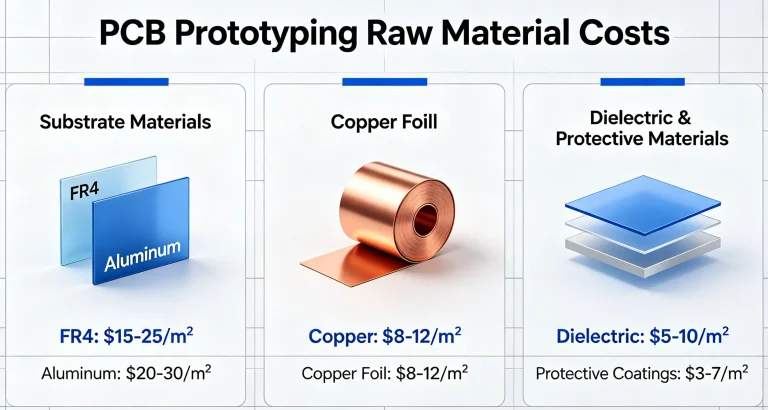
Material choice is critical for Military-grade PCBs. Manufacturers select optimized metal substrates, insulating materials, and copper foils based on specific application environments and performance demands. Raw materials undergo strict inspection and thorough cleaning during preprocessing to ensure compliance with military-grade quality standards.
2. Pattern Transfer & Etching
Pattern transfer transfers designed circuit layouts onto copper foils typically using high-precision photolithography. Etching removes unprotected copper to form the final circuit structure. For Military-grade PCBs, these processes require extreme precision and consistency to ensure accurate, uniform circuit patterns.
3. Drilling & Plating
Drilling creates through holes, blind vias, and buried vias to establish electrical connections between layers. Electroplating deposits metal layers such as copper onto hole walls and copper surfaces to improve conductivity and corrosion resistance. Military-grade drilling and plating demand tight control over hole size, wall roughness, and coating quality.
4. Solder Mask & Surface Finishing
Solder mask application protects circuit patterns from oxidation and corrosion. Surface finishes such as hot air solder leveling (HASL), gold plating, and immersion silver enhance conductivity, solderability, and environmental resistance. Both processes are stringently controlled to meet military quality requirements.
5. Testing & Validation
Testing and validation represent the final and most critical stage of Military PCB production. Comprehensive tests including electrical performance testing, environmental adaptability testing, and reliability testing verify that all specifications meet design standards. Non-conforming products are promptly identified, processed, and traced to maintain consistent high quality.
IV.Applications of Military PCBs
Military PCBs are widely deployed across nearly all categories of military electronic equipment. Major application areas include:
1. Aerospace
In aerospace systems such as aircraft, missiles, satellites, and launch vehicles, Military PCBs serve as core components in electronic control and communication systems. These applications demand exceptional reliability, lightweight construction, and miniaturization, making Military PCB an ideal solution for high-performance aerospace electronics.

2. Radar & Communications
Radar and communication systems are vital to modern military capabilities. Military PCBs support high-speed signal processing in radar systems and ensure stable, secure signal transmission in communication equipment. Their high anti-interference and security characteristics make them essential for defense communication and sensing platforms.

3. Weapon Systems
Military PCBs are widely used in electronic control systems for missiles, artillery, tanks, naval vessels, and other weapon platforms. These systems operate in extreme environments and require high strength, thermal stability, and durability. Advanced material and design optimization enable Military PCBs to meet these demanding operational requirements.
4. Command & Control Systems
As the nerve center of military operations, command and control systems process massive volumes of data and require ultra-high performance and reliability. Military PCBs, with their superior reliability, security, and anti-interference performance, are the preferred choice for critical command and control electronics.
V.Future Development Trends of Military PCBs
Driven by evolving military technology and rising performance demands, Military PCBs are evolving toward more advanced capabilities:
1. Higher Precision & Density
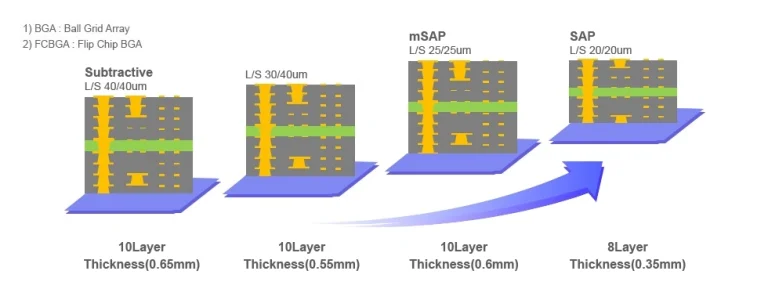
As military electronics become smaller and more integrated, Military PCBs will continue advancing toward finer line widths/clearances and higher interconnect density. Advanced manufacturing technologies and high-performance materials will enable greater miniaturization and integration for next-generation defense systems.
2. Enhanced Reliability & Durability
Stable performance under extreme conditions remains a core priority. Future Military PCBs will focus on further improving reliability and durability through optimized design and advanced specialty materials, ensuring long-term stable operation in harsh battlefield environments.
3. Improved Security & Electromagnetic Compatibility
Information security and electromagnetic protection will become even more critical. Future Military PCBs will adopt advanced encryption technologies, anti-tampering designs, and enhanced electromagnetic shielding to strengthen data security and electromagnetic compatibility for defense equipment.
4. Intelligent & Networked Integration
Supported by the Internet of Things (IoT) and artificial intelligence, Military PCBs will evolve toward intelligent and networked functionality. Integrated sensors, processors, and communication modules will enable remote monitoring, fault diagnosis, and autonomous control, boosting the intelligence and combat effectiveness of military systems.
5. Green & Sustainable Manufacturing
Environmental protection and sustainability are global priorities. Future Military PCB production will increasingly adopt eco-friendly materials and green manufacturing processes to reduce environmental impact and resource consumption while maintaining military-grade performance.
Conclusion
As a core component of military electronic systems, Military PCB holds an irreplaceable position in the defense industry. Its outstanding reliability, structural strength, thermal performance, security, and durability ensure the stable operation of military equipment in extreme environments and the successful completion of critical missions.
With continuous advancements in military technology and increasing operational demands, Military PCBs will further develop toward higher precision, reliability, security, intelligence, and environmental sustainability. It is certain that Military PCBs will continue to play an increasingly vital role in shaping the future of modern military capabilities.