
What Factors Determine PCB Prototyping Price? A Complete Cost Breakdown Guide
PCB prototyping is an indispensable preliminary step in the entire electronic product development and manufacturing process. It allows electronic engineers and manufacturers to verify circuit design rationality, test product performance, and fix potential defects before mass production. For electronics designers, startup teams, and purchasing managers, understanding the full composition of PCB prototyping price is critical for accurate budgeting, reasonable design optimization, and cost control. Many buyers often face inconsistent quotation standards from different PCB manufacturers, mainly because the final PCB prototyping cost covers multiple variable and fixed expense items. This comprehensive guide will break down all core components that affect PCB prototyping price, helping you fully grasp the cost structure and make more cost-effective purchasing and design decisions.
1. Raw Material Costs – The Foundation of PCB Prototyping Price
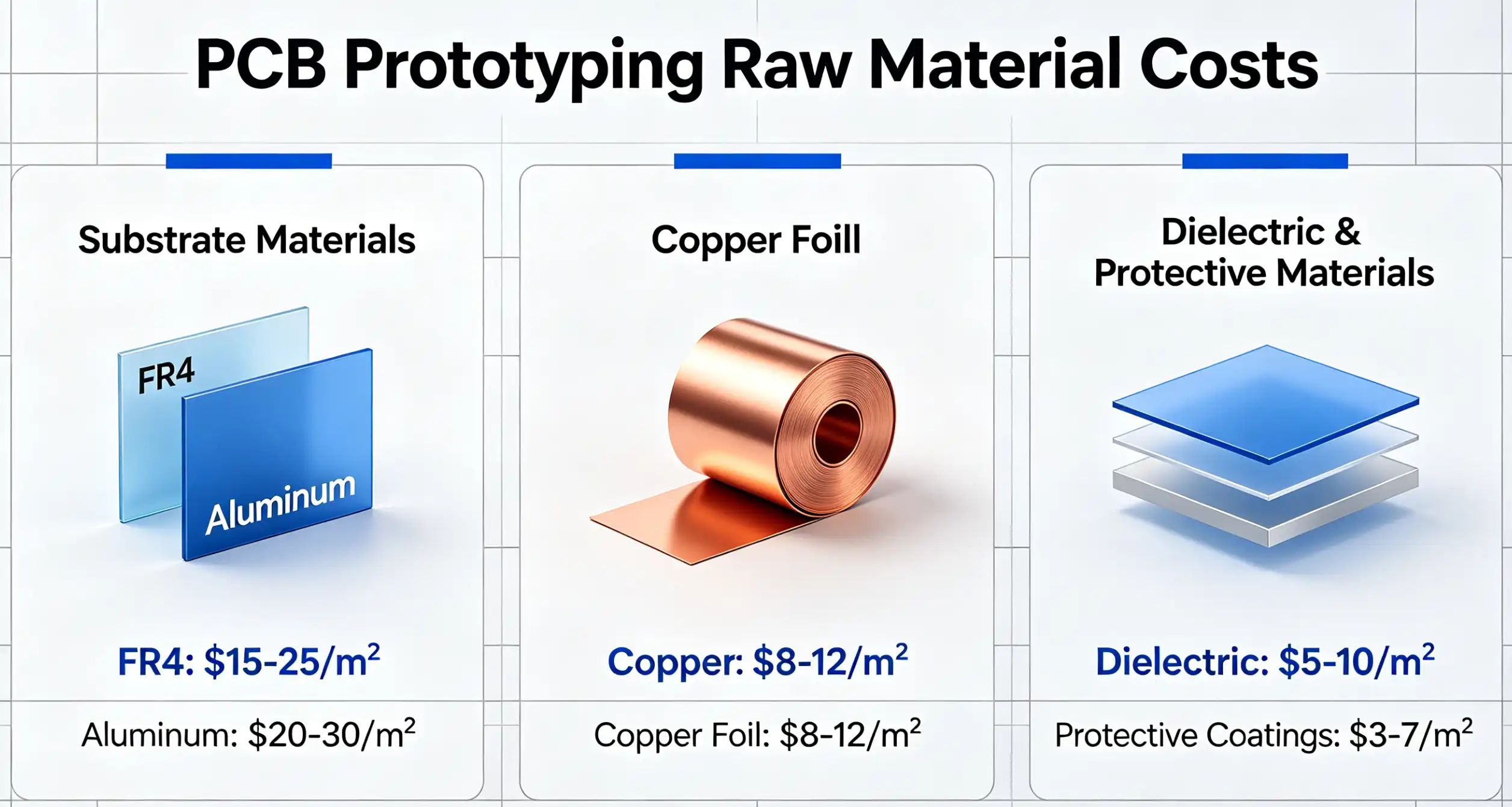
Raw material cost is the most fundamental and variable part of PCB prototyping price. The type, specification, quality, and thickness of materials directly determine the base cost of PCB samples. Different application scenarios (consumer electronics, industrial control, automotive electronics, medical devices) require different PCB materials, leading to obvious price gaps. The main raw materials involved in PCB prototyping are as follows:
1.1 Substrate Materials
The substrate is the core base material of all PCBs, supporting circuit lines and electronic components. Common substrate types include FR4, CEM-1, aluminum substrate, copper substrate, and special high-frequency/high-temperature resistant substrates. FR4 is the most widely used and cost-effective substrate for civilian consumer electronics, while aluminum substrates are mostly used for high-heat-dissipation equipment such as LED lighting and power supplies, and copper substrates apply to high-precision industrial and automotive electronic products. Special substrates with high temperature resistance, corrosion resistance and high frequency characteristics are more expensive. Choosing a matching substrate according to product functional requirements is the key to controlling PCB prototyping price.
1.2 Copper Foil
Copper foil forms the conductive circuit network of PCBs, which directly affects the electrical conductivity and stability of the circuit. It is mainly divided into electrolytic copper foil and rolled copper foil. Electrolytic copper foil is cost-effective and suitable for ordinary prototype boards, while rolled copper foil has better ductility and stability, ideal for high-precision, flexible PCB prototypes. The thickness and purity of copper foil also cause price differences; thicker and high-purity copper foil will correspondingly increase the PCB prototyping price.
1.3 Dielectric & Protective Materials
Dielectric materials, insulating layers, and surface protective materials are essential to ensure PCB electrical performance and mechanical stability. These materials isolate circuit layers, prevent short circuits, and protect the PCB from oxidation, moisture and mechanical damage. The thickness, insulation grade, and environmental resistance of dielectric materials vary greatly, and high-performance protective materials for industrial and automotive-grade PCBs will significantly raise the overall prototyping cost.
2. Manufacturing Production Costs – Direct Processing Expenses
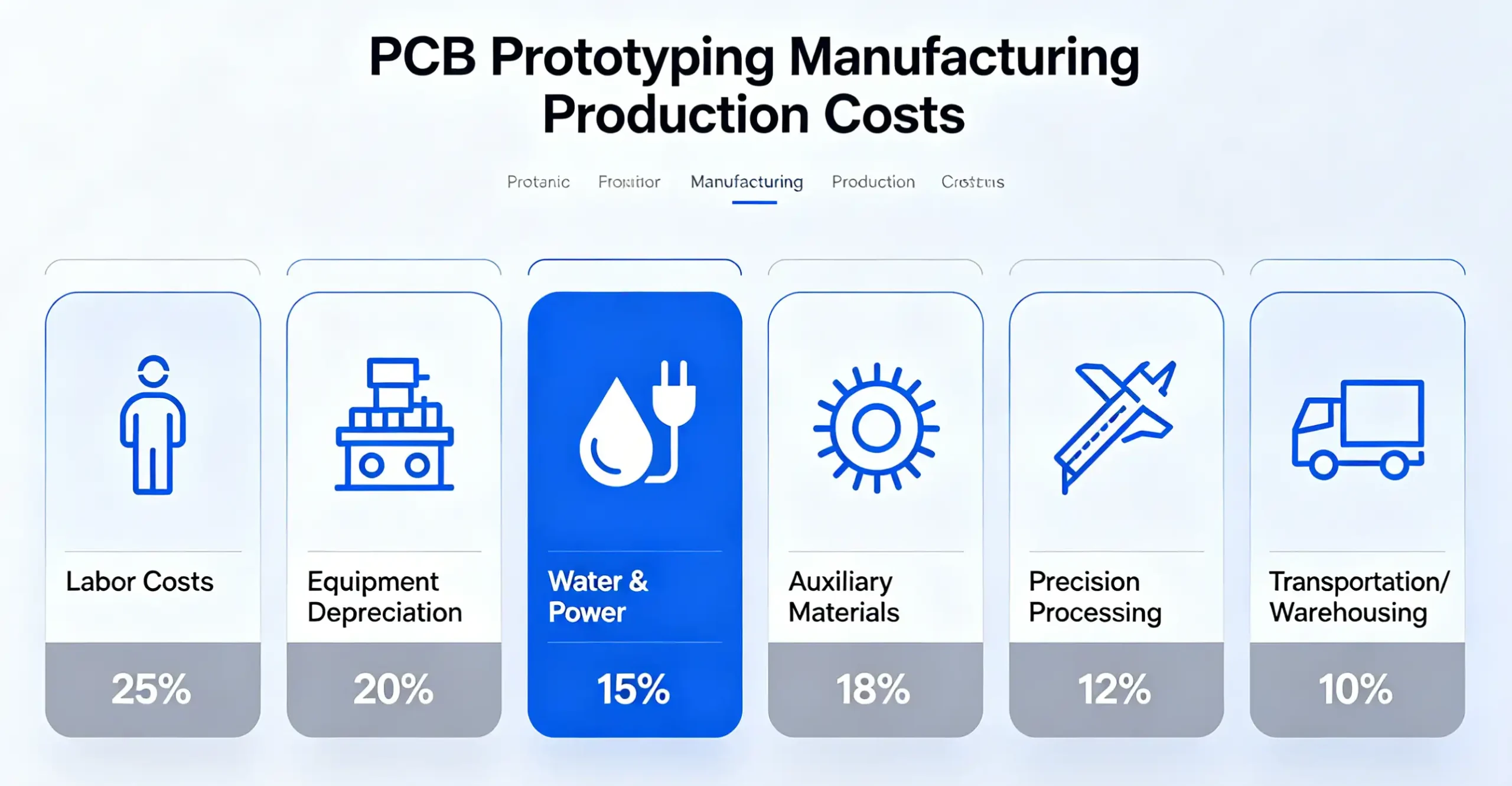
Manufacturing costs refer to all direct expenses incurred during the PCB prototyping production process, which are key factors that cause different manufacturers to have different PCB prototyping price standards. This part of the cost is closely related to production technology, process complexity, and factory production efficiency.
2.1 Labor Costs
PCB prototyping requires professional technicians to complete proofing inspection, process supervision, and manual auxiliary operations. Labor costs include production workers’ salaries, benefits, and daily management personnel expenses. Labor costs vary by region; manufacturers in regions with mature electronic manufacturing industries have standardized processes and higher production efficiency, which can effectively reduce unit labor costs and optimize PCB prototyping price.
2.2 Equipment Depreciation Costs
High-precision PCB prototyping relies on professional production equipment such as drilling machines, electroplating machines, exposure machines, and testing instruments. These precision devices have high purchase costs and fixed service lives. The daily depreciation loss of equipment is evenly allocated to each PCB prototype. Advanced equipment with higher precision has higher depreciation costs, but it can improve the yield rate of prototypes and avoid cost losses caused by defective products.
2.3 Water and Power Consumption Costs
The PCB prototyping process involves multiple links such as cleaning, electroplating, and etching, which consume a large amount of industrial water and electric power. Water and electricity fees are fixed daily operating costs for factories and will be included in the final PCB prototyping price. The regional energy price standard and factory production scale will affect the average water and power cost of a single prototype board.
2.4 Auxiliary Material Costs
In addition to core raw materials, PCB prototyping also consumes a variety of auxiliary materials, including solder, flux, cleaning agents, dry film, and ink. These auxiliary materials are indispensable for circuit processing and surface treatment. High-quality environmental-friendly auxiliary materials can improve prototype quality but will slightly increase production costs, thus affecting the final quotation.
2.5 Precision Processing Fees
The processing fee is the most flexible part of manufacturing costs, including drilling, copper plating, electroplating, patterning, welding, and surface finishing processes. Complex prototype designs such as multi-layer boards, ultra-fine circuit lines, tiny hole drilling, and impedance control require higher processing precision and longer production cycles, which will greatly increase processing costs. Simple single-layer and double-layer PCB prototypes have low processing difficulty and more favorable PCB prototyping price.
2.6 Transportation and Warehousing Costs
PCB prototyping involves the warehousing and transportation of raw materials, semi-finished products, and finished samples. Factories need to store raw materials in a constant temperature and humidity environment to avoid material deterioration. Meanwhile, the logistics cost of finished prototype delivery is also included in the overall prototyping price. For small-batch customized prototypes, the unit transportation and warehousing cost will be relatively higher.
3. Indirect Operating Expenses – Hidden Cost Components
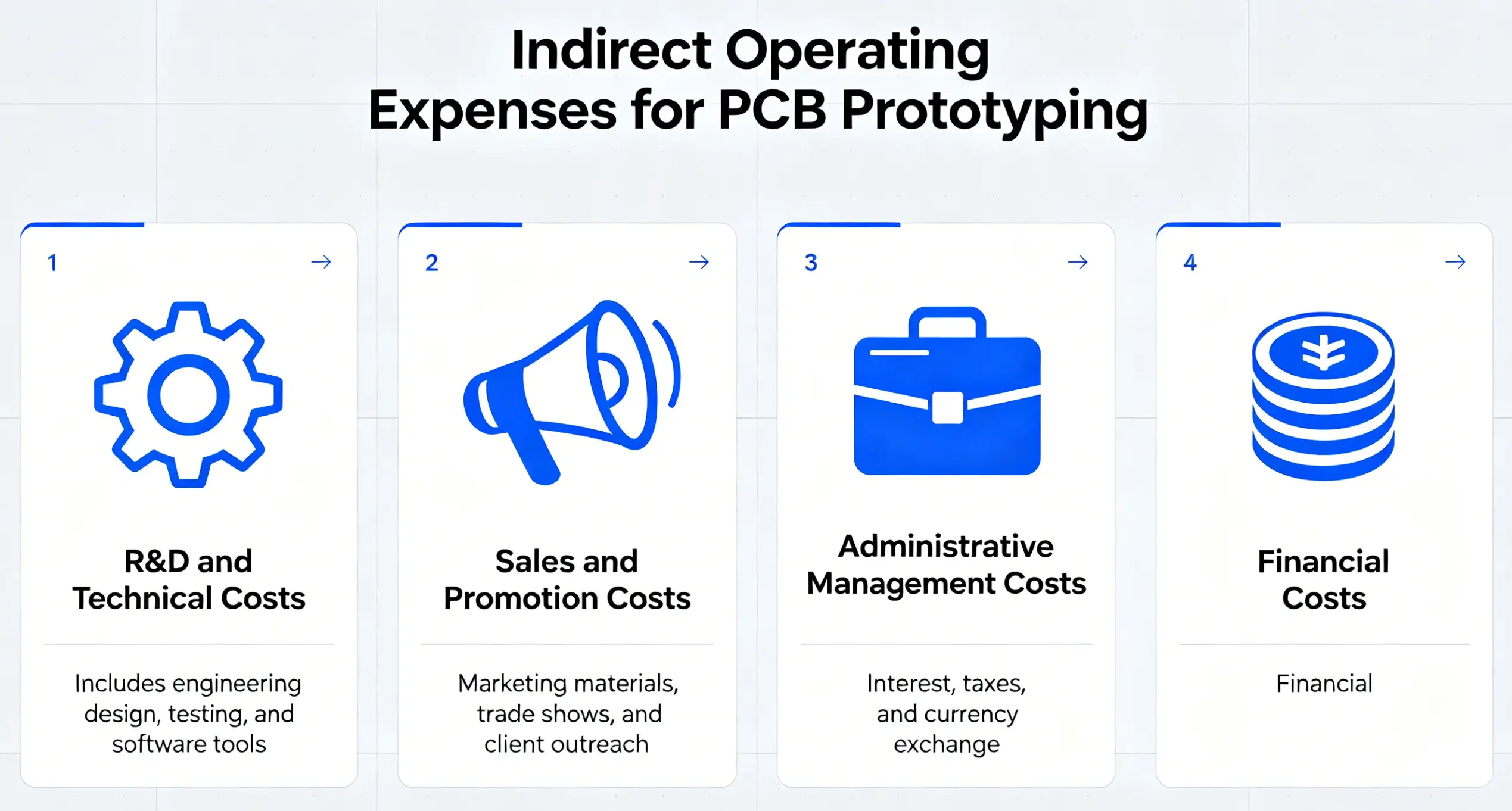
Indirect expenses are invisible but essential costs that cannot be ignored in PCB prototyping services. These operating expenses run through the whole process of enterprise operation and are important components of the final PCB prototyping price.
3.1 R&D and Technical Costs
Professional PCB manufacturers need to continuously optimize production processes, upgrade technical solutions, and provide customers with design consultation and proofing scheme optimization. R&D expenses include technical research and development fees, patent maintenance fees, design service fees, and technical transfer costs. For high-difficulty customized PCB prototypes, the technical investment is higher, so the indirect R&D cost will also increase accordingly.
3.2 Sales and Promotion Costs
Enterprises need to carry out market promotion, industry exhibition participation, and customer service maintenance to provide professional PCB prototyping services. Advertising fees, exhibition fees, and sales staff service salaries are all included in sales expenses, which are reasonably allocated to the quotation of PCB prototyping services.
3.3 Administrative Management Costs
Daily office operation, enterprise management, personnel training, and daily meeting expenses of PCB manufacturers belong to administrative management costs. Standardized and large-scale manufacturers have more standardized management systems, with lower average management costs per order, so their PCB prototyping price is more competitive.
3.4 Financial and Other Miscellaneous Costs
Financial costs include bank handling fees, loan interest, and exchange rate gains and losses incurred in capital operation. In addition, factory site rental, intellectual property maintenance, and professional technical consulting fees are also included in the indirect costs of PCB prototyping.
4. Corporate Profits and Taxes – Final Price Adjustment Factors
On the basis of all production and operating costs, PCB manufacturers will formulate reasonable profit margins according to market competition, service quality, and product added value. The profit level is affected by many factors such as brand strength, after-sales service, and customized service capabilities. At the same time, manufacturers need to pay various statutory taxes including value-added tax, corporate income tax, and related industry tariffs. All taxes and reasonable profits will be included in the final PCB prototyping price.
Conclusion
In summary, PCB prototyping price is a comprehensive quotation determined by four core parts: raw material cost, direct manufacturing cost, indirect operating expense, as well as enterprise profit and tax. Every link from material selection, process complexity to factory operation scale will affect the final proofing cost. For electronic product developers, fully understanding these cost components can help optimize PCB design schemes, select appropriate materials and processes, and effectively reduce prototyping costs. For PCB manufacturers, continuous improvement of production efficiency, optimization of management systems, and reduction of comprehensive operating costs are the key to maintaining competitive PCB prototyping prices and high-quality services.
FAQs About PCB Prototyping Price
Q1: What is the biggest factor affecting PCB prototyping price?
The design complexity and raw material type are the biggest influencing factors. High-layer count PCBs, ultra-fine line width, special heat-resistant or high-frequency substrates, and customized surface treatments will significantly raise the PCB prototyping price. In contrast, standard single-layer and double-layer FR4 PCB prototypes have the lowest and most stable cost.
Q2: Can I reduce PCB prototyping price without sacrificing quality?
Yes. You can optimize the design by simplifying unnecessary complex processes, selecting conventional qualified substrates that match your product’s functional needs, increasing the prototype quantity appropriately to average fixed processing costs, and choosing manufacturers with mature mass production processes to reduce yield loss costs, all of which can effectively lower the PCB prototyping price while guaranteeing prototype quality.
Q3: Why do different PCB suppliers offer different prototyping prices for the same design?
Price gaps mainly come from differences in production equipment, material quality, process standards, and after-sales services. Low-quote suppliers may use inferior raw materials or simplified production processes, leading to low prototype yield and hidden quality risks. Regular manufacturers with standardized processes have transparent cost composition, and their PCB prototyping price matches product quality and service guarantees.