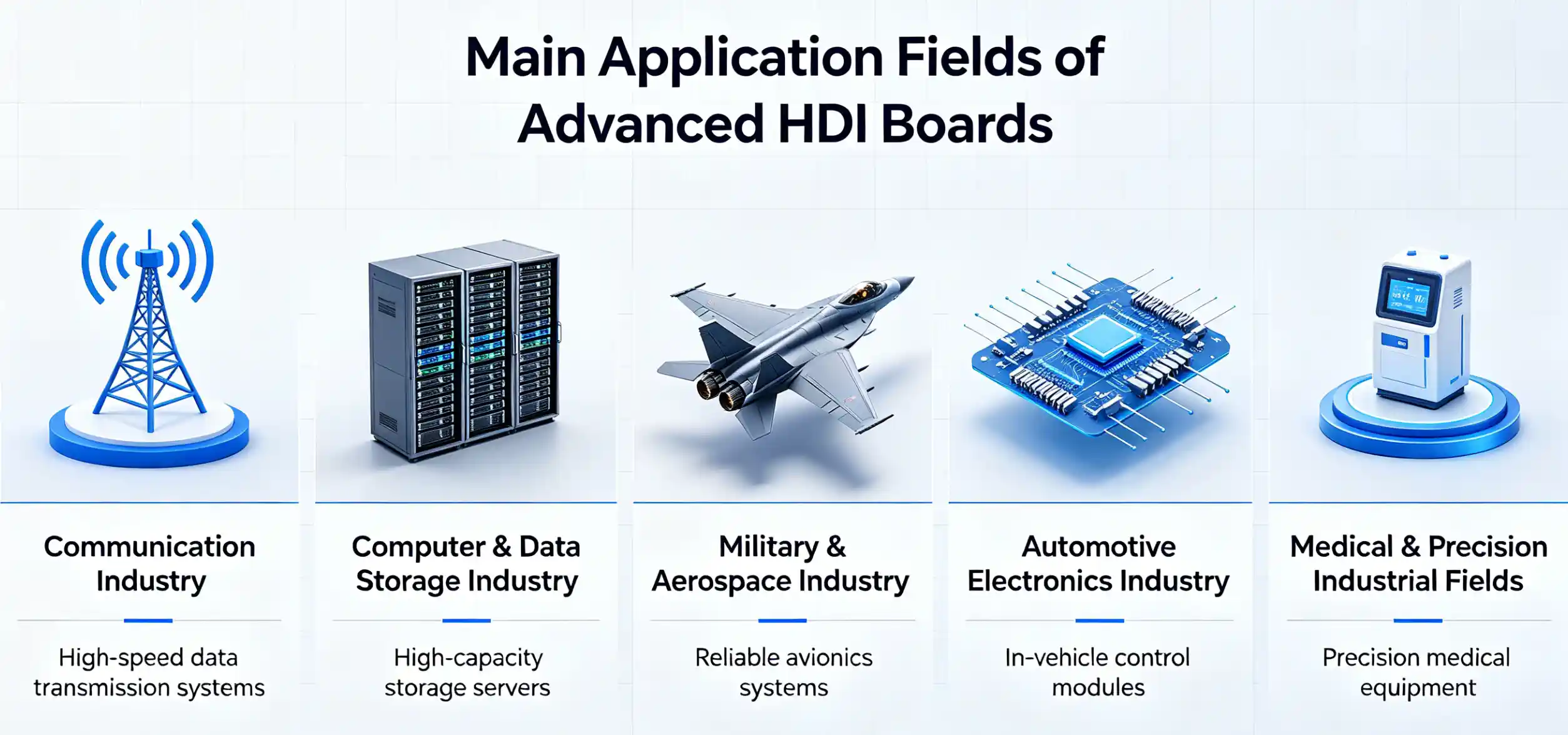
Key Applications of HDI Boards: Where High-Density Interconnect PCBs Are Used
In the modern electronics manufacturing industry, device miniaturization, high-speed data transmission, and long-term operational stability have become core development trends. Traditional printed circuit boards can no longer support the complex circuit design and high-frequency performance requirements of next-generation electronic equipment.
As advanced multilayer circuit substrates, HDI Boards (High Density Interconnect Boards) feature ultra-high wiring density, exceptional structural reliability, precise circuit precision, and superior high-speed signal transmission capabilities. These comprehensive advantages enable HDI Boards to replace conventional PCBs and become the core electronic substrate for countless high-end devices. This article comprehensively explores the mainstream applications of HDI Boards across key industries, explaining why HDI technology has become an indispensable foundation for modern electronic systems.
1. Telecommunications Industry: Core Carrier for High-Frequency Signal Transmission
The telecommunications industry is one of the largest and most critical application scenarios for HDI Boards. With the rapid iteration of 5G communication, fiber-optic transmission, and satellite communication technologies, communication equipment poses extremely strict requirements on circuit boards, including high-frequency signal stability, low-latency data transmission, and long-term operational reliability.
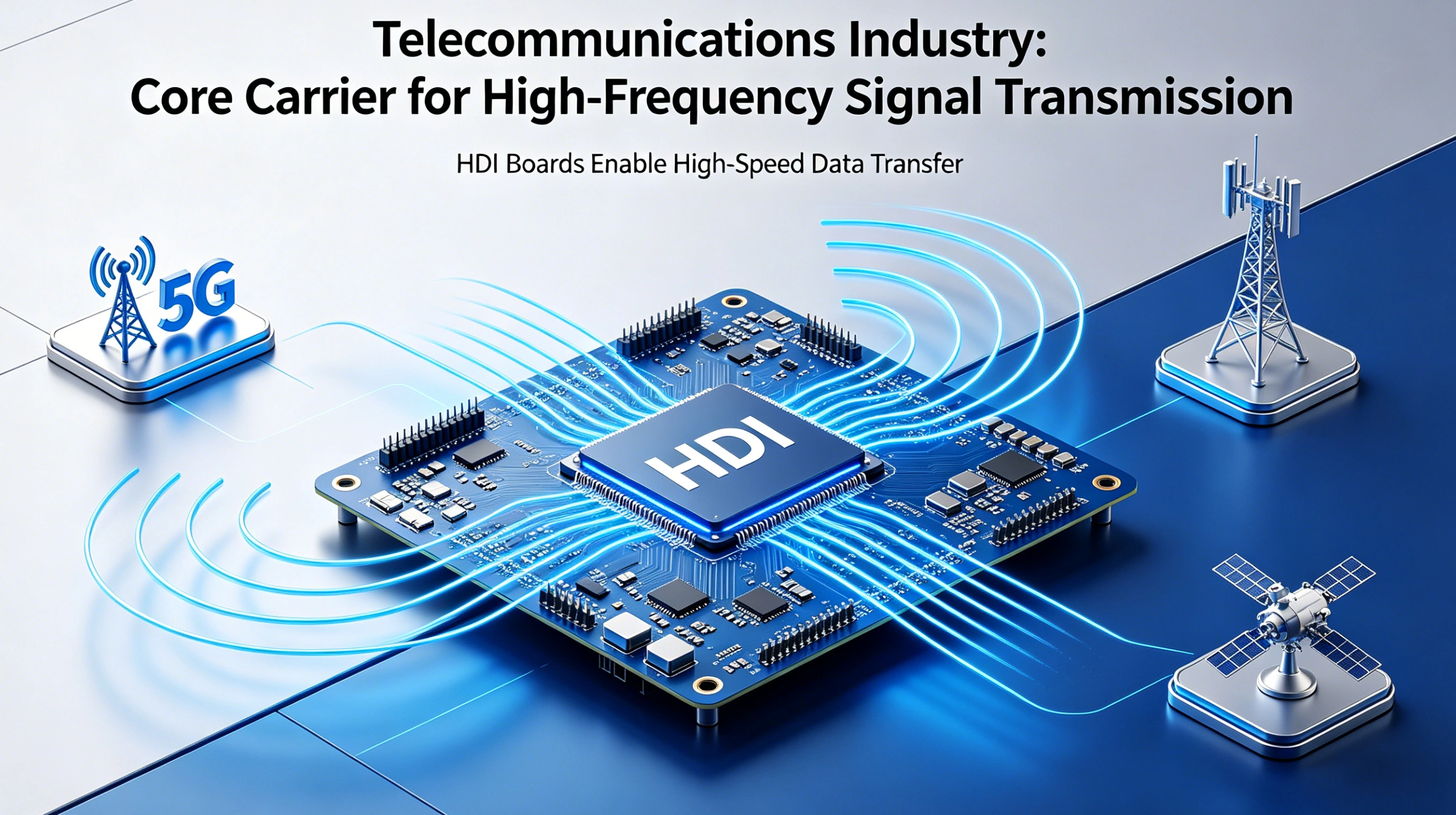
Thanks to their high precision and high-speed transmission performance, HDI Boards perfectly meet the rigorous standards of the communication field. They are widely deployed in core equipment such as mobile communication base stations, satellite communication terminals, optical fiber communication devices, and 5G radio frequency modules. In these devices, HDI Boards undertake key functions including high-speed digital signal processing, low-loss high-frequency signal transmission, and stable connection of high-end communication interfaces, ensuring efficient and uninterrupted data interaction for global communication networks.
2. Computer Industry: Reliable Support for High-Speed Computing
As computer hardware continues to upgrade toward high performance and multi-task parallel computing, traditional circuit boards are unable to bear high-load data processing and stable power supply operation. HDI Boards with high-density wiring, ultra-high reliability, and fast signal transmission characteristics have become the preferred substrate for high-end computer equipment.
HDI Boards are extensively applied in high-performance servers, industrial workstations, commercial desktop computers, and lightweight laptops. The advanced multilayer wiring structure of HDI Boards optimizes internal circuit layout, realizes efficient high-speed data operation, stable and low-consumption power distribution, and high-speed docking of peripheral interfaces. It effectively improves the overall operating efficiency of computer equipment and avoids system failures caused by circuit congestion and signal delay.
3. Consumer Electronics Industry: Key to Miniaturization and Multi-Functional Upgrade
The consumer electronics industry features rapid product iteration, pursuing lightweight, ultra-thin design, and diversified functions. Modern smart consumer devices need to integrate dozens of functional modules in a limited tiny space, which puts forward extremely high requirements on PCB wiring density. HDI Boards solve the space bottleneck of traditional PCBs and fully adapt to the development trend of consumer electronics.
Currently, HDI Boards are widely used in mainstream consumer products such as smartphones, tablet computers, smart TVs, and portable wearable devices. By utilizing microvia and microcircuit technology, HDI Boards realize highly integrated circuit design, support high-speed data processing, stable long-term power supply, and multi-functional interface expansion. They help consumer electronic products achieve thinner body design while realizing more intelligent and powerful functions.
4. Automotive Electronics Industry: High-Reliability Substrate for Intelligent Vehicles
With the comprehensive development of automotive intelligence and electrification, automotive electronic systems have become increasingly complex, covering intelligent control, active safety, intelligent cockpit, and vehicle sensing systems. Vehicle-mounted circuit boards need to adapt to harsh working environments such as extreme temperature differences, frequent vibration, and humid conditions, requiring extremely high durability and safety performance.
HDI Boards stand out in the automotive electronics field with excellent environmental adaptability and structural stability. They are widely used in automotive core control systems, vehicle safety protection systems, intelligent entertainment systems, and autonomous driving sensing modules. HDI Boards provide highly reliable data processing, durable power supply guarantee, and safe and stable circuit connection for automotive electronic equipment, ensuring the safe and stable operation of intelligent vehicles in complex road conditions.
5. Aerospace Industry: High-Standard Substrate for Extreme Environments
Aerospace equipment belongs to high-end precision equipment, working in extreme environments such as high altitude, strong electromagnetic interference, ultra-low temperature, and high pressure. Its internal circuit systems require ultra-high reliability, anti-interference performance, and long service life, which ordinary circuit boards cannot meet.
With high structural stability, strong environmental resistance, and high-precision signal transmission capabilities, HDI Boards have become the core circuit substrate for aerospace equipment. They are widely applied in aerospace control systems, high-precision navigation systems, and aerospace communication systems. HDI Boards ensure accurate data calculation, continuous and stable power supply, and anti-interference signal transmission for aerospace equipment, meeting the strictest industrial manufacturing standards.
Conclusion
Benefiting from their unique advantages of high density, high speed, high precision, and high reliability, HDI Boards have achieved large-scale applications in five core fields: communication, computer, consumer electronics, automotive electronics, and aerospace. As global electronic technology continues to innovate and downstream industry demand continues to upgrade, the manufacturing process and performance of HDI Boards will be further optimized. In the future, HDI Boards will gradually expand to emerging fields such as medical electronics and industrial precision equipment, becoming an indispensable core component of the global high-end electronic manufacturing industry.
FAQs About HDI Boards Applications
1. What are the main applications of HDI Boards?
HDI Boards are widely used in high-end industries including telecommunications, computer and data processing, consumer electronics, automotive electronics, and aerospace. Their high-density, high-speed, and high-reliability properties make them ideal for miniaturized, high-performance, and high-precision electronic devices that traditional PCBs cannot support.
2. Why are HDI Boards necessary for automotive and aerospace electronics?
Automotive and aerospace equipment operates in harsh and complex environments with strict requirements for vibration resistance, temperature resistance, and operational safety. HDI Boards feature excellent structural durability, stable signal transmission, and strong environmental adaptability, which can effectively avoid circuit failure and signal loss in extreme working conditions, ensuring long-term safe operation of precision equipment.
3. What is the future development trend of HDI Board applications?
With the development of 5G communication, artificial intelligence, autonomous driving, and smart medical technology, the market demand for high-precision and high-speed electronic equipment is growing rapidly. The application scope of HDI Boards will continue to expand, and they will gradually become the mainstream PCB solution for almost all high-end intelligent electronic devices in the future.