
How to Control Quality for Quick-turn PCB Sample: A Comprehensive Guide
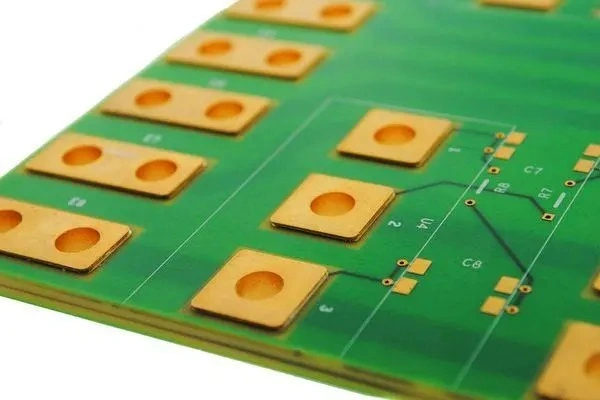
In the fast-paced electronics industry, where product development cycles are shrinking and market competition is intensifying, the Quick-turn PCB sample has become a critical component for accelerating product time-to-market. A Quick-turn PCB sample refers to the expedited production of printed circuit board prototypes, typically delivered within 24 to 72 hours, designed to help engineers validate designs, test functionality, and iterate quickly before mass production.
However, speed does not have to come at the cost of quality—on the contrary, a high-quality Quick-turn PCB sample ensures that design flaws are identified early, reducing rework costs and preventing delays in the overall product launch. This article explores proven quality control methods for Quick-turn PCB samples, addresses common challenges, and provides practical insights to help manufacturers deliver reliable, high-performance Quick-turn PCB samples without compromising on speed.
1. Introduction
Today’s electronics market demands faster innovation and shorter product lifecycles, pushing manufacturers to prioritize speed in every stage of development—including PCB prototyping. A Quick-turn PCB sample is no longer a “nice-to-have” but a necessity for businesses looking to stay ahead of competitors, whether they’re launching a new consumer device, iterating on an industrial control system, or developing critical aerospace components.
The core goal of Quick-turn PCB sample production is to compress the manufacturing timeline from weeks to days (or even hours) while maintaining the same high quality standards as standard PCB production. To achieve this, manufacturers must implement a systematic quality control process that covers every stage of the Quick-turn PCB sample lifecycle, from design to delivery.
Without effective quality control, a Quick-turn PCB sample may fail functional tests, contain manufacturing defects, or not meet design specifications—all of which can derail product development and increase costs. This guide will break down the key quality control strategies for Quick-turn PCB samples, helping manufacturers balance speed and quality effectively.
2. Key Quality Control Methods for Quick-turn PCB Sample
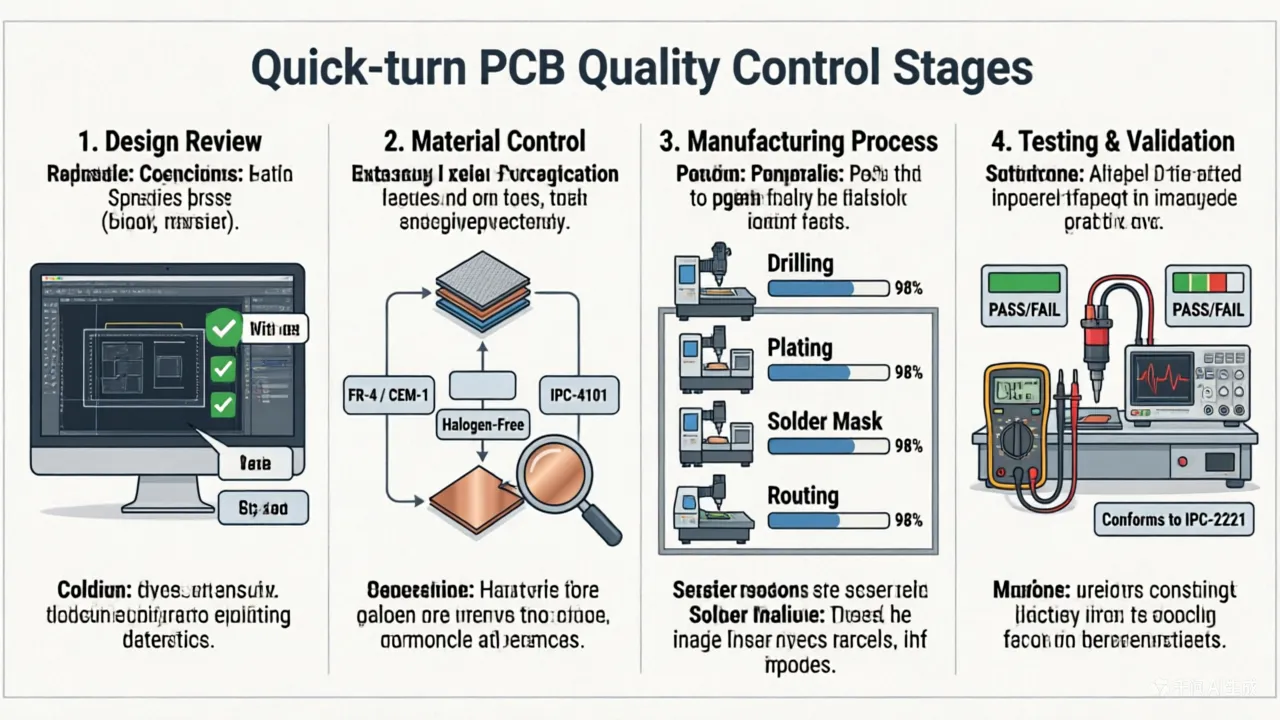
Quality control for Quick-turn PCB samples is a holistic process that starts long before production begins. It requires careful planning, strict process oversight, and proactive testing to ensure that every Quick-turn PCB sample meets the required specifications. Below are the four critical stages of quality control for Quick-turn PCB samples:
2.1 Perfect Quality Control in the Design Stage
The design stage is the foundation of a high-quality Quick-turn PCB sample—poor design decisions can lead to costly rework and delays, even with the fastest production processes. To optimize quality in the design phase for Quick-turn PCB samples, manufacturers must focus on three key areas.
First, select appropriate manufacturing processes, PCB materials, and layout/routing rules that align with both the design requirements and the capabilities of quick-turn production. For example, choosing standard FR-4 substrate (the gold standard for PCB substrates) can speed up production while ensuring stable electrical performance, making it ideal for most Quick-turn PCB sample applications.
Second, minimize post-production modifications and rework by conducting a thorough Design for Manufacturability (DFM) review before production. Reputable manufacturers now offer intelligent DFM review systems that automatically check for issues like insufficient trace spacing, incorrect hole sizes, and inadequate solder mask coverage within minutes of receiving Gerber files—improving efficiency by 80% compared to manual inspection.
Third, maintain close communication with the design team to clarify requirements, address potential design flaws early, and ensure that the design is optimized for quick-turn production. This collaboration helps avoid last-minute changes that can slow down the process and compromise the quality of the Quick-turn PCB sample.
2.2 Establish Strict Material Control Procedures
The quality of a Quick-turn PCB sample is directly determined by the quality of the raw materials used. Since quick-turn production leaves little room for material-related delays, manufacturers must implement strict material control procedures to ensure consistency and reliability. Start by conducting rigorous supplier screening to select trusted partners who can provide high-quality materials with reliable quality guarantees. For Quick-turn PCB samples, materials should meet industry standards (such as IPC-A-600) and be readily available to avoid production bottlenecks.
During the procurement process, verify that all materials—including copper foils, insulating substrates, solder masks, and adhesives—meet the specified requirements, and request detailed quality certificates from suppliers. Additionally, implement strict incoming inspection (IQC) processes to test materials for defects, such as impurities in copper foils or inconsistencies in substrate thickness, before they enter the production line.
Proper storage of materials is also critical: keep substrates and other sensitive materials in controlled environments to prevent moisture absorption, contamination, or damage, which can degrade the quality of the Quick-turn PCB sample. By controlling materials at every step, manufacturers can eliminate one of the most common causes of quality issues in Quick-turn PCB samples.
2.3 Strengthen Quality Control in the Manufacturing Process
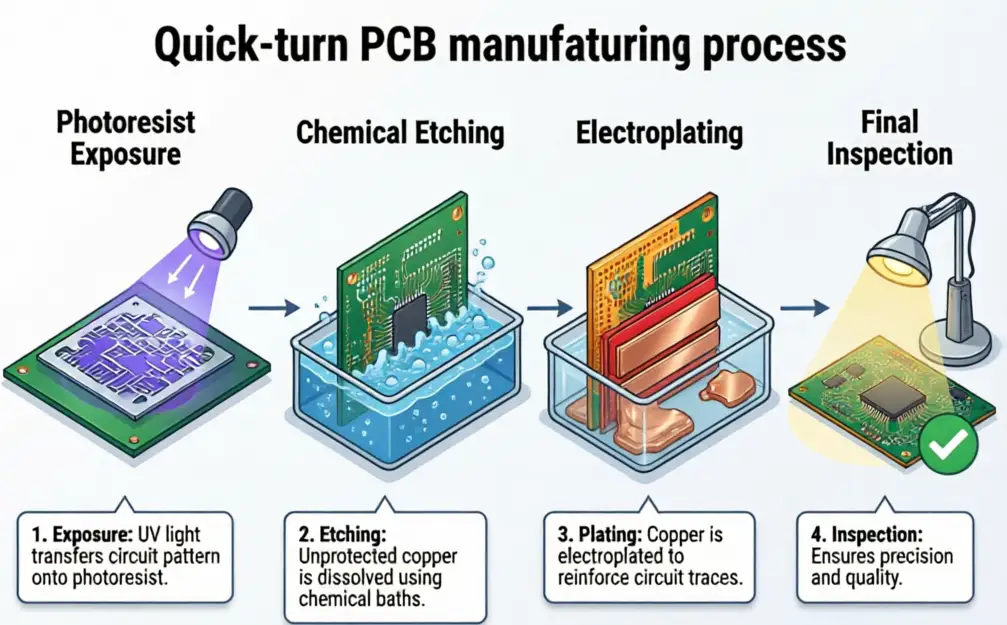
The manufacturing process is where speed and quality intersect most closely for Quick-turn PCB samples. To maintain quality while accelerating production, manufacturers must implement real-time monitoring and strict process controls for every key step, including exposure, development, etching, plating, and soldering. For example, using Laser Direct Imaging (LDI) instead of traditional photolithography improves pattern transfer accuracy to ±5 μm, enabling support for finer traces and smaller components—critical for high-quality Quick-turn PCB samples used in advanced electronics.
High-speed CNC drilling equipment, with spindle speeds up to 100,000 rpm, can complete small-diameter holes in a fraction of the time of conventional equipment, speeding up production without sacrificing precision. Additionally, provide professional training for all production operators to ensure they understand the correct operating procedures, quality standards, and how to identify potential defects.
Regular quality audits of the production line are also essential to identify process inefficiencies or deviations, and implement corrective and preventive actions promptly. Many manufacturers now use cellular manufacturing and dynamic scheduling models to optimize workflow, ensuring that Quick-turn PCB samples move through the production line efficiently while maintaining strict quality control.
2.4 Prioritize Quality Inspection and Testing
Quality inspection and testing are the final line of defense for ensuring a high-quality Quick-turn PCB sample. Unlike standard PCB production, quick-turn processes leave little time for rework, so it’s critical to identify and resolve defects early in the manufacturing process. Implement a multi-stage testing process that includes online testing (ICT), functional testing (FCT), and reliability testing.
In-circuit testing (ICT) checks for short circuits, open circuits, and component defects, while functional testing (FCT) verifies that the Quick-turn PCB sample performs as intended under real-world conditions. For complex Quick-turn PCB samples with hidden components (such as BGAs or QFNs), X-ray inspection is essential to check solder joint quality beneath packages—identifying voids, bridging, or misalignment that are invisible to optical inspection.
Automated Optical Inspection (AOI) systems can also be used to capture high-resolution images of the board, comparing them against golden standards to detect missing components, solder bridges, or misalignment. Additionally, analyze test data to identify recurring defects, optimize the production process, and continuously improve the quality of Quick-turn PCB samples. By combining automated testing with manual visual inspection, manufacturers can ensure that every Quick-turn PCB sample meets the required quality standards before delivery.
3. Challenges and Solutions for High-Quality Quick-turn PCB Sample
Balancing speed and quality for Quick-turn PCB samples is not without challenges. Below are the two most common challenges manufacturers face, along with practical solutions to overcome them:
3.1 Balancing Shortened Cycles and Quality Maintenance
The core challenge of Quick-turn PCB sample production is reducing the manufacturing cycle while maintaining or improving quality. Many manufacturers mistakenly believe that speed requires cutting corners on quality, but this often leads to costly rework and delays in the long run. The solution lies in implementing efficient, technology-driven quality control methods. For example, adopting automated testing equipment (such as AOI, X-ray inspection, and automated DFM review) can significantly improve inspection efficiency, reduce human error, and speed up the testing process.
Implementing an intelligent Quality Information System (QIS) allows for real-time monitoring of production data, enabling manufacturers to track quality metrics, identify potential issues early, and trace defects back to their source. Additionally, optimizing the production workflow—such as pre-stocking common materials, using dedicated production lines for quick-turn orders, and streamlining communication between departments—can reduce unnecessary delays without compromising quality.
Training employees to prioritize both speed and quality, and incentivizing them to identify and resolve defects proactively, also plays a key role in balancing these two critical goals. With these strategies, manufacturers can deliver high-quality Quick-turn PCB samples in as little as 24 hours without sacrificing reliability.
3.2 Addressing Diverse Customer Needs
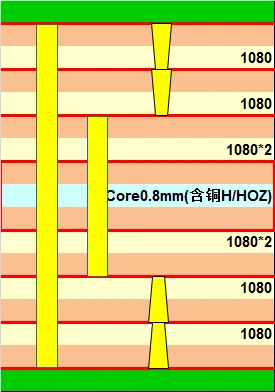
As the electronics industry evolves, customer demands for Quick-turn PCB samples are becoming increasingly diverse and personalized. From simple 2-layer boards for consumer electronics to complex 8-10 layer boards for aerospace and medical applications, manufacturers must adapt their quality control processes to meet a wide range of requirements.
This diversity poses a challenge for quality control, as a one-size-fits-all approach may not work for all types of Quick-turn PCB samples. To address this, manufacturers must build strong technical R&D capabilities and flexible production line configurations, allowing them to adapt quickly to different design requirements. For example, some customers may require Quick-turn PCB samples with high-temperature resistant materials for automotive applications, while others may need halogen-free boards to comply with RoHS regulations.
Maintaining close communication with customers is also critical: understand their specific needs, provide DFM feedback to optimize the design for quick-turn production, and keep them updated on the production progress. In terms of quality control, establish flexible quality standards and inspection procedures that can be adjusted based on the complexity of the Quick-turn PCB sample and the customer’s requirements. By being adaptable and customer-centric, manufacturers can deliver high-quality Quick-turn PCB samples that meet even the most unique needs.
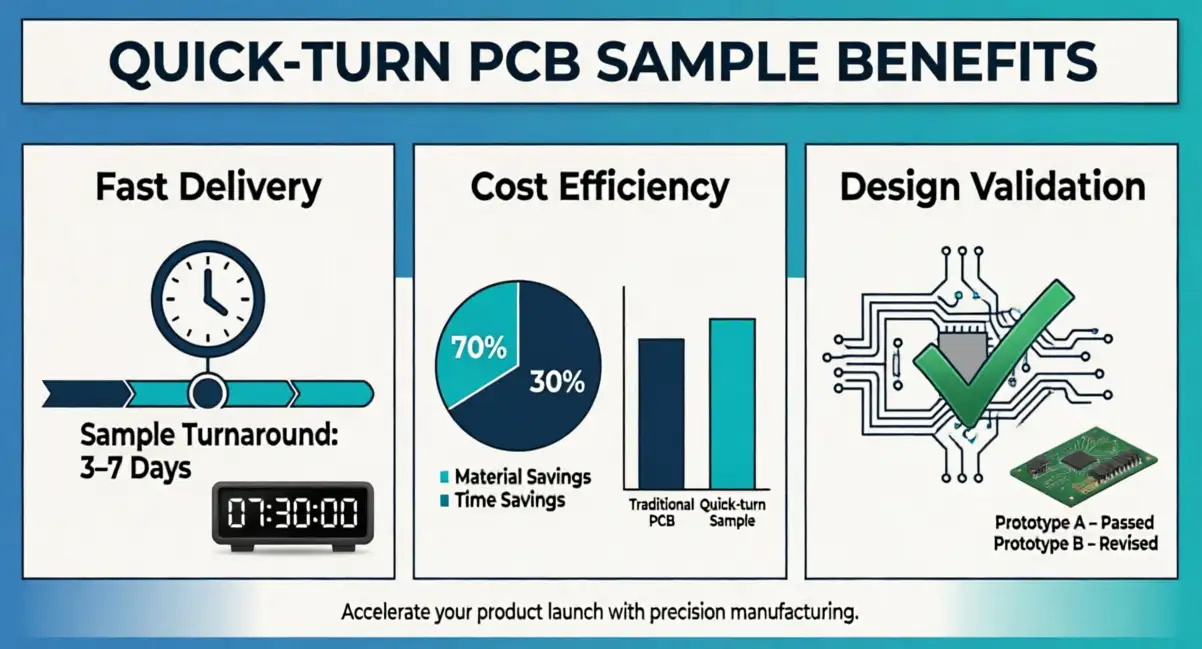
4. Case Study: Achieving High-Quality Quick-turn PCB Sample with Effective Quality Control
To illustrate how effective quality control can drive success in Quick-turn PCB sample production, let’s look at a real-world example: Shenze Multilayer Circuit Co., Ltd., a leading PCB manufacturer specializing in quick-turn prototyping. Facing increasing demand for high-quality Quick-turn PCB samples in industries like 5G, medical equipment, and aerospace, the company implemented a comprehensive quality control system that transformed its production capabilities.
First, they adopted an advanced automated testing system, including AOI, X-ray inspection, and ICT, which reduced inspection time by 60% and eliminated 90% of human-induced defects.
Second, they introduced an intelligent Quality Information System (QIS) that enabled real-time monitoring of production data, from material incoming to final delivery, allowing for quick defecttrace to the source and process optimization.
Third, they invested in employee training programs, ensuring that every operator was proficient in quick-turn production processes and quality control standards.
Finally, they streamlined their DFM review process, using an automated system to provide feedback within 10 minutes of receiving Gerber files, reducing design-related delays by 70%.
The results were impressive: the company reduced its Quick-turn PCB sample delivery time to 24-48 hours for standard boards and 72 hours for complex multi-layer boards, while maintaining a defect rate of less than 0.5%.
Their Quick-turn PCB samples met IPC-A-600 class 2 standards (and class 3 standards for aerospace/medical applications), making them suitable for functional testing and design validation. Customers across industries praised the reliability and consistency of their Quick-turn PCB samples, leading to a 40% increase in repeat orders and a strong reputation in the global market. This case study demonstrates that with the right quality control strategies, manufacturers can deliver high-quality Quick-turn PCB samples at speed, gaining a competitive edge in the industry.
5. Conclusion
In summary, controlling the quality of Quick-turn PCB samples requires a systematic approach that covers the entire production lifecycle—from design and material selection to manufacturing and testing. By perfecting design-stage quality control, establishing strict material procedures, strengthening manufacturing process oversight, and prioritizing comprehensive testing, manufacturers can balance speed and quality effectively.
Addressing common challenges, such as balancing shortened cycles and meeting diverse customer needs, requires technology-driven solutions, flexible processes, and a customer-centric mindset. As the electronics industry continues to evolve, the demand for high-quality Quick-turn PCB samples will only grow—manufacturers that invest in robust quality control systems will be well-positioned to meet this demand, reduce costs, and gain a competitive advantage.
Ultimately, a high-quality Quick-turn PCB sample is not just a prototype—it’s a critical tool for accelerating innovation and ensuring the success of the final product.
FAQ About Quick-turn PCB Sample
Q1: How fast can a high-quality Quick-turn PCB sample be delivered?
A1: The delivery time for a Quick-turn PCB sample depends on its complexity and specifications. Standard 2-layer FR-4 boards can typically be delivered within 24 hours, while 4-6 layer boards may take 48 hours. Complex multi-layer boards (8+ layers), HDI boards, or those with special materials (such as high-temperature substrates) usually require 72 hours. Reputable manufacturers can provide accurate timelines based on your design requirements, ensuring speed without compromising quality.
Q2: Is the quality of a Quick-turn PCB sample the same as a standard PCB prototype?
A2: Yes, when produced by a reputable manufacturer, a Quick-turn PCB sample meets the same quality standards as a standard PCB prototype. The speed of quick-turn production comes from optimized workflows, dedicated production lines, and automated technologies—not from cutting corners on quality. High-quality Quick-turn PCB samples undergo the same material inspections, manufacturing controls, and testing (ICT, FCT, AOI) as standard prototypes, ensuring they meet IPC industry standards and are suitable for functional testing and design validation.
Q3: What can I do to avoid delays in my Quick-turn PCB sample order?
A3: To minimize delays, start by submitting complete, error-free Gerber and drill files. Use standard materials (such as FR-4) and surface finishes (HASL, ENIG) that are readily available, as specialty materials can extend production time. Ensure your design passes DFM checks before ordering—this helps avoid design-related rework. Clearly communicate any special requirements (such as halogen-free materials or specific quality standards) upfront, and work with a manufacturer that offers real-time order tracking and proactive communication. Following these steps will help ensure your Quick-turn PCB sample is delivered on time and meets your specifications.