Industrial Control PCB: The Core Backbone of Smart Manufacturing & Industry 4.0
Against the backdrop of smart manufacturing and Industry 4.0, industrial automation control systems are rapidly transforming global production workflows. As the core carrier of these advanced systems, Industrial Control PCB (Industrial Control Printed Circuit Board) acts as the “nerve center” of industrial equipment, undertaking critical tasks including signal transmission, data processing, precision control, and stable interconnection. This article explores the definition, core functions, key characteristics, application scenarios, manufacturing requirements, and future trends of this critical component, highlighting its irreplaceable strategic value in modern industrial systems.
I. Definition & Core Mission of Industrial Control PCB
1. Technical Definition
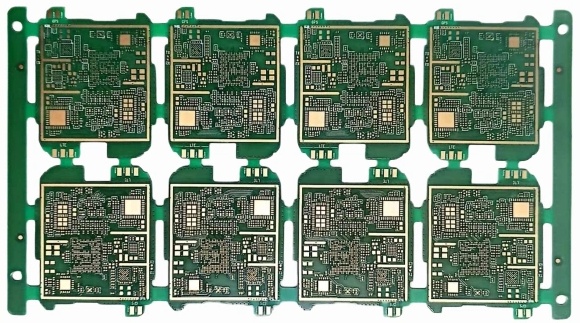
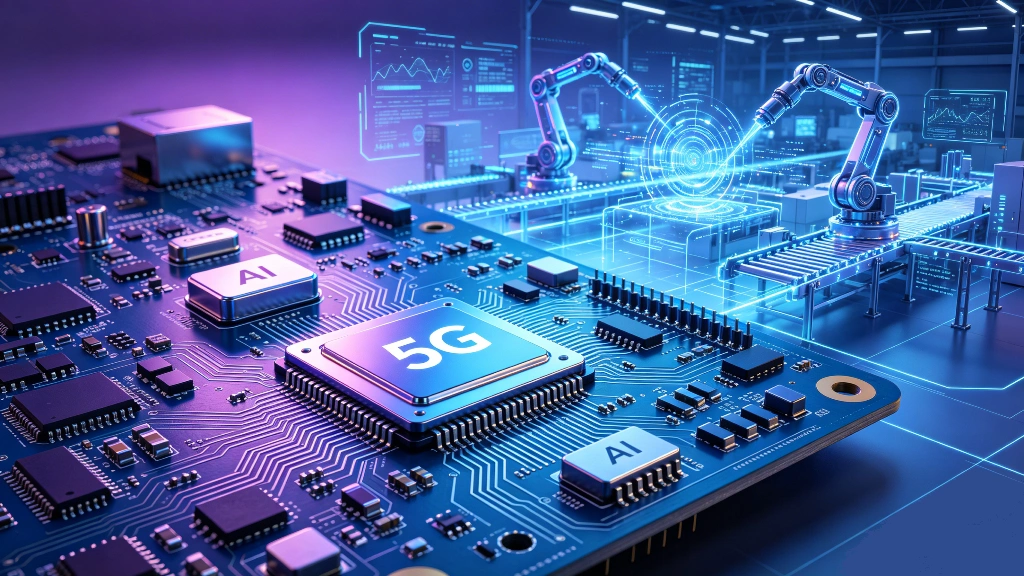
Industrial Control PCB refers to high-performance rigid or rigid-flex printed circuit boards specially designed for harsh industrial environments. Its core function is to connect key electronic components such as MCUs, FPGAs, power modules, sensors, and communication chips through precise circuit layouts, forming a complete hardware platform for industrial control systems. Unlike consumer-grade PCBs, these specialized boards must meet far stricter requirements for environmental adaptability, long-term durability, anti-interference capability, and operational stability—critical for reliable performance in industrial settings.
2. Structural Characteristics
The structural design of these boards is tailored to industrial demands, with three key features:
- Layer Structure: Typically 4 to 16 layers; complex industrial systems may exceed 20 layers, including signal layers, power layers, ground layers, and dedicated shielding layers to ensure signal integrity.
- Material Selection: Base materials include high-Tg FR-4 (Tg ≥ 170°C) for general use, aluminum substrates for high heat dissipation, and polyimide for high-frequency applications. Copper thickness is 2–3 oz for outer layers and 1–2 oz for inner layers to support high-current transmission.
- Protective Processes: Conformal coating (moisture, salt spray, and mildew resistance) and potting adhesive (vibration and shock resistance) extend the service life of these components in harsh environments.
3. Performance Specifications
To adapt to industrial operating conditions, these specialized PCBs boast superior performance metrics:
- Operating temperature range: -40°C to +125°C; military-grade versions support -55°C to +150°C.
- Vibration resistance: Compliant with IEC 60068-2-6, capable of withstanding random vibrations from 5 to 2000 Hz.
- Service life: 10 to 15 years of continuous operation, far exceeding the 3–5 year lifespan of consumer PCBs.
II. Core Functions of Industrial Control PCB
As the “nerve center” of industrial control systems, Industrial Control PCB fulfills three core functions that drive industrial automation efficiency:
1. System Integration: From Discrete Components to Unified Control
It enables modular integration of PLC controllers, I/O modules, and industrial communication interfaces (Profinet, EtherCAT), upgrading traditional relay logic to programmable digital control. High-layer HDI-based designs can integrate over 2,000 components within a 10cm×15cm area, replacing dozens of discrete boards and greatly optimizing space usage in industrial equipment.
2. Signal Integrity & Real-Time Control
Through differential routing, matched-length wiring (±0.1mm error), and multi-layer shielding, these boards effectively suppress electromagnetic interference (EMI) by more than 30dB. Their nanosecond-level signal delay ensures ultra-precise motion control—critical for applications like robotic arm positioning with error below 0.01mm.
3. Hub for Industrial Interconnection
They support embedded communication chips for RS-485, CAN bus, and industrial Ethernet, realizing stable device-level interconnection. By integrating ARM Cortex-A series processors, they enable edge computing capabilities, reducing cloud transmission latency by up to 60% and enhancing real-time data processing.
III. Four Key Characteristics of Industrial Control PCB
The unique advantages of Industrial Control PCB make it indispensable in modern industry, with four key characteristics:
1. High Integration & Miniaturization
It widely adopts 0.4mm pitch BGA packages and 0201 chip components. With microvia and blind/buried via technology, interlayer connection density is tripled, supporting highly compact industrial controller designs for space-constrained applications.
2. Extreme Environment Reliability
Qualified Industrial Control PCB passes 1,000 thermal cycles between -40°C and +125°C (IPC-TM-650 2.6.8) without failure. ENIG or immersion gold surface finishes ensure solder joints resist corrosion for up to 10 years, even in hydrogen sulfide and high-humidity industrial environments.
3. Deep Customization for Industry Scenarios
These specialized boards are highly customizable to meet industry-specific needs:
- Rail transit: Compliant with EN 50155, supporting 110V DC power and surge protection.
- Oil and gas drilling: Withstands high pressure and high temperature (HPHT) and holds ATEX/IECEx explosion-proof certifications.
- Expandability: Reserved PCIe and FMC interfaces support flexible hardware upgrades for future needs.
4. Full Lifecycle Cost Optimization
DFM (Design for Manufacturability) optimizes panel utilization to 95%, reducing per-unit cost of these components by 20%. Built-in temperature and vibration sensors enable predictive maintenance, cutting mean time to repair (MTTR) by 50% and lowering long-term operational costs.
IV. Five Major Application Scenarios of Industrial Control PCB
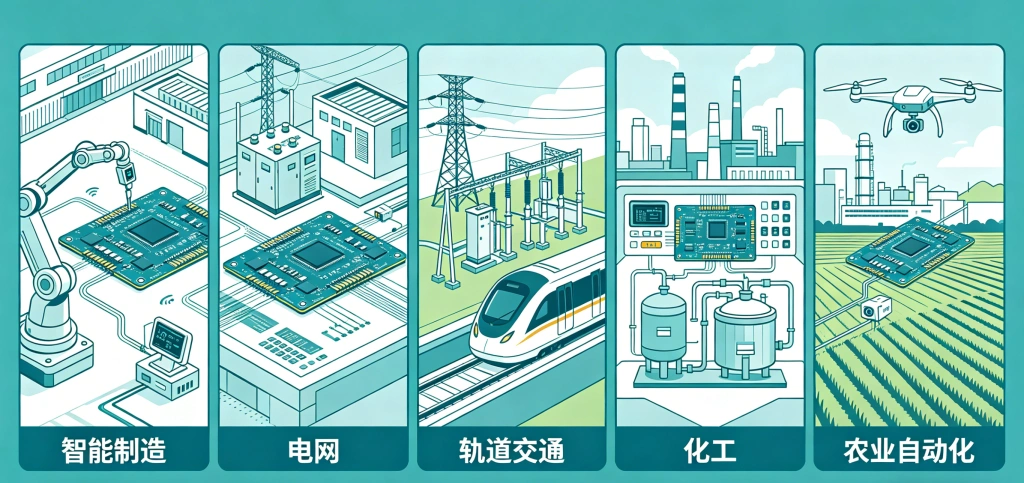
Industrial Control PCB is widely used across industries, serving as the core hardware for critical systems. Below are its key application scenarios:
1. Smart Manufacturing
High-layer units are used in PLCs, motion controllers, and robotic arms. They help automotive welding lines achieve a yield rate of 99.98% and reduce line changeover time from 8 hours to 15 minutes, boosting production efficiency.
2. Energy & Power Grid
CPCI-based designs support 16-channel synchronous sampling (0.1% accuracy) for real-time substation monitoring. They have helped provincial power grids reduce fault location time from 2 hours to 30 seconds, minimizing power outages.
3. Process & Chemical Industry
Explosion-proof models (Ex ia IIC T4) are applied in refinery DCS systems, monitoring thousands of pressure and flow points. They reduce accident rates by 80% and maintenance costs by 40%, enhancing operational safety.
4. Rail Transit
Aluminum-based units with copper-column heat dissipation support IGBT driver circuits, enduring 150°C junction temperature and ensuring over 100,000 hours of reliable operation in high-speed rail traction systems.
5. Agricultural Automation
IP67-rated boards integrate LoRa modules to intelligently control greenhouse temperature, humidity, and light, increasing crop yields by up to 35% and promoting precision agriculture.
V. Six Core Manufacturing Requirements for Industrial Control PCB
To ensure high performance and reliability,Industrial Control PCB must meet strict manufacturing standards, including six core requirements:
1. Micron-Level Precision
Minimum line width/space of 3/3 mil, with interlayer alignment controlled within ±25μm using X-ray drilling positioning systems to meet high-speed impedance requirements for these specialized boards.
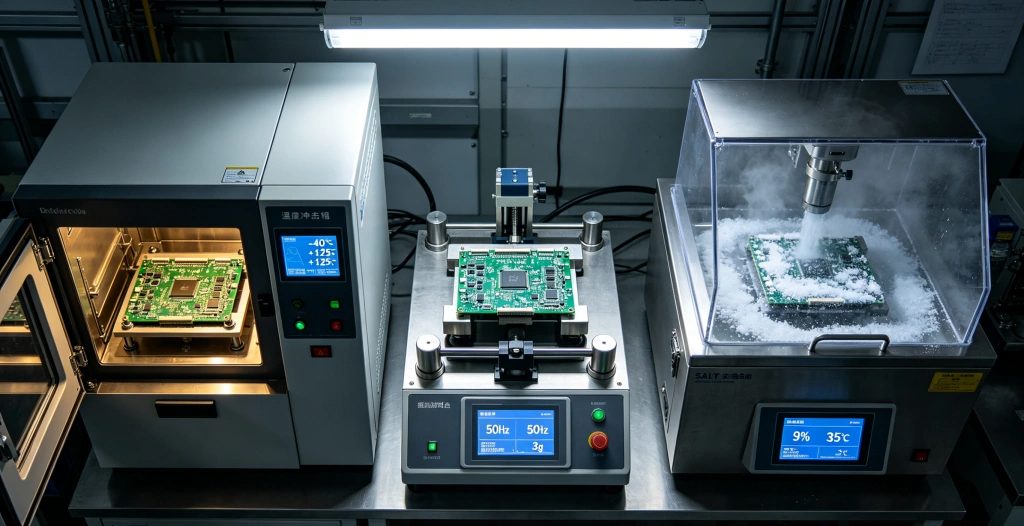
2. Strict Reliability Testing
- Thermal stress test: No delamination after 3 reflows at 288°C.
- CAF resistance test: Insulation resistance >10⁸Ω after 1000 hours at 85°C/85% RH.
3. Extreme Temperature Adaptability
High-frequency materials such as Rogers RO4350B and high-Tg Isola IS410 (Tg 180°C) ensure these components maintain stable performance under wide temperature fluctuations.
4. High Mechanical Strength
Components over 5g are fixed with epoxy adhesive; 1.6mm board thickness plus steel reinforcement ensures these boards pass 20G mechanical shock tests.
5. Excellent EMC Performance
Island-style power layout and π-type filters on IO ports effectively isolate noise. These specialized PCBs comply with EN 55032 Class A electromagnetic compatibility standards.
6. Green Manufacturing & Full Traceability
Lead-free processes conform to RoHS 2.0; water-based cleaners replace VOC solvents. Laser-etched QR codes enable 10-year traceability of material batches and process parameters for these components.
VI. Future Trends of Industrial Control PCB
As Industry 4.0 deepens and 5G, AI, and IoT integrate with industrial systems, Industrial Control PCB is evolving toward four key trends, shaping the future of industrial automation:
1. Heterogeneous Integration
Embedded passive components reduce its surface area by 30%. SiP (System-in-Package) and TSV (Through-Silicon Vias) technology support 3D stacking of processors and memory, increasing integration density by 50% and reducing power consumption by 30%.
2. High-Frequency & High-Speed Materials
Low-loss substrates such as Panasonic MEGTRON6 (Df=0.002@10GHz) support 112Gbps PAM4 signal transmission, meeting the high-speed communication needs of next-gen industrial systems. This advancement ensures these boards maintain signal integrity in 5G and edge computing applications.
3. Intelligent Manufacturing
AI-driven AOI systems achieve 99.99% detection accuracy (false alarm rate <0.1%) for its defects. IoT and digital twin technology optimize production processes, reducing trial costs and improving yield.
4. Sustainable & Eco-Friendly Development
Bio-based epoxy resins (plant fiber-reinforced) reduce its carbon footprint by 40%. Waste PCB recycling (copper recovery rate >95%) and green design (DFE) promote circular economy in the industry.
Conclusion
From mechanical gears in the steam age to silicon-based circuits in smart factories, the evolution of industrial control has centered on precision and reliability. As the physical foundation of this evolution,Industrial Control PCB carries not only electrical current and data but also the vision of advanced industrial civilization. With continuous breakthroughs in material science, microelectronics, and intelligent manufacturing, future versions will become more miniaturized, intelligent, and eco-friendly, providing a solid technical foundation for the Fourth Industrial Revolution.