Analysis of Difficulties in HDI PCB Manufacturing
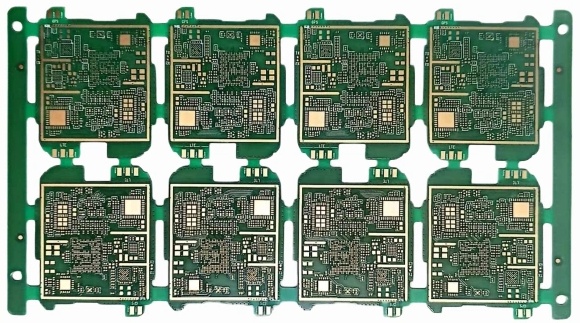
HDI PCB manufacturing involves a complex series of processes with high technical barriers, and each production step presents unique challenges. In the field of HDI PCB manufacturing, even minor errors in any single process can lead to direct scrappage of the entire circuit board, making strict process control critical to achieving stable, high-quality production. Below, we analyze the key technical difficulties in HDI PCB manufacturing and the core factors that affect processing quality and yield.
1. Challenges in Material Selection for HDI PCB
Material selection is one of the foundational steps in HDI PCB manufacturing and directly determines the processing performance, dimensional stability, and final cost of HDI boards.
For microvias with a diameter below 100μm, most PCB manufacturers choose yellow-green or yellow phenolic cotton woven materials as the core substrate. This type of base material offers the advantage of low cost and strong price competitiveness, making it suitable for the production of 4–6 layer HDI PCBs. Some manufacturers also use white cotton fabric substrates, which provide better control over aperture accuracy but come with a higher material cost.
For microvias with a diameter above 75μm, white phenolic resin, polyester, or polyimide materials are commonly preferred. These substrates feature excellent dimensional stability, minimal aperture deformation during processing, and sufficient performance to meet high-density wiring requirements. However, their higher material cost remains a key consideration in optimizing the overall economics of HDI PCB manufacturing.
2. Manufacturing Difficulties of Blind and Buried Vias
The application of buried vias and blind vias is a defining characteristic of HDI PCBs, and their precision processing represents one of the greatest technical hurdles in HDI PCB manufacturing.
Blind via fabrication relies heavily on laser drilling technology. During laser processing, the upper and lower copper foils of the substrate are ablated to form microvias, but the resulting hole walls often suffer from roughness, irregular geometry, and excessive resin or copper residue. These residues easily cause microvia blockage, requiring repeated cleaning and thorough drying throughout the production process.
In addition, poorly formed blind vias increase the risk of cold solder joints, open circuits, and interlayer connection failures during assembly. As a result, HDI PCB manufacturing imposes extremely high standards for laser parameter control, desmear treatment, and via metallization to ensure reliable electrical performance.
3. Special Design and Processing Challenges of HDI Pads
HDI PCB pads differ significantly from those on traditional PCBs, adding further complexity to HDI PCB manufacturing.
Whereas traditional PCB pads only need to avoid being covered by copper traces, HDI pads often feature chamfers, notches, special-shaped cuts, and fine-pitch structures. A major processing difficulty is the risk of copper peeling or pad breakage during via formation or special-shaped routing, especially for fine-pitch pads smaller than 0.6mm.
To mitigate these issues, optimized process sequences are essential in HDI PCB manufacturing: engineers typically perform slotting before drilling, apply non-linear cutting processes first, and then conduct linear precision cutting. This sequence reduces mechanical stress and minimizes copper loss, improving pad integrity and yield.
4. Challenges in Microstrip Line Design and High-Density Wiring
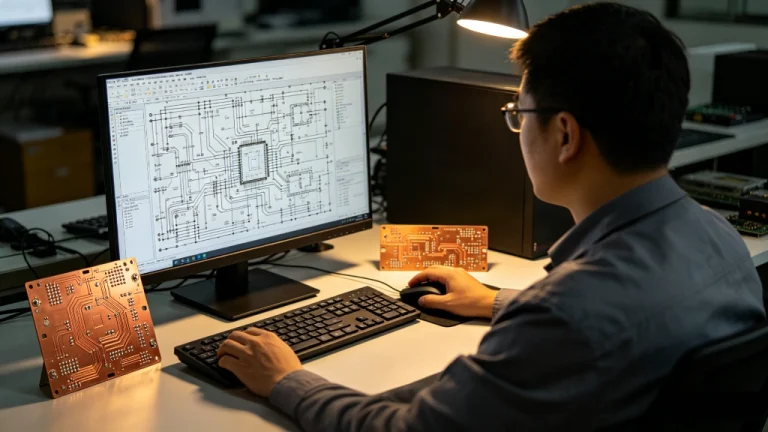
Continuous miniaturization in electronic products has pushed HDI wiring to extremely fine dimensions, typically below 4mil line width and 3mil line spacing, greatly increasing the difficulty of precision wiring in HDI PCB manufacturing.
High-precision wiring requires the use of high-performance polymer resin materials, which offer superior thermal resistance, low thermal expansion, and reduced risk of trace breakage under thermal stress.
During HDI PCB manufacturing, a structured wiring approach is recommended: rough wiring is first implemented to confirm routing directions, followed by an initial curing process. Fine adjustments are then made before secondary curing to stabilize trace positions. Additionally, strict avoidance of trace crossing and crosstalk is required to maintain signal integrity and electrical insulation performance.
5. Difficulties in Interlayer Connection for Multi-Layer HDI PCBs
Modern HDI designs often involve a large number of circuit layers and highly concentrated connection points. Using through-hole vias for all interlayer connections would result in excessive drilling density, compromising structural stability, signal integrity, and overall board performance—another key challenge in HDI PCB manufacturing.
To address this, manufacturers rely on blind via and buried via technologies. However, buried via fabrication is highly complex and costly, while laser-drilled blind vias demand ultra-precise equipment and process control. Poor drilling quality can lead to inadequate metallization, weak interlayer adhesion, and connection failures, making interlayer connection control a core focus in advanced HDI PCB manufacturing.
6. Technical Challenges in the Solder Mask Process
As HDI PCBs are widely used in high-end consumer electronics, communications, and wearable devices, appearance quality and surface cleanliness have become increasingly important, making solder mask processing a critical stage in HDI PCB manufacturing.
The solder mask process typically includes several key steps: after rough drilling, the board undergoes scraping, brushing, and deep cleaning to remove surface contaminants; solder mask materials are then applied evenly and cured under ultraviolet light; final inspection and packaging complete the process.
In HDI PCB manufacturing, precise alignment between the solder mask and circuit traces is essential to prevent solder mask from covering bonding pads or signal lines. Even slight misalignment can lead to assembly failures, electrical short circuits, or reduced insulation performance, requiring high-precision registration systems and strict quality inspection.
Conclusion
HDI PCB manufacturing is a highly integrated process that combines precision materials engineering, laser processing, micro-fabrication, and multilayer interconnection technology. Each stage—from substrate selection and blind via processing to fine wiring, interlayer connection, and solder mask application—directly affects the yield, reliability, and performance of HDI boards.
By understanding and overcoming these core difficulties in HDI PCB manufacturing, manufacturers can enhance process stability, improve product quality, and better meet the demands of high-density, high-performance electronic products in industries such as 5G communications, smart wearables, automotive electronics, and consumer devices.