
The Ultimate Guide to Backplane PCB
In the complex ecosystem of modern electronics, few components are as critical yet misunderstood as the Backplane PCB. Often described as the “backbone” of a system, a backplane is far more than a simple circuit board; it is the central nervous system that dictates the performance, reliability, and scalability of high-end electronic equipment.
From the servers powering the AI revolution to the avionics in modern aircraft, the Backplane PCB plays a pivotal role. This comprehensive guide explores what a backplane is, why “back drilling” is a game-changer for signal integrity, and how to select the right board for your application.
I.What is a Backplane PCB?
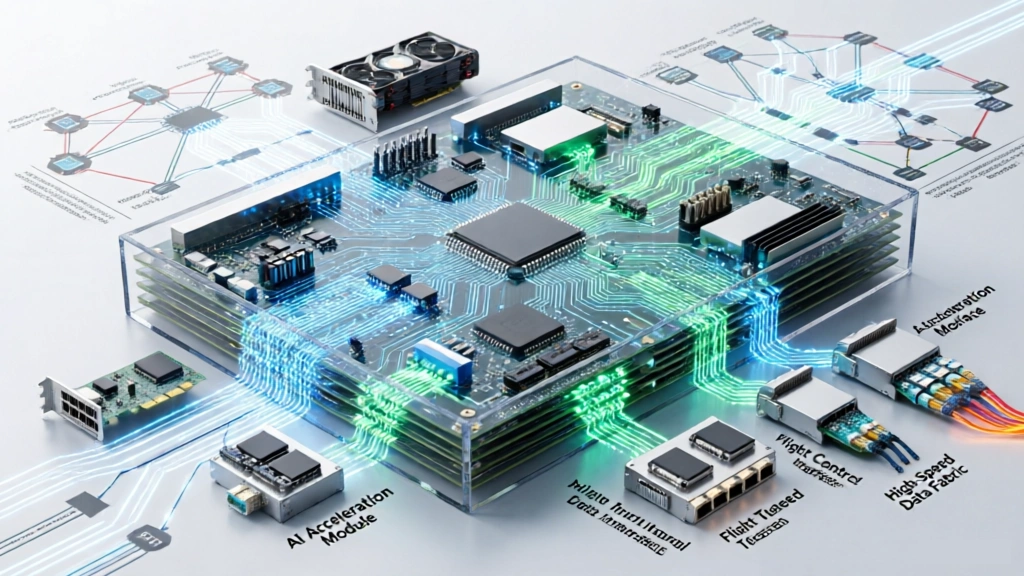
A Backplane PCB (Printed Circuit Board) is a specialized type of circuit board designed to connect multiple printed circuit boards (PCBs) to each other. Unlike a standard motherboard that might host a CPU and memory directly, a backplane PCB acts as a passive or active carrier. It allows various “daughter cards” or plug-in modules to be inserted into it, creating a unified system.
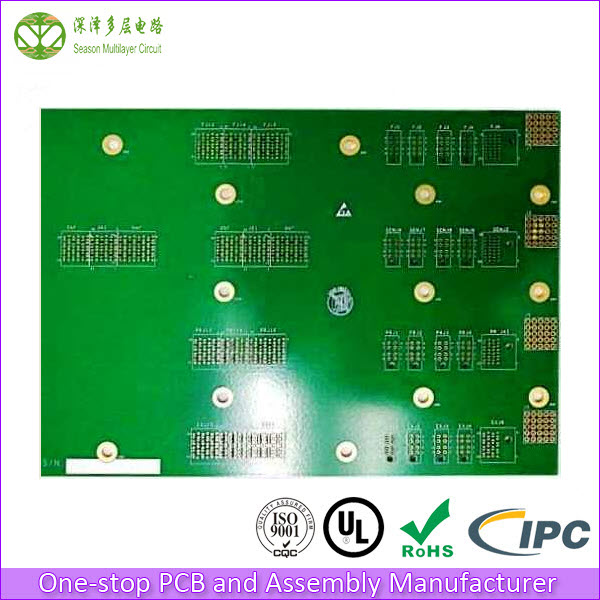
For instance, the following picture shows a 12-layer high-speed backplane PCB produced by our company, which is used for automotive products.
1.The “Back Drilling” Distinction
In the PCB manufacturing industry, the term “backplane PCB” has become synonymous with high-complexity boards that require Back Drilling.
When signals travel through a PCB, they use holes called “vias” to move between layers. However, if a signal only needs to travel from Layer 1 to Layer 10, the remaining portion of the hole (the stub) acts like an antenna, reflecting signals and causing data loss. Back Drilling is a secondary drilling process that removes this unused copper stub. This technique is essential for high-speed backplanes to ensure signal integrity, particularly in 5G and high-performance computing applications.
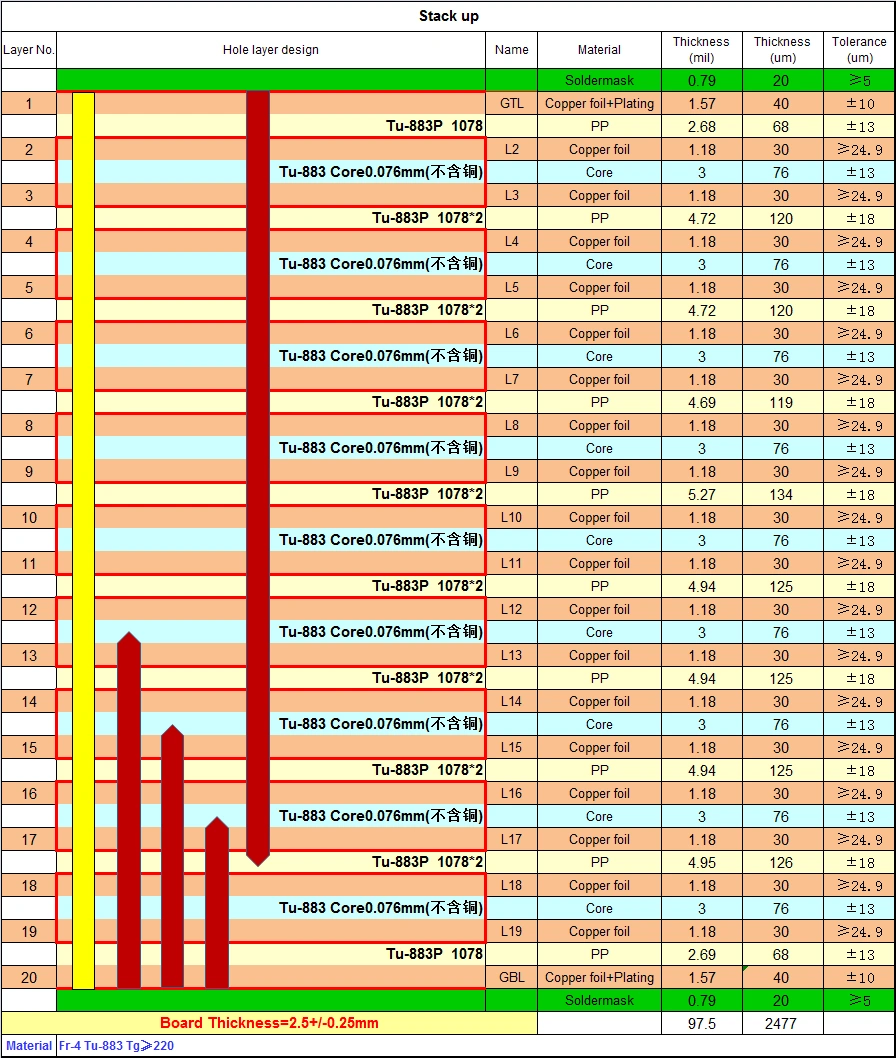
For example, the following picture shows the 20-layer backplane PCB stacked structure produced by our company.
2.Core Functions of a Backplane PCB
The backplane is the foundation of the device. Its functions go far beyond simple connectivity.
3.High-Speed Electrical Interconnection
The primary function of a Backplane PCB is to route electrical signals between different modules. In a server rack, for example, the backplane connects the processing cards to the network cards. It must support high-speed transmission protocols (such as PCIe, Ethernet, or SATA) without signal degradation. The traces on a backplane are designed to act as transmission lines, maintaining specific impedance (usually 50Ω or 100Ω differential) to prevent signal reflection.
4.Power Distribution
Backplanes are often responsible for distributing heavy electrical current to the entire system. While signal layers handle data, dedicated power planes within the backplane distribute voltage (e.g., 12V, 5V, 3.3V) to every plugged-in card. This requires the use of heavy copper (often 2oz to 4oz thickness) to handle high amperage without overheating or causing voltage drops.
5.Mechanical Structural Support
A backplane provides the physical structure for the electronic assembly. It acts as a sturdy chassis that holds all the daughter cards in precise alignment. This is crucial in environments with vibration or shock, such as in automotive or military applications. The rigidity of the backplane ensures that connectors remain seated and that the system maintains its physical integrity over years of operation.
6.Thermal Management
High-performance electronics generate significant heat. A well-designed backplane aids in thermal dissipation. By using thermal vias and thick copper layers, the backplane can spread heat away from hot components and distribute it across the board surface or to a heatsink. In advanced liquid-cooled servers, the backplane may even be designed to interface directly with cooling plates.
II.Design and Manufacturing: A Deep Dive
Creating a high-quality Backplane PCB is a complex engineering feat that involves precise design and rigorous manufacturing processes.
1.Design Phase Considerations
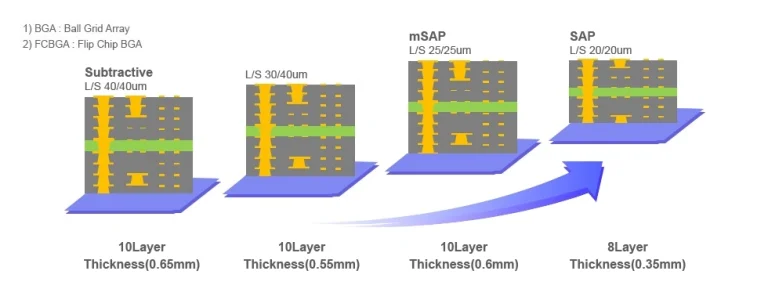
- Stack-up Design: Engineers must carefully plan the layer stack-up. A typical high-speed backplane might have 20 to 50+ layers. The arrangement of signal layers, ground planes, and power planes is critical to controlling impedance and minimizing crosstalk.
- Material Selection: For high-speed signals, standard materials are often insufficient. Designers must choose Low Loss or Very Low Loss laminates (such as Rogers, Isola, or Panasonic Megtron) which have a low Dielectric Constant (Dk) and Dissipation Factor (Df).
- Signal Integrity (SI) & Power Integrity (PI): Simulation tools are used to model how signals will behave. This includes analyzing eye diagrams to ensure the “eye” remains open for data recognition and checking for power plane resonance.
2.Manufacturing: The Back Drilling Process
The manufacturing of a backplane involves several advanced steps:
- Inner Layer Imaging: Creating the circuit patterns on internal layers.
- Lamination: Pressing the layers together under high heat and pressure.
- Drilling: Drilling holes for vias and component mounting.
- Plating and Etching: Depositing copper to connect layers and etching away unwanted copper.
- Back Drilling: This is the defining step for high-speed backplanes. A larger drill bit is used to remove the copper plating from the unused portion of a via barrel. This eliminates the “stub” that causes signal resonance.
3.Testing and Quality Control
Because backplanes are often expensive and difficult to replace, quality control is paramount.
- Electrical Testing: 100% of the nets are tested for continuity (opens) and isolation (shorts).
- Impedance Testing: Test coupons are used to verify that the trace impedance matches the design requirements (e.g., ±10% tolerance).
- Thermal Stress Testing: The board is subjected to thermal cycling to ensure the materials can withstand expansion and contraction without delaminating.
III.Classification and Selection Guide
Choosing the right Backplane PCB depends heavily on the application’s specific requirements.
1.Classification by Material
- Standard FR-4: Suitable for low-speed, cost-sensitive applications (e.g., industrial control panels). It has higher signal loss at high frequencies.
- High-Speed Materials: Essential for data centers and telecom. Materials like Isola FR408HR,TUC Tu-872slk, Tu-883,Tu-883sp, Rogers RO4000, or Megtron 6 offer superior signal integrity at high frequencies (10Gbps+).
2.Classification by Application
- Telecom & Data Center: Requires ultra-high layer counts (30+ layers), back drilling, and low-loss materials to support 5G and cloud computing speeds.
- Medical & Aerospace: Focuses on high reliability, strict impedance control, and resistance to harsh environments.
- Automotive: Requires boards that can withstand high vibration and temperature fluctuations, often using High-Tg (Glass Transition Temperature) materials.
3.Selection Checklist
When selecting a backplane, consider the following:
- Signal Speed: If >1Gbps, you likely need Low Loss materials and back drilling.
- Power Requirements: High current requires thick copper (2oz+).
- Environment: High heat requires High-Tg materials (Tg > 170°C).
- Form Factor: Ensure the board fits the chassis and supports the specific connector type (e.g., VHDM, Hard Metric).
IV.Future Trends in Backplane Technology
The Backplane PCB industry is evolving rapidly to keep pace with the demands of AI, 5G, and IoT.
1.Orthogonal Architecture
Traditional backplanes use cables to connect shelves, which creates airflow blockage and signal loss. The industry is moving toward Orthogonal Backplanes, where daughter cards plug directly into the backplane at a 90-degree angle. This eliminates cables, improves cooling efficiency, and reduces signal path length.
2.Extreme High Density (HDI)
As devices shrink, backplanes must carry more connections in less space. High Density Interconnect (HDI) technology is being applied to backplanes, utilizing micro-vias (laser drilled holes) and finer trace widths to increase routing density.
3.Intelligent Backplanes
The future of backplanes is “smart.” We are seeing the integration of sensors directly into the PCB. These smart backplanes can monitor voltage, current, and temperature in real-time, sending data to the system controller to predict failures before they happen.
4.Green Manufacturing
Sustainability is becoming a priority. Manufacturers are shifting toward halogen-free laminates and lead-free surface finishes (like ENIG or ENEPIG) to comply with environmental regulations like RoHS and REACH.
Conclusion
The Backplane PCB is the unsung hero of the electronics industry. Whether it is facilitating the high-speed data transfer in a Google data center or ensuring the reliability of a military radar system, the backplane is the critical infrastructure that holds the system together.
By understanding the importance of back drilling, material selection, and thermal design, engineers can build systems that are not only faster but also more reliable and durable. As technology advances, the backplane will continue to evolve, becoming denser, smarter, and more efficient.
FAQ: Backplane PCB
Q: What is the difference between a backplane and a motherboard?
A: A motherboard typically contains the CPU, memory, and other active components. A backplane is usually passive (containing only connectors and traces) and is used to connect other boards (daughter cards) in a rack or chassis system.
Q: Why is back drilling important?
A: Back drilling removes the unused portion of a via (the stub). This prevents signal reflections and resonance, which is critical for maintaining signal integrity in high-speed applications (10Gbps and above).
Q: What materials are best for high-speed backplanes?
A: Low Loss materials such as Rogers, Isola FR408HR, or Panasonic Megtron are preferred because they have a lower Dissipation Factor (Df), reducing signal attenuation at high frequencies.