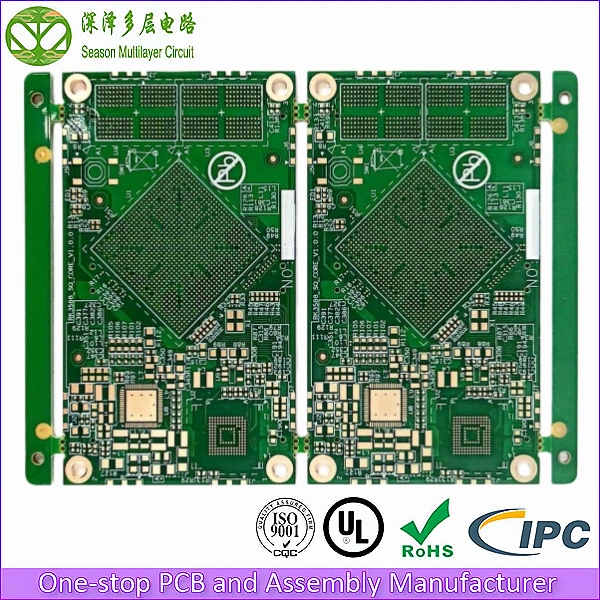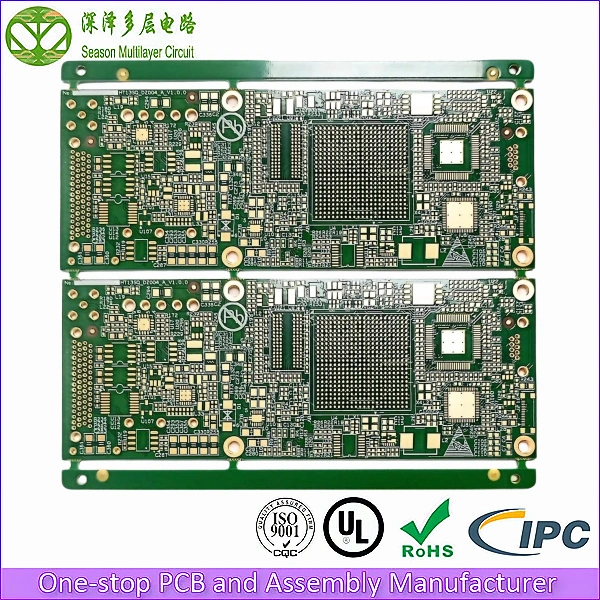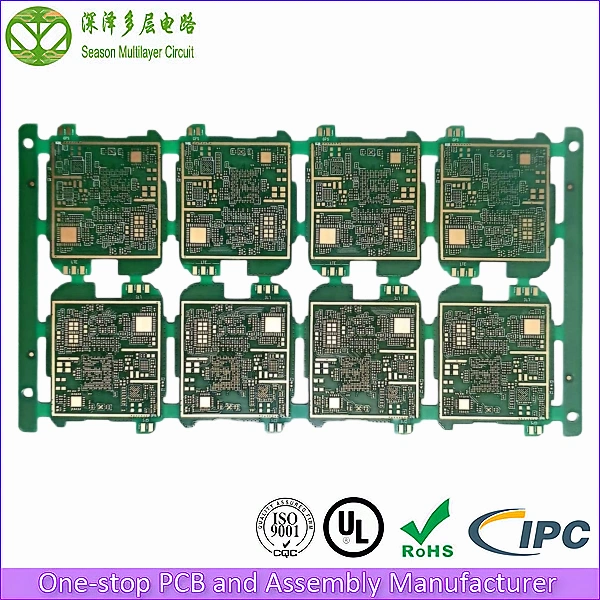

6-Layer 1st-order Rearview Mirror PCB
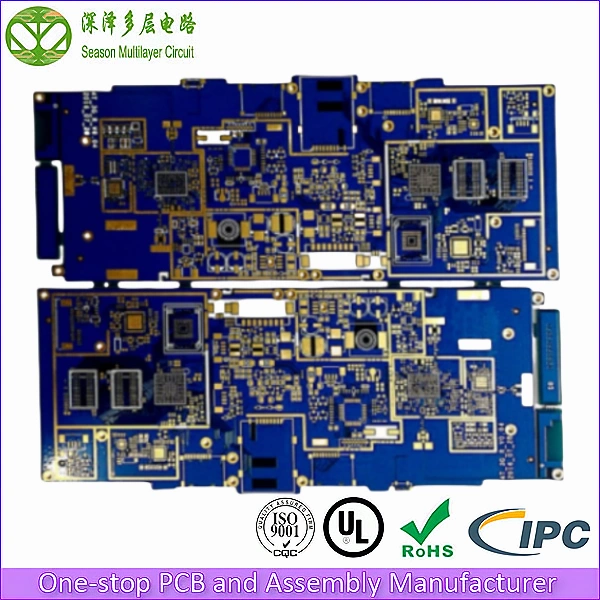
Rearview Mirror PCB
Layer Count: 6L(1+4+1)
Material: FR4 Tg1570
Board Thickness: 1.6mm
Panel Size: 138*162mm/2
Outer Layer Copper Thickness: 1OZ
Inner Layer Copper Thickness: 1OZ
Min Via Diameter: 0.20mm
Microvia Hole Size: 0.1mm
Trace Width/Spacing: 3/3mil
Min BGA Pad: 0.2mm
Surface Finish: ENIG1-2U’’
Rearview mirror pcb,utilizing Intel’s Sofia 3G-R solution, is primarily designed for automotive applications including OEM front/rear-view mirrors, aftermarket rearview mirror systems, tablet computers, and similar electronic products.
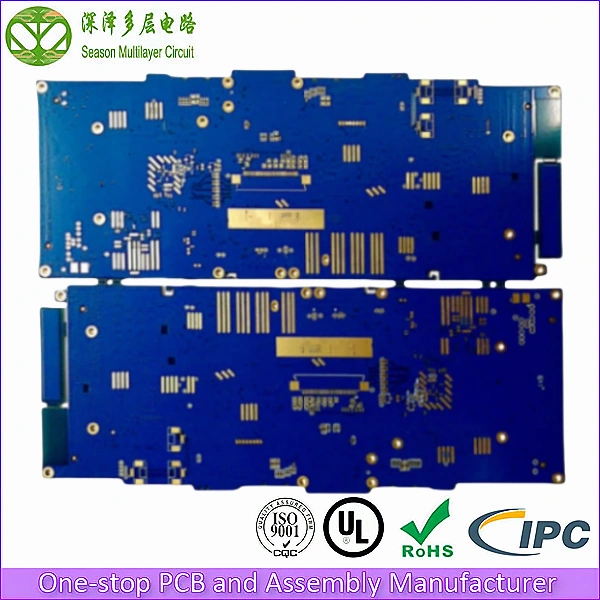
6-Layer 1st-order Rearview Mirror PCB: Elevating Driving Safety and Reliability to New Heights
In the rapidly evolving automotive industry, rearview mirrors—a critical component of driving safety—have seen continuous technological innovation. The 6-Layer 1st-order Rearview Mirror PCB (High-Density Interconnect, HDI), as an emerging technology in this field, is becoming an industry benchmark due to its exceptional performance and reliability. This article delves into the working principles, manufacturing processes, material selection, and advantages of the 6-Layer 1st-order Rearview Mirror PCB in enhancing driving safety and reliability. It also highlights the contributions and achievements of Season Multilayer Circuit in this domain.
I. Working Principles of the 6-Layer 1st-Order Rearview Mirror PCB
The 6-Layer 1-Step Rearview Mirror PCB is a highly integrated electronic interconnection system that seamlessly connects complex electronic components and circuit patterns to enable diverse rearview mirror functionalities. These include heating, folding, automatic adjustment, and sensor signal transmission. Through precise control of electronic components and rapid signal processing, the PCB provides drivers with clearer and more accurate rear traffic information, significantly improving driving safety.
II. Manufacturing Process of the 6-Layer 1st-order Rearview Mirror PCB
The production of this advanced PCB involves multiple intricate steps:
- Design Phase: Engineers develop detailed schematics based on functional requirements and specifications.
- Inner-Layer Circuit Fabrication: Advanced imaging technology is used to precisely etch circuit patterns onto substrate layers.
- Layer Lamination: Multilayer substrates are bonded using high-precision lamination technology to form a compact, interconnected structure.
- Drilling and Assembly: Micro-vias are laser-drilled, followed by precise component placement and soldering to ensure electrical connectivity.
III. Material Selection for the 6-Layer 1st-order Rearview Mirror PCB
Material choices are critical to performance and durability:
- Substrate: High-performance materials like FR-4 are prioritized for their thermal stability, moisture resistance, and electrical insulation properties, ensuring reliability in harsh environments.
- Surface Coating: High-temperature-resistant solder masks and finishes (e.g., ENIG or HASL) are applied to enhance insulation, corrosion resistance, and signal integrity.
IV. Key Advantages of the 6-Layer 1st-order Rearview Mirror PCB
- High Integration: Compact design reduces space consumption while improving system reliability.
- Superior Conductivity: Advanced materials and manufacturing techniques ensure low resistance and efficient current/signal transmission.
- EMI Resistance: Optimized circuit layout and shielding materials minimize electromagnetic interference, safeguarding critical driving functions.
- Environmental Adaptability: Robust materials and coatings enable stable operation under extreme temperatures and humidity.
V. Season Multilayer Circuit’s Contributions and Achievements
Season Multilayer Circuit, a globally renowned PCB manufacturer, has established itself as a leader in automotive electronics through its expertise in 6-Layer 1st-order Rearview Mirror PCB solutions.
- Technical Excellence:
- A dedicated R&D team and state-of-the-art facilities enable customized PCB designs tailored to client specifications.
- Rigorous quality control protocols ensure compliance with automotive standards like TS16949 and IATF 16949.
- Cost-Efficiency:
- Streamlined production processes and economies of scale deliver competitive pricing without compromising quality.
- Industry Recognition:
- Season has earned accolades as a “Premium Automotive Supplier” for its innovative solutions and commitment to advancing automotive safety technologies.
Conclusion
The 6-Layer 1st-order Rearview Mirror PCB represents a transformative leap in automotive safety, combining cutting-edge HDI technology with robust engineering. Season Multilayer Circuit continues to drive industry progress through technological innovation and unwavering quality standards, empowering clients with reliable, high-performance PCB solutions. As the automotive sector evolves, such advancements will remain pivotal in shaping safer and smarter vehicles for the future.
FAQs
Q1: How does this 6-layer 1st-order HDI PCB fit into the compact space of an automotive rearview mirror?
Electronic and streaming rearview mirrors require highly integrated circuitry within an extremely slim enclosure. This PCB achieves this by utilizing a 6-layer 1st-order (1+4+1) HDI architecture, compressing the entire board to an ultra-thin 0.6mm profile on a 105*95mm panel. Combined with a minimum BGA pad size of 0.3mm and an ultra-fine 3/3mil trace width/spacing, it allows engineers to pack powerful image processors and camera-interface components into a highly restricted space without compromising functionality.
Q2: Automotive rearview mirrors are exposed to direct sunlight and extreme temperature swings. How does this PCB maintain long-term reliability?
To withstand the harsh thermal environments typical of automotive applications, this PCB is manufactured using high-quality FR4 Tg170 material. The high glass transition temperature (Tg) ensures that the board retains its structural integrity, prevents delamination, and minimizes thermal expansion or warping when exposed to freezing winter temperatures or intense summer heat behind the vehicle’s windshield.
Q3: What technical features ensure stable signal transmission and robust component mounting for streaming rearview mirrors?
Smart rearview mirrors process high-speed, real-time video feeds from external cameras, making signal integrity crucial. This board utilizes laser-drilled microvias (0.1mm) and standard vias (0.20mm) to optimize signal routing and reduce parasitic capacitance. Additionally, the 1OZ inner/outer copper thickness ensures stable power delivery, while the ENIG (Electroless Nickel Immersion Gold, 1-2U’’) surface finish provides a perfectly flat, anti-oxidative, and highly reliable contact surface for fine-pitch SMT components.