Why Does HDI PCB Prototyping Take So Long
In today’s fast-paced electronics industry, High-Density Interconnect (HDI) Printed Circuit Boards (PCBs) have become the cornerstone for designing compact, high-performance devices across diverse fields such as aerospace, automotive, consumer electronics, and defense. However, the journey from design to a finished HDI PCB Prototyping—especially the prototyping phase—often faces a significant hurdle: prolonged lead times. This delay not only hinders product development cycles but can also postpone market entry, ultimately impacting a company’s competitiveness. A deeper understanding of the underlying causes is essential for identifying optimization strategies. This article will delve into a detailed four-dimensional analysis covering Design Complexity, Manufacturing Challenges, Stringent Material Requirements, and Rigorous Quality Control.
I. Design Complexity: The Microengineering Challenge
Designing an HDI PCB is akin to creating a masterpiece at the microscopic level. It employs a micro-scale design philosophy focused on achieving extremely high wiring density and intricate structures. Throughout this design process, numerous critical factors demand meticulous consideration.
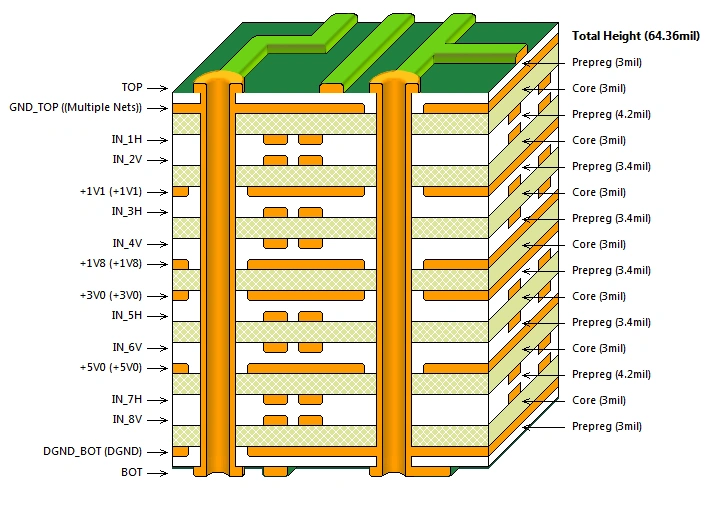
- Layer Count: Each additional layer introduces greater spatial complexity in circuit routing. Designers must re-evaluate the routing paths for every new layer to ensure stable and accurate signal transmission between layers.
- Via Placement and Types: The precise location of vias is critical for component installation and electrical connections. Even a minor deviation can lead to assembly issues.
- Trace Width/Spacing (Line Width/Line Spacing): Operating at the micron level, minimal errors can cause signal crosstalk or integrity issues, necessitating extremely precise control.
- Dielectric Constant (Dk): This property of the substrate directly affects signal transmission speed and quality. Designers must select materials with appropriate Dk values based on specific application scenarios and performance requirements.
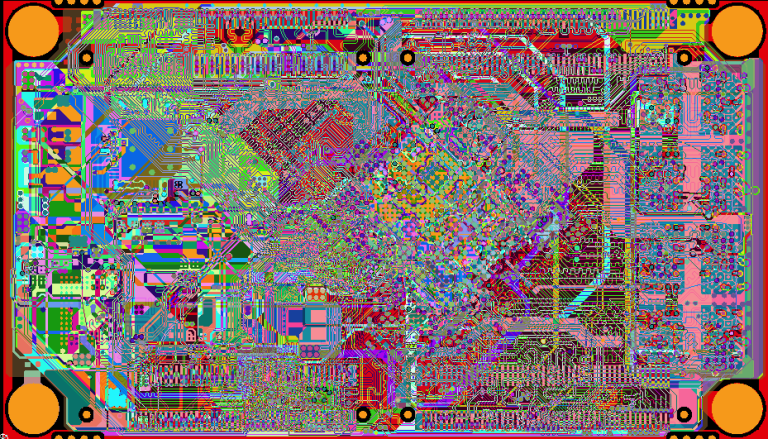
To realize such complex designs, engineers must rely on sophisticated Electronic Design Automation (EDA) tools. While powerful, these tools require extensive expertise and experience. The design process involves constant iteration, from initial schematic capture to the final PCB layout, often requiring multiple rounds of revision and optimization to reach a satisfactory design outcome. In the most demanding applications, such as aerospace PCBs, teams may spend several weeks or even months fine-tuning the design, performing simulations, and validating performance under strict reliability standards. This inherently iterative and complex design workflow is a primary contributor to extended HDI prototyping timelines.
II. Manufacturing Intricacies: A Symphony of Precision Steps
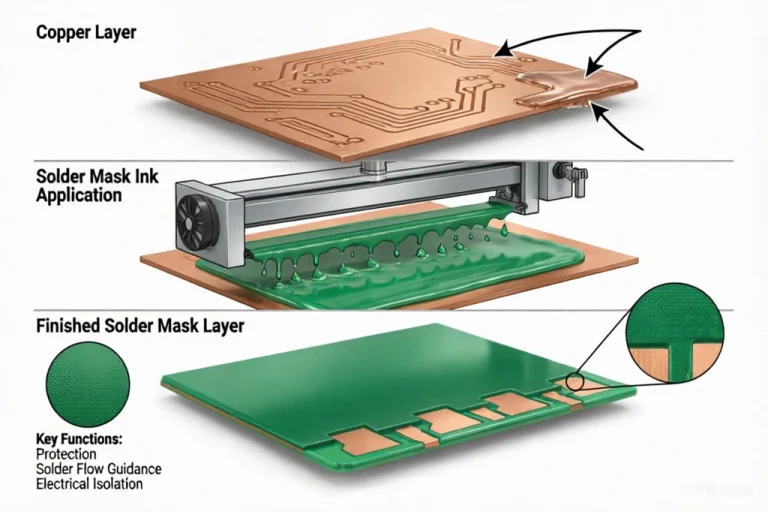
The manufacturing process for an HDI PCB Prototyping is a complex orchestration of precise, interconnected stages. It begins with board fabrication (开料), progressing through a multitude of high-precision steps such as inner layer imaging, inner layer etching, AOI (Automated Optical Inspection), browning (棕化), and lamination (压合). Key phases include creating and plating blind/buried vias—involving laser drilling, mechanical drilling, chemical copper deposition (沉铜), and via plating (填孔电镀). This is followed by additional cycles of pattern transfer, etching, AOI, browning, and lamination. The process culminates in solder mask application (阻焊), silkscreen (文字), surface finishing (like immersion gold or ENIG), final outline routing (外形加工), and comprehensive electrical testing.
Every single step requires exacting control. A minor error in any stage can render the entire board unusable. Consider the drilling process:
- Accuracy: HDI PCB Prototyping utilizes micron-level fabrication, demanding extremely high positional accuracy and consistent via diameters. A misaligned drill can cause connection errors, while an incorrect diameter affects component installation and solderability.
- Equipment and Skill: This precision depends on high-end equipment and highly skilled operators capable of monitoring the process and solving unexpected issues swiftly.
Consequences of Error: An error discovered at a later stage can be costly and time-consuming. For instance, if via plating (buried via plating) parameters are incorrect, causing non-uniform plating, the board may need reworking from the chemical copper deposition (沉铜) stage onward. Such rework significantly delays the prototype delivery.
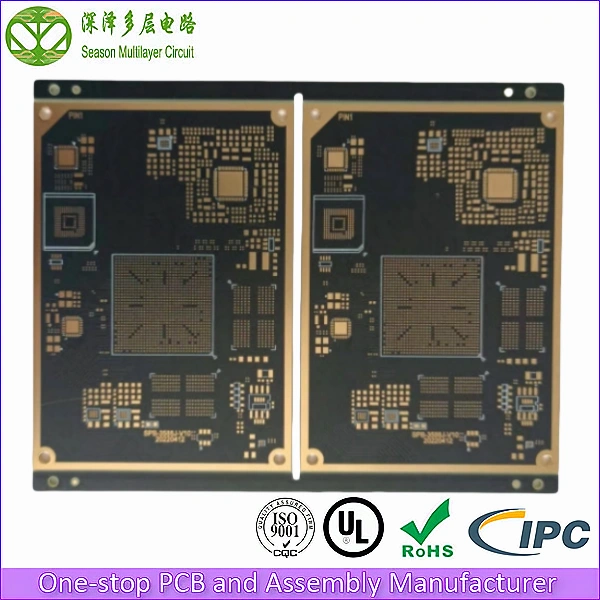
HDI Expedited Proofing
Layer Count: 10L(1+8+1)
Material: FR4 Tg170
Material: 1.0mm
Panel Size: 121.6*95mm/2
Outer Layer Copper Thickness: 1OZ
Inner Layer Copper Thickness: HOZ
Min Via Diameter: 0.20mm
Microvia Hole Size: 0.1mm
Trace Width/Spacing: 3/3mil
Min BGA Pad: 0.25mm
Surface Finish: ENIG1-2U’’
10-Layer 1-Step HDI Expedited Proofing,RK3588 core board, designed for industrial control applications.
Real-World Example: A 10-layer, 1-step HDI PCB Prototyping for an industrial control module (e.g., RK3588 core) illustrates these challenges. Typical specifications further complicate manufacturing:
- Minimum Via/Blind Via: 0.20mm/0.10mm
- Minimum BGA pitch: 0.25mm
- Line Width/Spacing: 3/3mil (approx. 76μm)
- Via Fill Plating: Required for enhanced reliability.
III. Stringent Material Requirements: A Critical Supply Chain Factor
HDI PCB Prototyping necessitate materials of the highest precision to ensure performance and reliability.
- High-Purity Copper Foil: Essential for optimal conductivity and signal integrity, its production involves multiple purification steps, leading to relatively long production cycles and limited market availability.
- Low-Loss/Low-Dk Dielectric Materials: Specialized low-loss (high-Dk) dielectric materials are crucial to manage signal delay and attenuation. Their development, production, and supply can be inconsistent.
Furthermore, the unique structure of HDI PCB Prototyping often requires specialized materials like thin copper foils and ultra-thin dielectric layers (薄介电层). These materials are not only expensive but also can face supply shortages. Companies must manage a complex supply chain with multiple specialized vendors. Disruptions, whether from production delays or logistical issues, can halt a prototype line completely. For example, a single delay in the delivery of high-purity copper foil can force a production line to stop, pushing back a client’s prototyping schedule by days.
IV. Rigorous Quality Control: Ensuring Perfection Through Multiple Checks
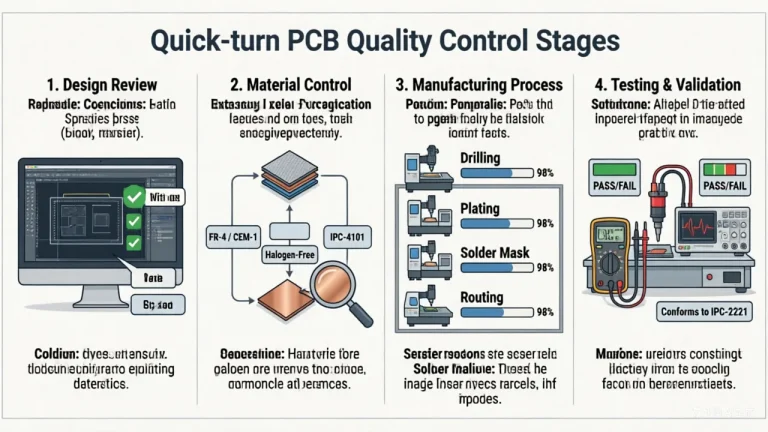
Given their critical role in electronic devices, quality assurance for HDI PCB Prototyping is absolute. A multi-stage, strict verification process is integrated directly into the manufacturing flow.
- Repeated Inspections: From the initial inner-layer AOI to subsequent post-etching AOI checks and final electrical testing, each inspection is a potential bottleneck where defects must be caught.
- “First-Pass Success” Imperative: The critical goal is to pass all inspections on the first attempt. A failure discovered during, for example, final electrical testing triggers a root cause investigation that may trace back to design, a specific manufacturing step, or material quality.
- Consequences of Failure: Identifying and then fixing the root cause, followed by reworking the affected process steps (potentially all the way back to the beginning), adds substantial time and cost.
- Rising Standards: As device performance demands increase, quality standards and inspection rigor (e.g., more sophisticated electrical tests) continuously tighten, further lengthening the cycle.
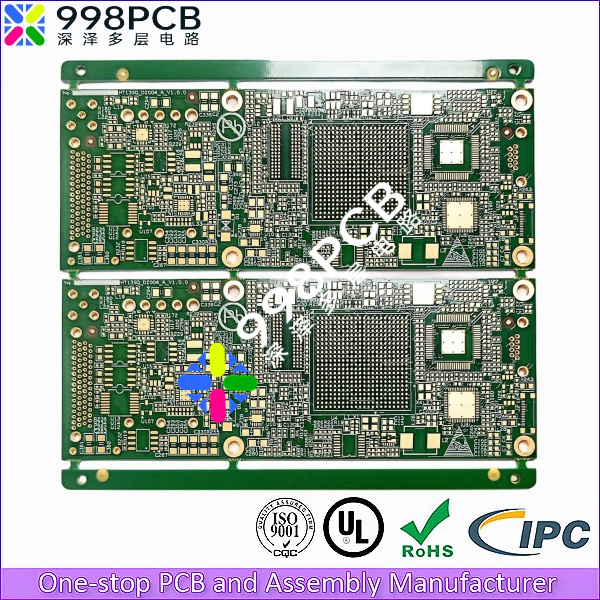
HDI PCB Prototype
Layer Count: 14L(2+10+2)
Materia: FR4 Tg170
Board Thickness: 1.6mm
Panel Size:102*75mm/2
Outer Layer Copper Thickness: 1OZ
Inner Layer Copper Thickness: 0.5OZ
Min Via Diameter: 0.20mm
Microvia Hole Size: 0.1mm
Trace Width/Spacing: 2.5/2.5mil
Min BGA Pad: 0.2mm
Surface Finish: ENIG1-2U’’
14-layer 2-step HDI prototype for the RK3588 solution, primarily used in high-end intelligent security, high-definition image processing, video conversion, and industrial control products.
Real-World Example: A 14-layer, 2-step HDI PCB Prototyping for high-end applications like image processing, video conversion, and industrial control involves even more critical and numerous checks.
Conclusion: Addressing Extended HDI PCB Prototyping Lead Times
Extended HDI PCB Prototyping lead times are not random but are the direct result of the complex interplay between:
- Highly Complex Design Requirements
- An Intricate, Multi-Step Manufacturing Process
- Dependence on Specialized, High-Precision Materials
- Non-Negotiable, Rigorous Quality Control Standards
To effectively shorten these cycles without compromising quality, a comprehensive approach is necessary. Companies can invest in advanced EDA tools and simulation, improve manufacturing techniques, forge stable partnerships with material suppliers to secure their supply chain, and refine quality control processes to enhance efficiency and reduce defect rates. By optimizing across these four key areas, electronics firms can navigate the challenges of HDI PCB Prototyping more effectively, accelerating product development and maintaining their competitive edge in the market.
If the article “Why Does HDI PCB Prototyping Take So Long” is useful to you, please save it in time for future reference.