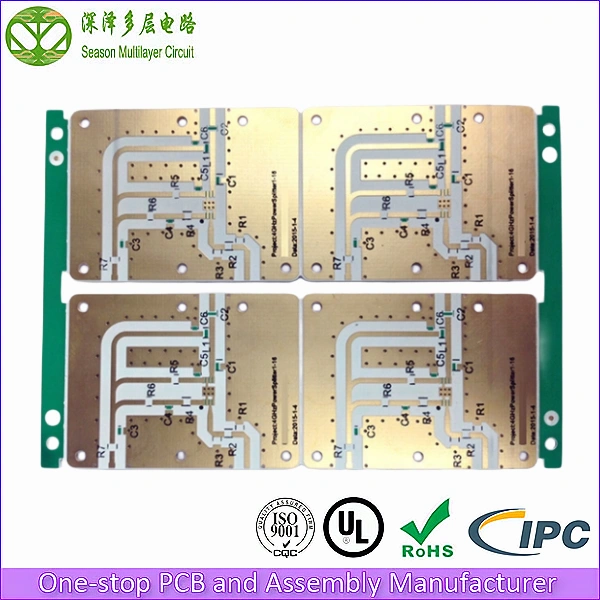

2L PTFE High-Frequency PCB
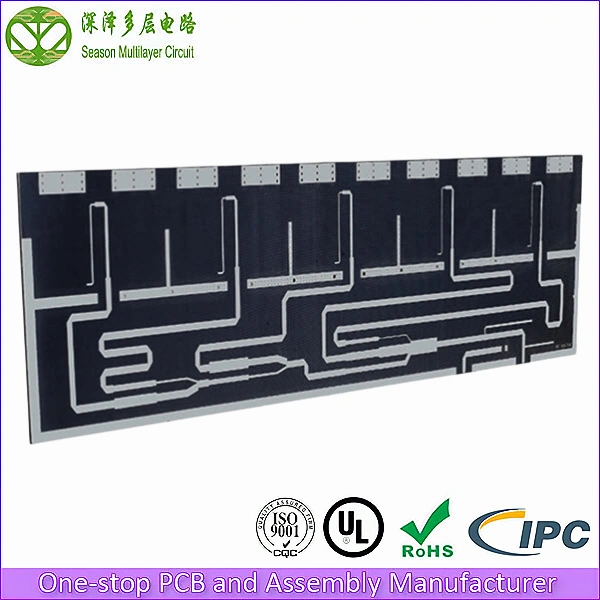
PTFE High-Frequency PCB
Layer Count: 2L
Material: PTFE
Board Thickness: 3.2mm
Panel Size: 107*40mm/4
Copper Thickness: 1 OZ
Min Via Diameter: 0.5mm
Trace Width/Spacing: 12/12mil
Surface Finish: Immersion Silver
Double-sided high-frequency PTFE PCB, manufactured with Taconic laminates, deliver exceptional signal integrity and thermal stability. This industry-proven solution combines reliable high-frequency performance with significant cost efficiency for RF/microwave applications.
PTFE High-Frequency PCB: Features, Manufacturing Process and Applications
PTFE high-frequency PCB (Polytetrafluoroethylene Printed Circuit Board) is a high-performance circuit board built with premium PTFE resin as the core substrate. Unlike conventional FR-4 PCBs that struggle with signal attenuation and performance instability at high frequencies, PTFE PCBs deliver exceptional electrical stability, extreme temperature resistance, superior chemical corrosion resistance, and reliable mechanical properties. These unique characteristics make them the preferred solution for high-frequency, high-precision, and harsh-environment electronic applications across diverse industries.
PTFE high-frequency PCBs are widely adopted in telecommunications, aerospace, aviation, chemical engineering, high-precision consumer electronics, and radar systems. They excel particularly in high-temperature, high-humidity, and corrosive working conditions where standard PCBs fail to maintain long-term stability. In this guide, we will dive deep into the core properties of PTFE resin, the key advantages and industrial applications of PTFE high-frequency PCBs, and their professional manufacturing workflow, helping you fully understand the value of this advanced circuit board material.
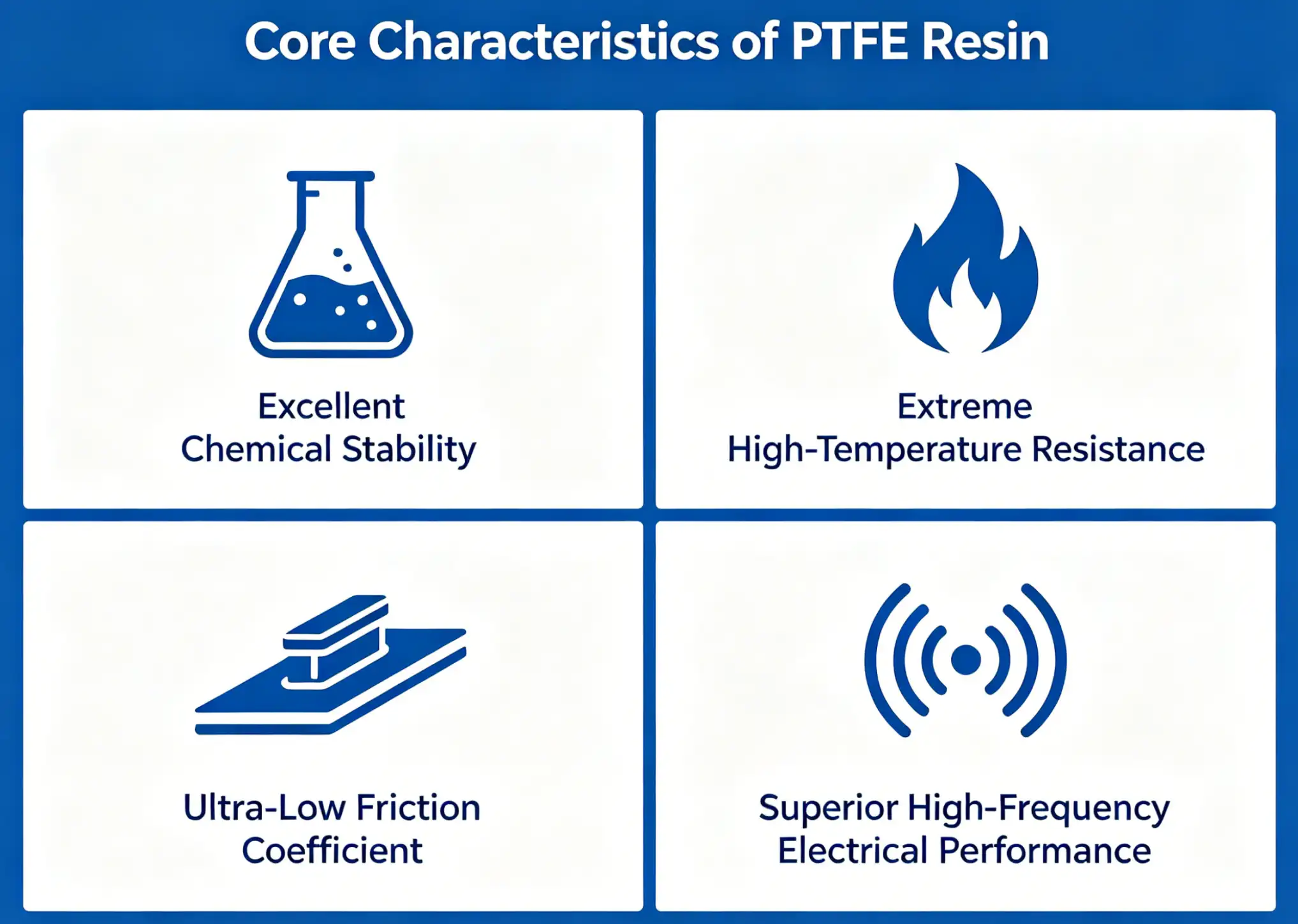
1. Core Characteristics of PTFE Resin
PTFE resin is a specialized synthetic polymer material renowned for its comprehensive superior physical and chemical properties. It serves as the foundation for the outstanding performance of PTFE high-frequency PCBs, with core advantages as follows:
1.1 Excellent Chemical Stability
PTFE resin features unparalleled chemical inertness, making it almost immune to corrosion from most industrial chemicals. It can effectively resist erosion from strong acids, strong alkalis, salts, organic solvents, and corrosive gases. This property ensures that PTFE-based PCBs will not degrade, oxidize, or lose performance in severe chemical environments, extending the service life of electronic equipment in chemical and industrial scenarios.
1.2 Extreme High-Temperature Resistance
PTFE resin boasts outstanding thermal stability with a continuous working temperature of up to 260°C. It maintains stable physical structure and electrical performance under long-term high-temperature operation, without deformation, aging, or functional failure. Compared with ordinary PCB substrates that are prone to performance degradation at temperatures above 120°C, PTFE resin adapts to extreme high-temperature working scenarios perfectly.
1.3 Ultra-Low Friction Coefficient
As one of the materials with the lowest friction coefficient among solid polymers, PTFE resin significantly reduces friction resistance between mechanical moving parts. When applied in electronic and mechanical integrated equipment, it minimizes mechanical wear, reduces operating energy consumption, and effectively improves the overall operating efficiency and service life of devices.
1.4 Superior High-Frequency Electrical Performance
PTFE resin is the ideal substrate for high-frequency circuit manufacturing, thanks to its ultra-low and stable dielectric constant (2.0–2.2) and extremely low dielectric loss. It effectively reduces high-frequency signal transmission attenuation, avoids signal delay and distortion, and ensures efficient and accurate transmission and storage of electrical energy. This is the key reason why PTFE PCBs dominate high-frequency and microwave circuit fields.
2. Key Benefits and Industrial Applications of PTFE High-Frequency PCB
Inheriting all the superior properties of PTFE resin, PTFE high-frequency PCBs outperform traditional FR-4 PCBs in high-frequency performance, environmental adaptability, and structural stability. Their comprehensive advantages support wide-ranging high-end industrial applications:
2.1 Stable High-Frequency Electrical Performance
PTFE high-frequency PCBs maintain a low dielectric constant and ultra-low dielectric loss across high-frequency and microwave bands. Meanwhile, they feature high insulation resistance and excellent voltage resistance, ensuring zero signal distortion and low loss during high-speed signal transmission. This core advantage makes them indispensable for 5G/6G communication equipment, satellite communication systems, radar detectors, and radio frequency (RF) devices.
2.2 Reliable High-Temperature Operation
With the high-temperature resistance of PTFE substrate, these PCBs can operate stably for a long time in high-temperature environments. They resist thermal aging and structural deformation, adapting to high-temperature working conditions of aerospace equipment, automotive high-power electronic devices, and industrial high-temperature detection instruments.
2.3 Strong Chemical Corrosion Resistance
PTFE PCBs can withstand the erosion of various corrosive chemicals, including acids, alkalis, and industrial salt solutions. They will not corrode or short-circuit in corrosive working environments, which is critical for electronic monitoring and control equipment in chemical, petroleum, and marine engineering fields.
2.4 High Mechanical Strength and Impact Resistance
Despite its stable chemical properties, PTFE PCB has excellent mechanical rigidity and toughness. It can withstand strong mechanical pressure, vibration, and impact loads, and is not easy to crack or damage. It is suitable for portable electronic devices, aerospace precision equipment, and field detection devices with harsh vibration conditions.
2.5 Eco-Friendly and Flexible Processing Performance
PTFE substrate features good processability and can be customized into various complex shapes and precise sizes according to circuit design requirements. The entire processing process produces almost no harmful pollutants, meeting global environmental protection standards. It supports mass customized production of high-precision high-frequency PCBs while ensuring green manufacturing.
2.6 Zero Moisture Absorption and Excellent Humidity Resistance
PTFE material has almost no moisture absorption property, so PTFE high-frequency PCBs will not absorb water vapor in high-humidity environments. Their electrical performance and structural stability remain unchanged, effectively avoiding circuit short-circuit and signal failure caused by moisture. They are widely used in marine equipment, outdoor communication base stations, and humid industrial environments.
2.7 Outstanding Dimensional Stability
PTFE high-frequency PCBs have minimal thermal expansion and cold contraction coefficients, with no obvious deformation or bending under temperature changes or long-term operation. The stable dimensional accuracy fully meets the manufacturing requirements of ultra-precision electronic circuits and high-end miniaturized electronic devices.
3. Professional Manufacturing Process of PTFE High-Frequency PCB
The production of PTFE high-frequency PCBs requires strict precision control, different from ordinary PCB manufacturing. The complete standardized production process includes five core steps to ensure product performance and yield:
3.1 Substrate Preparation
The first step is to prepare high-purity PTFE resin substrates. The mainstream production method is hot pressing molding: high-purity PTFE resin powder is sintered and hot-pressed at a constant high temperature and pressure to form flat, uniform, and dense substrate sheets. This process ensures the substrate has consistent thickness, stable dielectric performance, and no internal defects, laying a foundation for subsequent circuit processing.
3.2 Metallization Treatment
Since pure PTFE substrate has poor surface adhesion, professional metallization treatment is required to form a uniform conductive metal layer on the substrate surface. The industry mainly adopts chemical plating and electroplating processes. Chemical plating improves the surface activity of PTFE to deposit a thin metal transition layer, while electroplating thickens the conductive copper layer to ensure good conductivity and adhesion between the metal layer and the substrate.
3.3 Photolithography and Plate Making
According to the customized circuit design drawings, photolithography technology is used for precision plate making. First, a photosensitive dry film is covered on the metalized substrate surface, then exposure and development are carried out according to the circuit layout. This step accurately retains the circuit pattern area and removes the redundant photosensitive layer, realizing precise mapping of the design circuit on the substrate.
3.4 Etching Treatment
The substrate after photolithography is sent to the etching process to remove the exposed redundant metal layer through professional etching solution. After strict time and temperature control, the precise and complete high-frequency circuit pattern is formed on the PTFE substrate. Subsequent cleaning and drying are conducted to remove residual etching solution and impurities, avoiding circuit corrosion.
3.5 Surface Finishing Treatment
The final surface treatment is crucial to enhance circuit stability, conductivity, and oxidation resistance. Common processes include gold plating, silver plating, and tin plating. Gold plating provides excellent oxidation resistance and high-frequency conductivity for long-term stable operation of high-frequency circuits; silver plating further improves signal transmission efficiency. Surface treatment effectively extends the service life of PTFE PCBs and improves the reliability of high-frequency signal transmission.
FAQs About PTFE High-Frequency PCB
Q1: What is the main difference between PTFE PCB and ordinary FR-4 PCB?
The core difference lies in high-frequency performance and environmental adaptability. PTFE PCB has an ultra-low and stable dielectric constant (2.0–2.2) and minimal dielectric loss, enabling low-loss transmission of high-frequency signals above 1GHz, even millimeter-wave signals. In contrast, FR-4 PCB has a higher dielectric constant (4.2–4.7) and severe signal attenuation at high frequencies. Additionally, PTFE PCB supports continuous 260°C high-temperature operation and resists corrosion and moisture, while FR-4 PCB is only suitable for conventional room-temperature and low-frequency scenarios.
Q2: What industries are PTFE high-frequency PCBs mainly used in?
PTFE high-frequency PCBs are mainly applied in high-end fields requiring high precision, high frequency, and high stability. The key application scenarios include 5G/6G communication base stations, satellite communication equipment, radar and microwave detection systems, aerospace precision electronic devices, chemical industry corrosion-resistant control equipment, marine electronic facilities, and high-precision medical electronic instruments. They are the core substrate materials for modern high-frequency wireless communication and extreme environment electronic equipment.
Q3: Are PTFE PCBs expensive, and is they worth investing in?
Compared with ordinary FR-4 PCBs, PTFE PCBs have higher material and processing costs due to premium raw materials and sophisticated manufacturing processes. However, they deliver irreplaceable value in high-frequency and harsh-environment applications. Their ultra-low signal loss improves equipment operation accuracy and efficiency, excellent environmental resistance reduces failure rates and maintenance costs, and long service life lowers overall replacement costs. For high-end communication, aerospace, and industrial high-precision equipment, PTFE PCBs are a cost-effective and reliable long-term solution.