
Selecting a Premium Prototype PCB Manufacturer: 10 Essential Criteria for Fast-Turn Electronics Engineering
The global electronics sector is expanding rapidly, driving an urgent demand for accelerated hardware development. For hardware engineers, innovators, and procurement specialists, the journey from an initial schematic to a physical, working device relies on one critical partner: a high-quality Prototype PCB Manufacturer.
Rapid prototyping bridges the gap between digital design and mass production. However, selecting a quick-turn vendor requires evaluating capabilities that extend far beyond speed. A world-class Prototype PCB Manufacturer must harmonize rapid execution with absolute precision, advanced material science, and robust quality control. As a leading Prototype PCB Manufacturer, a top-tier vendor ensures your designs are fully validated before mass production.
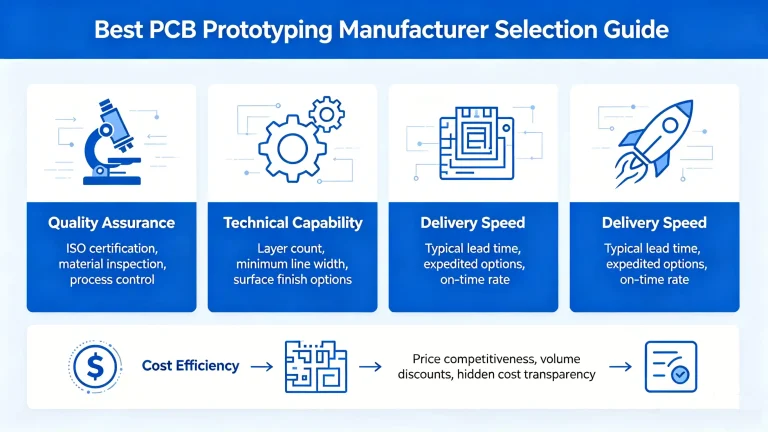
Below is an in-depth analysis of the 10 core pillars a top-tier quick-turn PCB partner must possess, helping you choose the right Prototype PCB Manufacturer for your next high-velocity project.
1. State-of-the-Art Production Equipment & CAD/CAM Technology
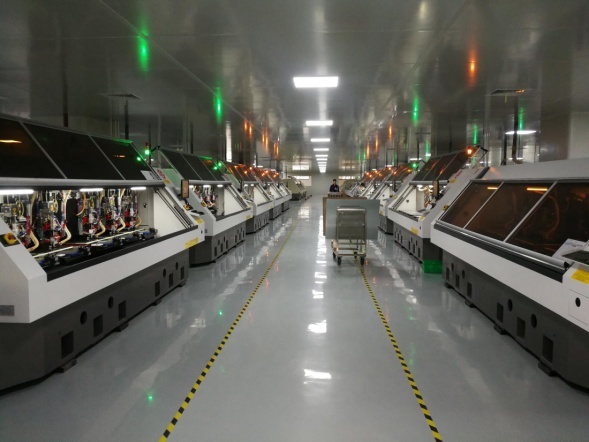
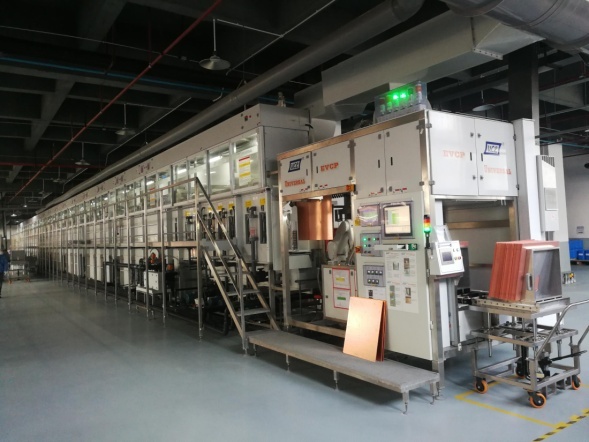
At the foundation of any elite Prototype PCB Manufacturer is an investment in cutting-edge factory automation. Quick-turn fabrication cannot rely on legacy machinery without compromising accuracy or yield rates. Therefore, an advanced Prototype PCB Manufacturer regularly upgrades its production floor.
- High-Precision Systems: Top-tier shops utilize Laser Direct Imaging (LDI) for sub-3mil line/space definition, automated optical inspection (AOI), and advanced CNC/laser drilling rigs for blind and buried microvias.
- Software Mastery: Front-end CAM engineers at a premium Prototype PCB Manufacturer must master the latest design software conversions (handling Gerber X2, ODB++, IPC-2581) to seamlessly translate complex multi-layer configurations—such as high-density interconnect (HDI) stack-ups—into a smooth manufacturing workflow.

2. High-Efficiency Production Management & Scheduling
Standard PCB factories are optimized for high-volume, long-lead batch runs. Conversely, a specialized Prototype PCB Manufacturer operates in a high-mix, low-volume environment where minutes matter. Efficient production management relies on sophisticated Manufacturing Execution Systems (MES) and real-time Enterprise Resource Planning (ERP). These software solutions allow a Prototype PCB Manufacturer to dynamically route quick-turn panels through drilling, plating, and etching lines, minimizing bottleneck delays and consistently fulfilling 24-to-72-hour fast-turn commitments.
3. Elite Technical Teams & Rapid DFM Engineering
When quick-turn design files are uploaded, the engineering clock starts immediately. A premier Prototype PCB Manufacturer employs highly skilled application and CAM engineers who perform a rapid, comprehensive Design for Manufacturing (DFM) review. This critical gatekeeping process, performed by the Prototype PCB Manufacturer, identifies footprint mismatches, trace-to-pad violations, acid traps, or un-routable via geometries before physical fabrication begins. Catching these digital anomalies early allows the Prototype PCB Manufacturer to prevent costly production delays or non-functional prototypes.
4. Stringent Quality Assurance & Automotive-Grade Standards
“Accelerated delivery” must never serve as an excuse for compromised quality. True industry leaders among Prototype PCB Manufacturers implement rigorous, end-to-end quality assurance systems. From incoming quality control (IQC) of raw materials to in-process checks (IPQC) and final automated testing (FQC), every board must be verified by the Prototype PCB Manufacturer. A dependable prototyping partner builds boards compliant with IPC Class 2 or Class 3 parameters, backed by global safety and quality certifications including UL, ISO9001, and IATF16949 for automotive-grade reliability.
5. Comprehensive After-Sales Support & FAE Access
The prototyping phase is iterative, often requiring design modifications, engineering revisions, or rapid re-runs. A reliable customer support framework differentiates a premium Prototype PCB Manufacturer from low-cost web portals. Leading Prototype PCB Manufacturers establish dedicated customer service pipelines and provide direct access to Field Application Engineers (FAEs). Whether troubleshooting a thermal issue post-assembly or accelerating a revised layer stack-up, an agile Prototype PCB Manufacturer provides continuous technical support through its after-sales team.
6. Continuous Innovation & Advanced R&D Capabilities
As microcontrollers, RF modules, and high-speed memory modules become more compact, circuit board architectures must evolve. A forward-thinking Prototype PCB Manufacturer maintains dedicated R&D budgets to push the boundaries of PCB fabrication. They continuously test ultra-low-loss dielectrics (like Rogers or Isola), embedded component methods, and next-generation surface finishes (such as ENEPIG or ultra-flat ENIG). This technological foresight ensures that when your next-generation product requires bleeding-edge substrates, your chosen Prototype PCB Manufacturer is already equipped to build it.
7. Resilient Supply Chain & Substrate Inventory Management
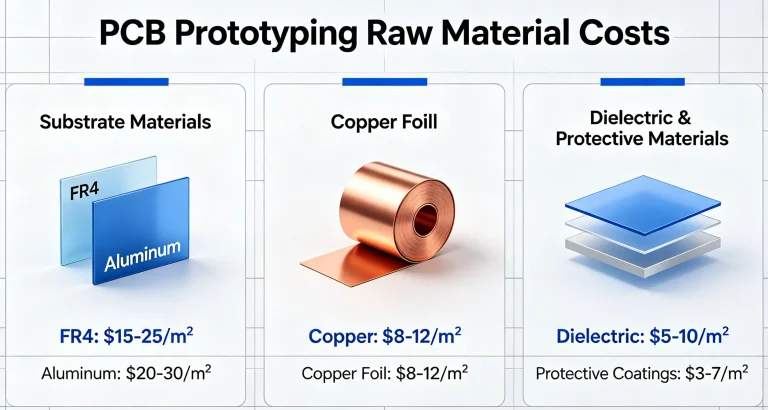
A fast-turn production line can easily be derailed by raw material shortages. A dominant Prototype PCB Manufacturer mitigates this risk through a highly resilient supply chain management system. Such a Prototype PCB Manufacturer maintains a comprehensive, readily accessible stock of Grade-A laminates, varying copper weights (from 0.5oz to heavy 3oz+ copper), and specific core thicknesses. By building strategic relationships with major material distributors, the Prototype PCB Manufacturer protects your project timeline from market supply fluctuations.
8. Environmental Stewardship & Social Responsibility
Modern electronics prototyping must be clean, safe, and sustainable. An eco-conscious Prototype PCB Manufacturer actively implements green manufacturing workflows. This includes optimizing power consumption, employing closed-loop water filtration systems, using lead-free and RoHS-compliant materials, and deploying halogen-free laminates. Furthermore, a responsible Prototype PCB Manufacturer upholds strict workplace safety standards and ethical employment practices, aligning with corporate social responsibility (CSR) expectations.
9. Advanced Cost Control & Competitive Pricing Architectures
While rapid prototyping natively commands higher engineering fees than mass production, a highly competitive Prototype PCB Manufacturer utilizes automation and efficient panelization to optimize yields. By maximizing the usable area on every production panel and reducing chemical scrap, the Prototype PCB Manufacturer minimizes manufacturing overhead. This allows them to offer transparent, highly competitive tier-pricing models, enabling startups, universities, and enterprise R&D hubs to run multiple design iterations without straining their budgets.
10. Continuous Improvement & Adaptive Learning Mindset
The technology landscape changes continuously. An exceptional Prototype PCB Manufacturer fosters an internal culture of continuous improvement (Kaizen) and ongoing learning. Excellent Prototype PCB Manufacturers systematically collect customer feedback, audit internal defect rates, and invest in ongoing training certifications for their factory technicians. This adaptive mindset ensures that the Prototype PCB Manufacturer continually tightens its process windows, accelerates delivery clocks, and evolves alongside the complex demands of the global electronics community.
Technical Visualizations: The Prototyping Ecosystem
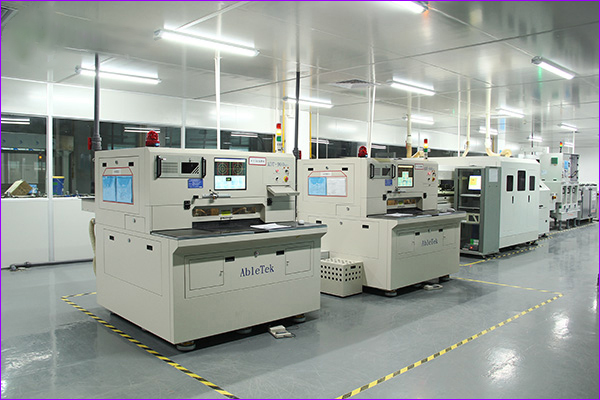
Visual 1: High-Precision LDI and AOI Prototyping Line
This workflow illustrates how automated imaging and verification loops ensure fine-line routing precision within a 24-to-72-hour turnaround.
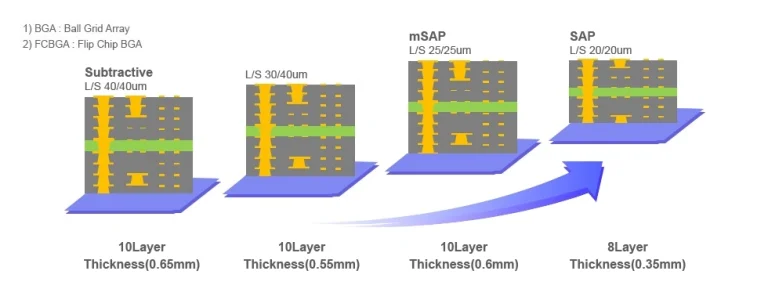
Visual 2: High-Density Multilayer HDI Prototype Architecture
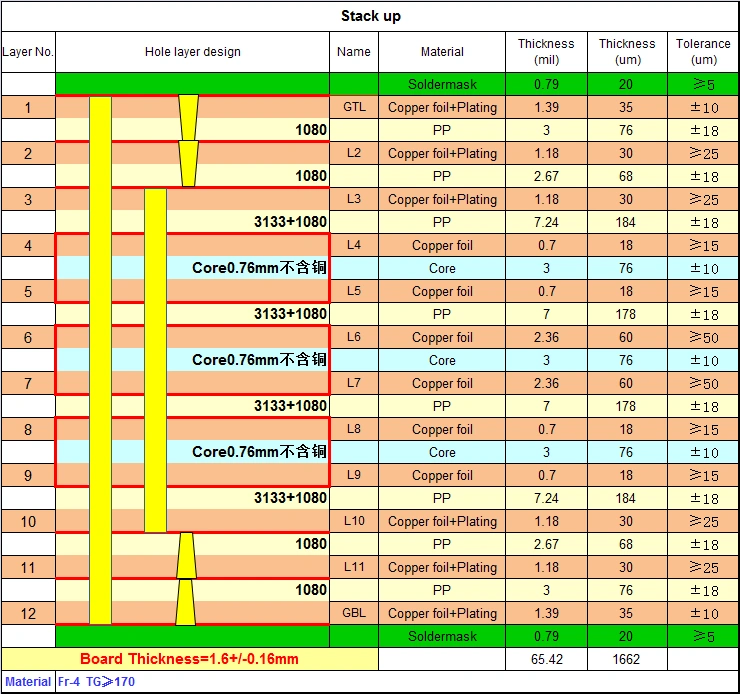
A structural cross-section of a complex 12-layer 2nd-order HDI prototype board, utilizing resin-plugged buried vias and copper-filled blind microvias for high-density components.
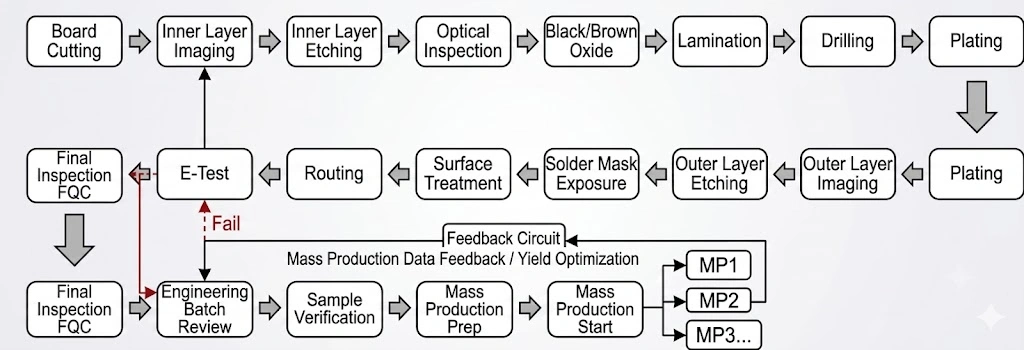
Visual 3: Prototyping Journey to Mass Production Scale
The operational transition graph showing how a dedicated prototyping partner smoothly migrates initial short-run designs into scalable, cost-optimized volume manufacturing.
Conclusion
Partnering with the right Prototype PCB Manufacturer goes far beyond comparing basic pricing grids or shipping speeds. A premier prototyping partner represents a sophisticated mix of automated hardware, rapid DFM engineering, ironclad quality assurance, and a highly resilient supply chain. By meticulously verifying these ten essential manufacturing capabilities, engineering teams can confidently secure an agile production partner capable of delivering flawless, high-precision circuit boards exactly when critical market windows demand them.
FAQs
Q1: What parameters dictate the lead time of a prototype PCB order?
Prototype lead times are heavily influenced by the total layer count, laminate selection (e.g., standard FR4 vs. specialized high-frequency Rogers materials), and layout complexity. Standard double-sided or 4-layer boards can typically be dispatched within 24 to 48 hours. However, advanced architectures requiring multi-stage sequential laminations, via-in-pad resin plugging, or multi-order HDI configurations typically require 3 to 5 working days for full fabrication and electrical testing.
Q2: Why is the DFM process so vital during the rapid prototyping phase?
In rapid prototyping, there is zero margin for timeline friction. A front-end Design for Manufacturing (DFM) review acts as an automated security screen for your Gerber data. By scanning files for layout clearance violations, un-routable track pitches, or plane splits before printing copper, the engineering team eliminates the risk of fabricating non-functional hardware, ensuring an immediate, defect-free first-time yield.
Q3: How do prototype manufacturers guarantee electrical integrity on quick-turn runs?
Elite prototype manufacturers avoid using expensive, hard-wired test fixtures for low-volume runs, opting instead for highly agile Flying Probe Testing lines. These software-driven automated test probes rapidly check every net on the PCB against the original netlist downloaded from the CAD data. This process identifies any open circuits, microscopic shorts, or continuity anomalies without delaying the rapid delivery window.