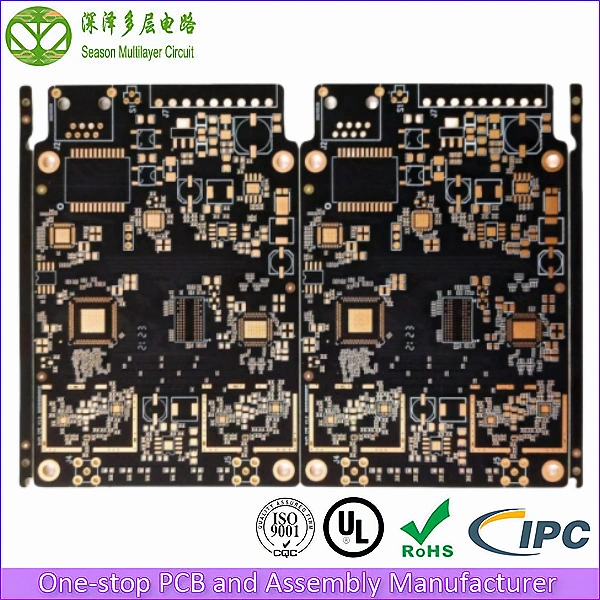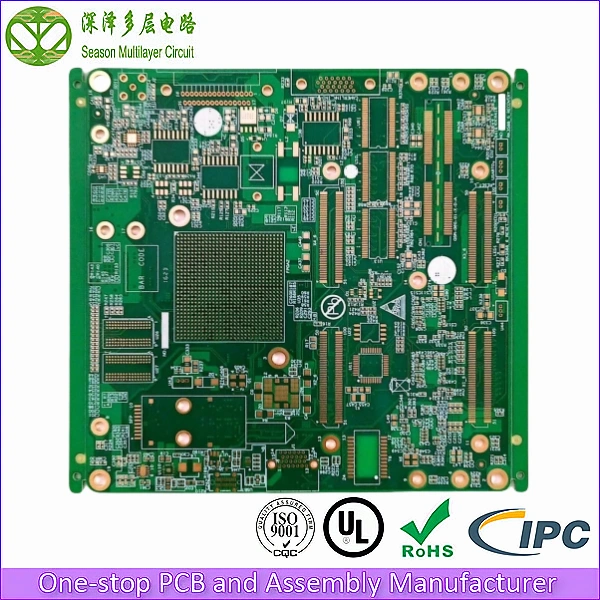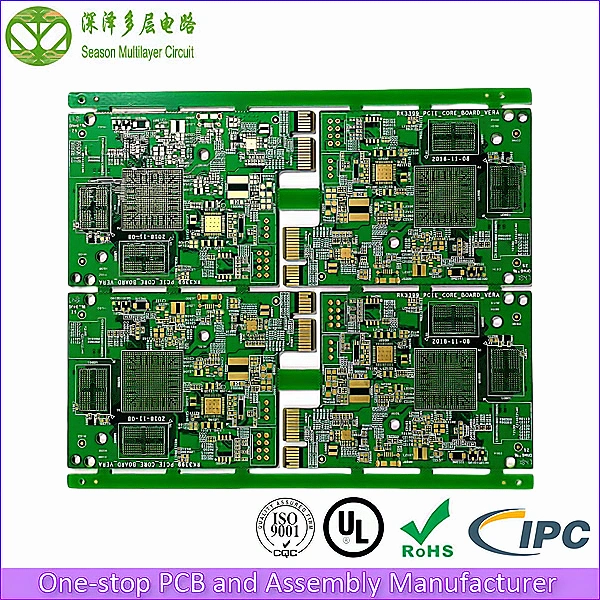

6-layer automotive PCB sample
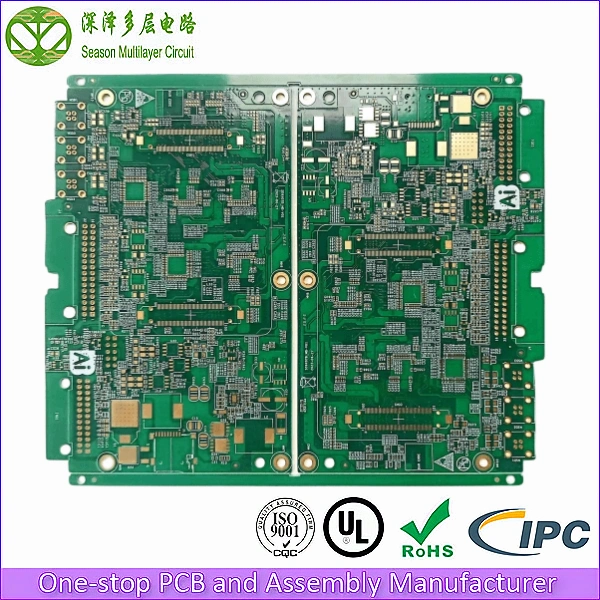
Automotive PCB sample
Layer Count: 6L
Material: FR4 Tg150
Board Thickness: 1.6mm
Panel Size: 187*155mm/2
Outer Layer Copper Thickness: 1OZ
Inner Layer Copper Thickness: 1OZ
Min Via Diameter: 0.20mm
Min BGA Pad: 0.25mm
Trace Width/Spacing: 4/4mil
Surface Finish: ENIG1-2U’’
6-layer automotive PCB sample, designed for critical applications including automotive control systems, cabin electronics, central control systems, and smart AV systems.
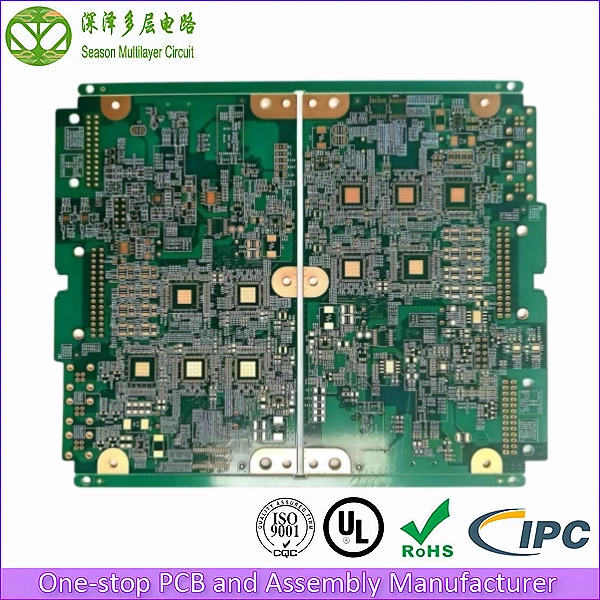
6-layer automotive PCB sample introduction
6-layer automotive PCB sample. With continuous technological advancements, automobiles are no longer merely transportation tools but are evolving into intelligent systems integrated with a wide array of high-tech components. In this context, the design and manufacturing of automotive PCBs have become increasingly critical. This article explores key aspects of automotive PCBs, including development trends, design challenges, and manufacturing processes, to help readers gain a deeper understanding of this field.
1. Development Trends of Automotive PCBs
As vehicle electrification advances, PCBs are being used more extensively across automotive systems. Currently, automotive PCBs are primarily applied in engine control, chassis systems, body electronics, and safety systems. To meet industry demands, PCB design and manufacturing technologies are evolving in several key directions:
- Miniaturization and Integration: As vehicles incorporate more electronic functions, PCBs must accommodate a growing number of components. To address space constraints, PCBs are trending toward smaller form factors and higher integration.
- High Reliability and Durability: Automotive environments expose PCBs to extreme conditions such as high/low temperatures and humidity. Therefore, PCBs must deliver exceptional reliability and longevity to ensure vehicle safety and performance.
- Environmental Sustainability and Energy Efficiency: In response to global eco-friendly initiatives, PCB materials are shifting toward halogen-free, lead-free, and recyclable options.
2. Design Challenges of Automotive PCBs
Designing automotive PCBs is a complex, multidisciplinary task involving electronics, mechanics, and materials science. Key challenges include:
- Space Constraints: Limited installation space in vehicles requires designers to optimize component placement and routing within tight spatial boundaries while maintaining functionality and performance.
- High Reliability Requirements: PCBs must remain stable and functional under harsh environmental conditions, necessitating robust design practices and material selection.
- Electromagnetic Compatibility (EMC): The complex electromagnetic environment in vehicles demands careful EMC design to prevent interference and ensure reliable operation of electronic systems.
- Cost Optimization: Balancing performance with cost is essential. Designers must reduce expenses through layout optimization, material selection, and manufacturability improvements to enhance market competitiveness.
3. Manufacturing Processes of Automotive PCB sample
The manufacturing of automotive PCBs involves several critical steps:
- PCB Substrate Preparation: Based on design specifications, suitable base materials are cut, drilled, and copper-plated to form substrates with required electrical and mechanical properties.
- Component Placement: Electronic components are mounted onto the PCB, typically using automated pick-and-place machines, establishing electrical connections.
- Quality Inspection: Finished assemblies undergo visual inspection, dimensional checks, and electrical testing to ensure compliance with quality standards.
- System Assembly: Qualified PCBs are integrated with other mechanical parts using automated assembly lines to form complete automotive electronic modules.
- Reliability Testing: Final products are subjected to environmental stress tests—including thermal cycling, humidity exposure, and vibration—to verify long-term reliability and stability.
4. Conclusion
The design and manufacturing of 6-layer automotive PCB sample represent a crucial aspect of automotive electronics development. As the industry evolves, so too do the technologies supporting PCB innovation. This article has examined key trends, design challenges, and manufacturing processes, aiming to provide valuable insights for professionals in the field.